No results. Is a plant missing? Tell uscontact@wikiplant.net
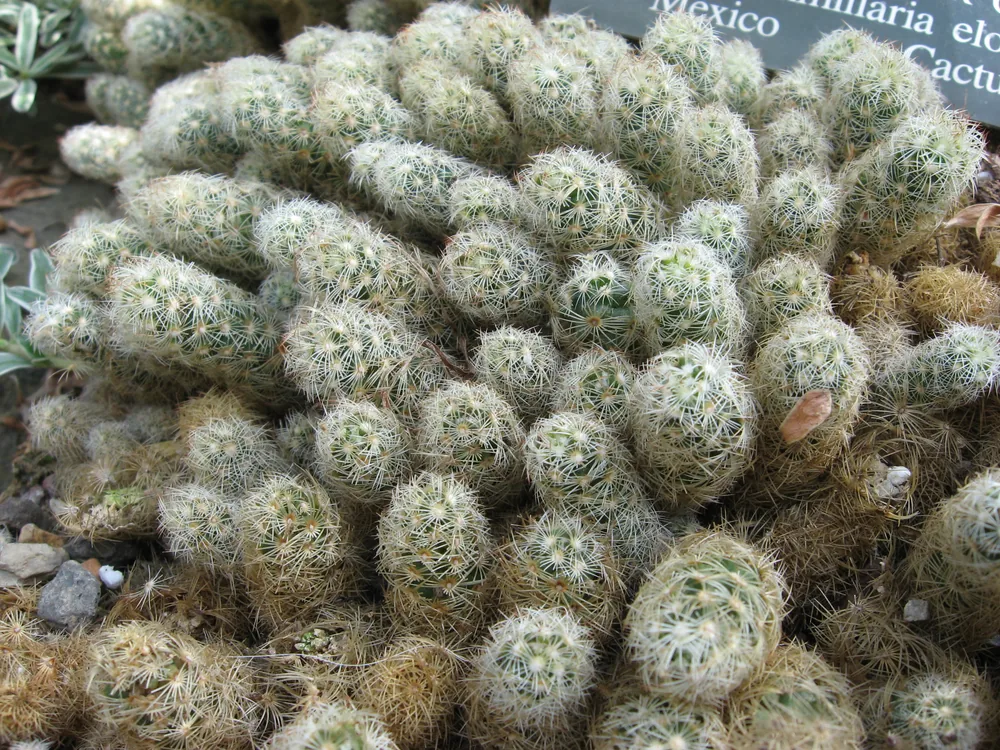
Lady Finger Cactus
Mammillaria elongata
Care level: Very easy
Lady finger cactus forms dense clusters of slender, finger-like stems that multiply readily by branching at the base, so a single small plant can fill out into an impressive clump within a few years without any special effort. Its fine, comb-like spines lie close against the stem in neat rows rather than jutting outward dangerously, giving the clusters a soft, almost fuzzy appearance despite still being sharp enough to handle with care.
Full sun to bright light for most of the day; low light causes weak, stretched growth.
Water
Let soil dry out completely between waterings, roughly every 2-3 weeks, less in winter.
Humidity
Prefers low humidity and dry, well-ventilated air.
Soil
Fast-draining cactus mix with added coarse sand or perlite.
Temperature
21-27°C in growth. A cool, dry winter rest at 7-13°C encourages flowering.
Size
Stems 15-20cm tall, forming clusters.
Growth speed
Slow
Best position
south-east / south / south-west-facing windowanywhere up to about 1 m from the window
east / west-facing windowright by the window
See every window directionHide window directions
Best position
right by the window
about 1 m
about 2 m
about 4 m
4 m or more
north
too dark○
too dark○
too dark○
too dark○
too dark○
north-east
too dark○
too dark○
too dark○
too dark○
too dark○
east
works well✓
too dark○
too dark○
too dark○
too dark○
south-east
works well✓
works well✓
too dark○
too dark○
too dark○
south
works well✓
works well✓
too dark○
too dark○
too dark○
south-west
works well✓
works well✓
too dark○
too dark○
too dark○
west
works well✓
too dark○
too dark○
too dark○
too dark○
north-west
too dark○
too dark○
too dark○
too dark○
too dark○
✓works well~just about○too dark☼too much direct sun
A rough guide based on window direction and typical daylight through the year. Window size, curtains and whatever stands outside matter just as much.
?Pet safety not confirmed
As a precaution, keep it out of reach of children and pets.
Propagation tip
The finger-like offsets that cluster around the base separate from the parent plant easily and root readily once left to callous for a few days before being set into dry cactus soil, making this one of the simplest cacti to propagate into more plants.
Care by Season
Spring
Resume watering gradually and begin light feeding with diluted cactus fertilizer.
Summer
Water once soil is fully dry and provide strong direct light for compact, healthy clusters.
Autumn
Taper off watering and stop feeding as growth slows for the year.
Winter
Water only rarely and keep in a cool, bright spot to encourage spring flowering.
Growing & Maintenance
Soil and pot
A well-drained cactus mix with added grit or coarse sand, in a pot with drainage holes.
Repotting
Every 2-3 years.
Fertilising
A light feed with diluted cactus fertiliser in spring and summer.
Propagation
From the finger-like offsets. Twist one off, let the cut end dry for several days and set it on dry cactus mix.
Pests & Diseases
Common problems
Tall, thin, leaning stems
Most likely cause: Too little light.
What to do: Give it full sun or strong direct light, with a little afternoon shade in the hottest weather.
Soft, mushy base
Most likely cause: Rot from overwatering or poor air circulation.
What to do: Stop watering, let the plant dry out fully and repot healthy stems in fresh, gritty mix.
No flowers
Most likely cause: No cool, dry winter rest.
What to do: Keep it at 7-13°C in winter and stop watering until spring.
Shrivelled stems
Most likely cause: A very long dry spell in the growing season.
What to do: Water thoroughly once the compost is dry, then let it dry out completely again.
Pale, scorched patches
Most likely cause: A sudden move into hot sun.
What to do: Increase the sun gradually.
Pests & Diseases
Mealybugs
Signs: White cottony fluff tucked between the finger-like stems.
Treatment: Remove with an alcohol-soaked cotton swab, taking care around the spines. Check the undersides of the leaves and the crevices where the leaf stem meets the main stalk.
Spider mites
Signs: Fine webbing and faint discoloration on stems in very dry, still air.
Treatment: Improve airflow and apply insecticidal soap if mites are present. Check the undersides of the leaves and the crevices where the leaf stem meets the main stalk.
Root rot
Signs: Soft, discolored stems and a mushy base from overwatering.
Treatment: Stop watering, let the plant dry out fully, and repot into fresh, gritty mix if needed.
FAQ
Why is my lady finger cactus growing tall and thin instead of staying compact?
Stretched, thin growth reaching toward one direction usually signals insufficient light; move it to a spot with more direct sun, since low light causes this cactus to etiolate rather than form its normal tight clusters.
Can I just break off one of the finger stems to start a new plant?
Yes, twist or cut off an offset, let the cut end dry and callous for several days, then place it on top of dry, gritty cactus mix, and it will typically root within a few weeks.
How often should I water a lady finger cactus?
Roughly every 2-3 weeks in the growing season, once the compost has dried out completely. Stop watering altogether during its winter rest.
Does a lady finger cactus flower?
Yes. Small funnel-shaped flowers form a ring near the top of the stems in spring, provided the plant has had a cool, dry winter rest.
How should I overwinter a lady finger cactus?
In a cool, bright spot at about 7-13°C, kept dry. That rest is what triggers flowering in spring.
When should I repot a lady finger cactus?
Every 2-3 years, into fresh cactus mix with grit. Handle it with folded paper or tongs to avoid the spines.