No results. Is a plant missing? Tell uscontact@wikiplant.net
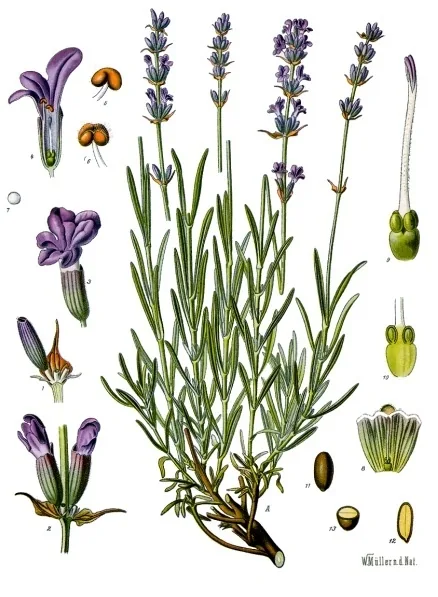
Lavender
Lavandula angustifolia
Care level: Moderate
Lavender's name traces back to the Latin "lavare" (to wash), since Romans scented their bathwater and laundry with it long before it became a garden staple. It's fundamentally a Mediterranean hillside shrub bred for scorching sun and rocky, poor soil, which is exactly why it resents being treated as a cozy indoor houseplant.
Needs full sun, ideally 6+ hours daily; place in the brightest south-facing window you have.
Water
Allow soil to dry out fully between waterings, roughly every 1-2 weeks; overwatering is the most common way to kill it.
Humidity
Prefers low humidity and good air circulation; avoid misting.
Soil
Very free-draining, slightly alkaline mix, such as cactus/succulent soil with added grit or sand.
Temperature
Winter-hardy outdoors. Indoors, keep it in the coolest bright spot in winter.
Size
30-60cm tall and 60-90cm wide.
Growth speed
Medium
Best position
south-east / south / south-west-facing windowanywhere up to about 1 m from the window
east / west-facing windowright by the window
See every window directionHide window directions
Best position
right by the window
about 1 m
about 2 m
about 4 m
4 m or more
north
too dark○
too dark○
too dark○
too dark○
too dark○
north-east
too dark○
too dark○
too dark○
too dark○
too dark○
east
works well✓
too dark○
too dark○
too dark○
too dark○
south-east
works well✓
works well✓
too dark○
too dark○
too dark○
south
works well✓
works well✓
too dark○
too dark○
too dark○
south-west
works well✓
works well✓
too dark○
too dark○
too dark○
west
works well✓
too dark○
too dark○
too dark○
too dark○
north-west
too dark○
too dark○
too dark○
too dark○
too dark○
✓works well~just about○too dark☼too much direct sun
A rough guide based on window direction and typical daylight through the year. Window size, curtains and whatever stands outside matter just as much.
!Toxic to pets
Toxic to cats and dogs if eaten.
Eating it can cause vomiting and an upset stomach.
If your pet has eaten some, contact your vet.
Source: ASPCA
Common mistake
Growing lavender indoors long-term rarely works well; it evolved for intense outdoor sun and constant airflow, so even a bright windowsill usually leaves it leggy and short-lived compared to a spot outdoors or on a sunny balcony.
Care by Season
Spring
Trim back any winter-damaged growth and resume regular watering as new shoots appear.
Summer
Give it maximum sun and watch for the soil drying quickly in heat; deadhead spent flower spikes to encourage more blooms.
Autumn
Cut back lightly after flowering finishes and taper off watering as growth slows.
Winter
Keep in the coolest bright spot available and water only sparingly; indoor lavender often struggles most from low winter light.
Growing & Maintenance
Soil and pot
A very free-draining, slightly alkaline mix, such as cactus soil with added grit or sand, in a pot with drainage holes.
Pruning
Remove the spent flower spikes and cut the plant back lightly every year after flowering.
Propagation
From stem cuttings, or from seed.
Pests & Diseases
Common problems
Leggy plant with bare, woody stems
Most likely cause: Too little light, and no yearly trim.
What to do: Give it full sun and trim it lightly after flowering every year.
Yellowing and wilting in wet soil
Most likely cause: Root rot from overwatering.
What to do: Repot into dry, gritty mix and water much less.
No flowers
Most likely cause: Too little sun.
What to do: Give it at least six hours of direct sun a day.
Spots on the leaves
Most likely cause: A fungal leaf spot, brought on by still, damp air.
What to do: Improve the airflow, water at the soil and remove the affected leaves.
Grey, limp growth indoors in winter
Most likely cause: A warm room with weak light.
What to do: Move it to the coolest bright spot you have and water sparingly.
Pests & Diseases
Root rot
Signs: Wilting, blackened stem base, soggy soil
Treatment: Repot into dry, gritty mix and cut back watering drastically; trim away rotten roots.
Aphids
Signs: Small green or black insects clustering on new growth and flower spikes
Treatment: Rinse off with water or apply insecticidal soap.
Fungal leaf spot
Signs: Brown or gray spots on foliage in humid, still air
Treatment: Improve airflow, avoid overhead watering, and remove affected leaves.
FAQ
Why is my lavender getting leggy with bare, woody stems?
This usually comes from insufficient light and skipping annual pruning; lavender needs a light trim after flowering each year to stay bushy, and without strong sun it stretches toward the light and becomes sparse.
Can I grow lavender indoors year-round?
It's difficult since lavender needs 6+ hours of direct sun and excellent airflow that most indoor spaces can't fully provide; it does best moved outdoors for summer and brought in only for the coldest months in a very bright, cool spot.
Is Lavender toxic to cats and dogs?
Yes, Lavender is toxic to cats and dogs. Eating it can cause stomach upset, so keep pets from chewing it.
How often should I water Lavender?
Roughly every 1-2 weeks, once the soil has dried out fully. Overwatering is the most common way to lose it.
When does Lavender flower?
In summer. Removing the spent spikes keeps the plant tidy and can encourage more flowers.
How big does Lavender get?
Between 30 and 60cm tall and 60 to 90cm wide. It grows at a medium pace and stays compact if it is trimmed every year.