No results. Is a plant missing? Tell uscontact@wikiplant.net
Leyland cypress
x Cuprocyparis leylandii
Care level: Moderate
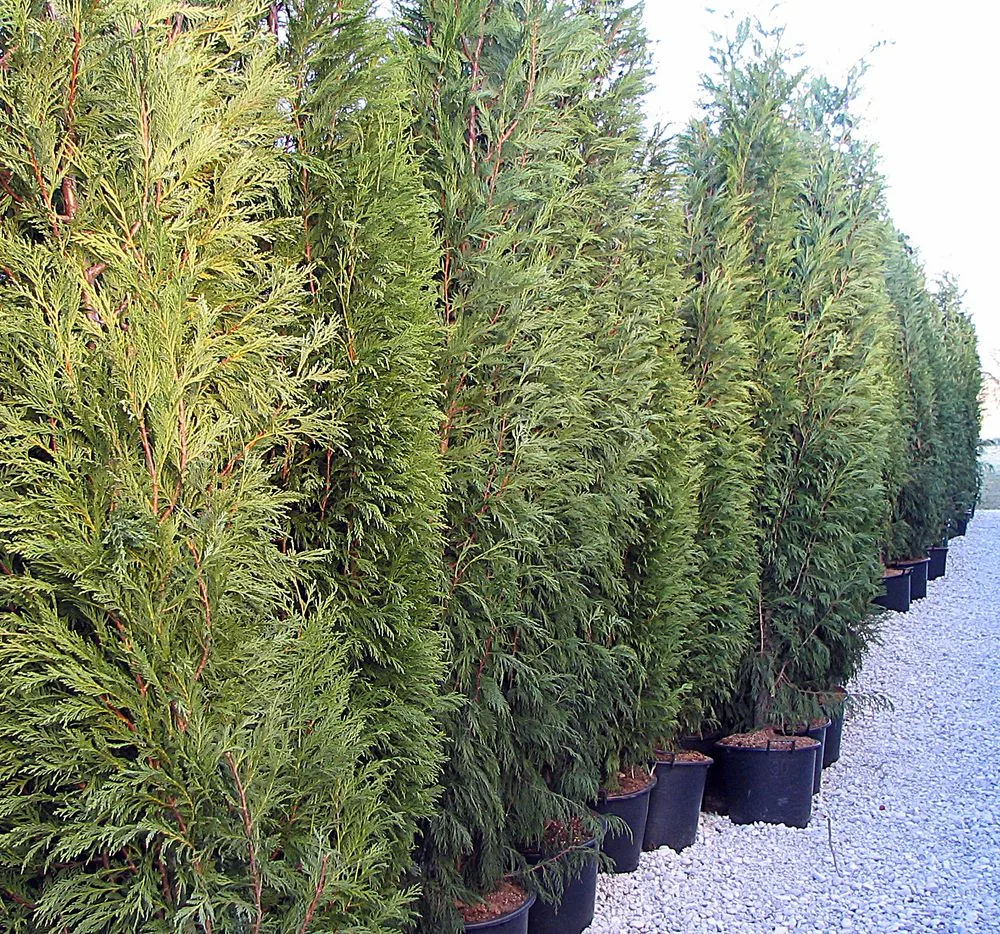
Leyland cypress, usually just called leylandii, is a large, dense, columnar conifer with flattened sprays of scale-like leaves. It is a hybrid between two North American conifers that arose by chance in a British garden, and it is planted almost entirely as a fast evergreen hedge or screen. Left alone it grows into a tree well over 12m tall, so it only makes a good hedge for a gardener prepared to trim it every year.
As a precaution, keep it out of reach of children and pets.
Common mistake
Cutting back into old brown wood is the mistake that ruins a leylandii hedge. Old wood does not resprout, so a hedge that has been allowed to grow too wide or tall cannot simply be cut back hard; it has to be kept in check from the start.
Care by Season
Spring
Growth starts. Give the first trim of the year once the new shoots are growing, and check hedges for nesting birds before cutting.
Summer
Trim again in summer. Water young hedges in dry weather.
Autumn
A good time to plant. Give the last trim before growth stops for the year.
Winter
No care is needed. The plant is fully hardy.
Growing & Maintenance
Planting
Plant in autumn or spring in well-drained soil in sun or partial shade. For a hedge, set young plants in a row and water them through their first summers.
Pruning
Trim two or three times in the growing season, cutting only into young green shoots. Reduce the height while the hedge is young rather than letting it get away.
Propagation
By semi-hardwood cuttings. It is a hybrid, so any seed does not come true.
Pests & Diseases
Common problems
Brown patches after trimming
Most likely cause: The cut went into old wood, which does not resprout.
What to do: Trim only within the green growth, little and often.
A hedge that has grown too big
Most likely cause: It was not trimmed every year.
What to do: Reduce the height and trim the sides as far as the green allows; replace the hedge if that is not enough.
Dead branches with oozing resin
Most likely cause: Canker.
What to do: Cut the branches out below the damage.
Brown shoots low in the hedge
Most likely cause: Conifer aphids earlier in the year.
What to do: Keep the hedge healthy; green growth nearby may cover small gaps.
A tree leaning or blown over
Most likely cause: Shallow roots under a tall, heavy crown.
What to do: Keep the plant to hedge height rather than letting it become a tree.
A skin rash after trimming
Most likely cause: Contact with the foliage.
What to do: Wear gloves and long sleeves.
Pests & Diseases
Conifer aphid
Signs: Shoots turn yellow, then brown, often low down in the hedge, with black sooty mould on the stems.
Treatment: Damage shows after the aphids have gone. Keep the hedge watered and trimmed lightly so that surrounding green growth can cover small patches.
Scale insects
Signs: Small, shell-like bumps on the shoots, sometimes with sticky honeydew.
Treatment: Prune out badly affected shoots within the green growth.
Canker
Signs: Individual branches turn brown and die, with resin oozing from sunken patches on the bark.
Treatment: Cut affected branches out below the damage and clean the blades afterwards. Badly affected plants are best replaced.
Honey fungus
Signs: A plant dies back over one or two seasons, with white fungal sheets under the bark at the base.
Treatment: Remove the plant with as much root as possible and do not replant a susceptible species in that spot.
FAQ
How fast does Leyland cypress grow?
Very fast. Young plants can put on up to about a metre a year, which is why it is planted for quick screening and also why it gets out of hand so easily.
How often should I trim a leylandii hedge?
Two or three times during the growing season. Light, regular trimming keeps the hedge dense and within bounds. Always stay within the young green shoots.
Can I cut an overgrown leylandii hedge back hard?
No. Cuts into old, bare wood leave brown patches that never green up again. The height can be reduced, but the sides can only be trimmed as far as the green growth goes.
Why does my leylandii hedge have brown patches?
Common causes are trimming into old wood, conifer aphids feeding on the shoots, and canker. Brown patches rarely fill in again, so the aim is to prevent them: trim lightly and regularly and keep the plants healthy.
How tall does Leyland cypress get?
Unchecked it grows well over 12m and can reach 30m, with a spread of 4-8m. The roots are fairly shallow and large trees can blow over.
Can the foliage irritate skin?
Yes. Contact with the foliage can cause a skin rash in people, and the same is reported for dogs. Wear gloves and long sleeves when trimming.