No results. Is a plant missing? Tell uscontact@wikiplant.net
Lily of the valley
Convallaria majalis
Care level: Easy
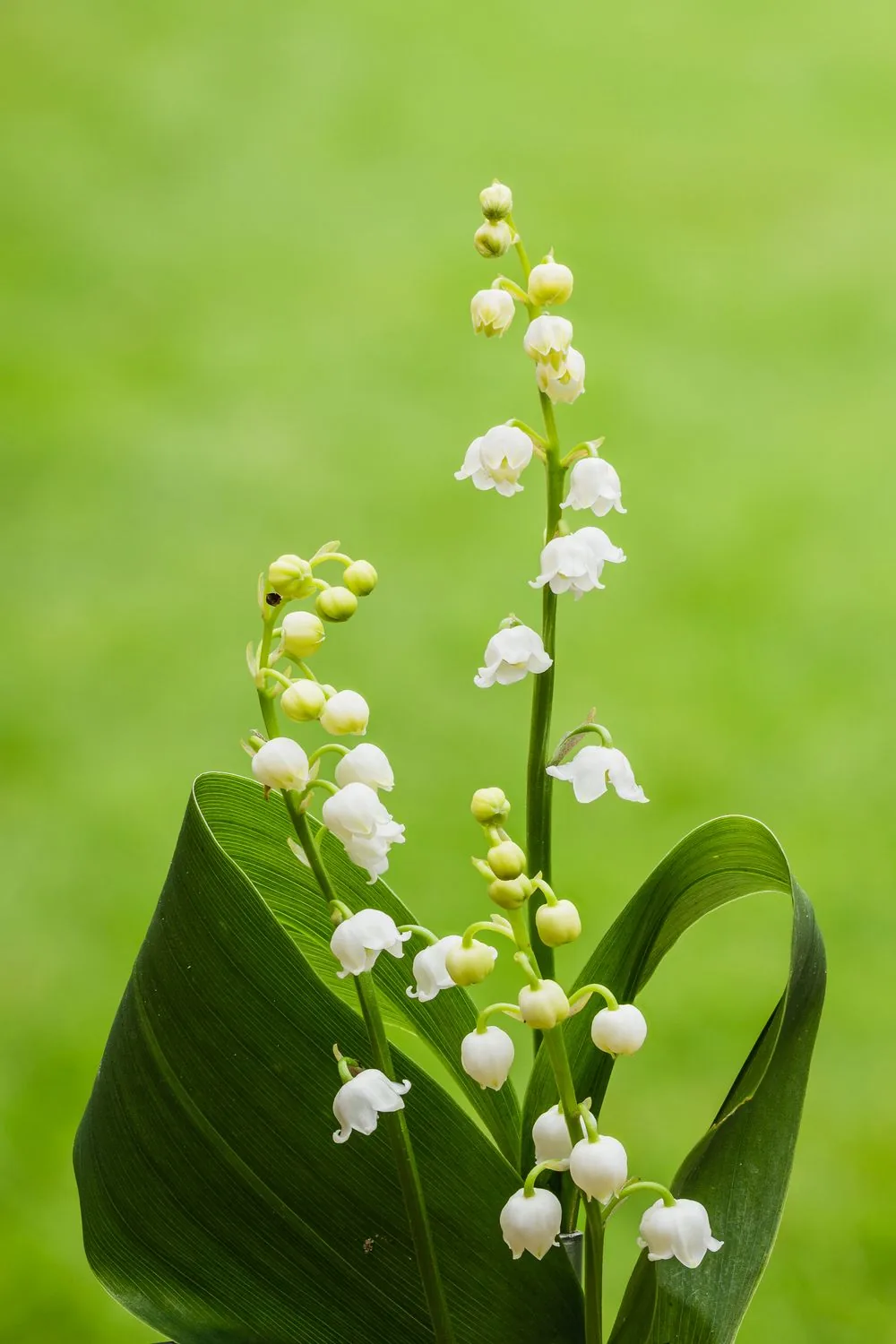
Lily of the valley is a low woodland perennial that spreads by creeping rhizomes into a dense carpet of paired, upright green leaves. In late spring each shoot carries an arching stem of small, nodding, white bells with one of the best-known scents in the garden, sometimes followed by red berries. It thrives in the shade where little else will, is hardy to well below -20°C, and once settled it looks after itself. Every part of it is poisonous.
Can cause vomiting and diarrhoea, and more rarely affects heart rhythm.
If your pet has eaten some, contact your vet.
Source: RHS, Pet Poison Helpline
Safety note
All parts of the plant are toxic to people and pets: leaves, flowers, berries and roots. It contains substances that act on the heart. Wear gloves when handling it, and plant it where children and animals cannot get at the berries.
Care by Season
Spring
Shoots emerge and the scented white bells open in late spring.
Summer
The leaves stay green and red berries may form. Water in long dry spells.
Autumn
The leaves yellow and die back. Divide and replant now, and top-dress with leaf mould.
Winter
The plant is dormant underground and needs nothing.
Growing & Maintenance
Planting
Plant in autumn in fertile, humus-rich, moist soil in full or partial shade, with the buds just below the surface.
Pruning
None is needed. Clear away the dead leaves in late autumn.
Propagation
By division in autumn. It can also be raised from seed sown as soon as it is ripe.
Pests & Diseases
Common problems
No flowers
Most likely cause: Newly planted crowns, or an old, congested patch.
What to do: Wait a year or two after planting; divide old patches in autumn.
Brown, scorched leaves in summer
Most likely cause: Too much sun or dry soil.
What to do: Move it to a shadier, moister spot and mulch.
It is taking over the bed
Most likely cause: Spreading rhizomes.
What to do: Dig out the edges each year or confine it with a buried barrier.
Leaves yellowing in late summer
Most likely cause: Natural die-back, earlier in a dry year.
What to do: Nothing is needed.
Sparse, thin growth
Most likely cause: Poor, dry soil.
What to do: Top-dress with leaf mould each autumn.
Pests & Diseases
Swift moth caterpillars
Signs: Plants that grow weakly or wilt, with white caterpillars in the soil feeding on the roots and rhizomes.
Treatment: Dig over the edges of the patch and remove the caterpillars you find; established colonies usually outgrow the damage.
Grey mould
Signs: Brown patches covered in grey fuzz on leaves and flower stems in cool, wet weather.
Treatment: Remove affected growth and thin a very dense patch to let air through.
Leaf spot
Signs: Brown spots on the leaves, mostly late in the season.
Treatment: Clear away the old leaves in autumn. No other treatment is needed.
FAQ
Is lily of the valley toxic to cats and dogs?
Yes, seriously so. Every part of the plant contains compounds that affect the heart. A cat or dog that eats it may vomit and stop eating, and can go on to show changes in heart rate and rhythm, weakness and seizures. Contact a vet at once if you suspect a pet has eaten any.
Where should I plant lily of the valley?
In full or partial shade, in fertile, humus-rich soil that stays moist. Under deciduous trees and shrubs or along the shady side of a wall is ideal.
Why is my lily of the valley not flowering?
Newly planted crowns often take a year or two to settle before they flower. Established patches flower less when they become very congested or when the soil is dry and poor; divide them in autumn and top-dress with leaf mould.
Does lily of the valley spread?
Yes. It forms extensive colonies by underground rhizomes and can take over a bed in moist, cool conditions. Plant it where spreading is welcome, or dig out the edges of the patch each year.
When do I divide it?
In autumn. Lift a section, pull the rhizomes apart into pieces with a bud each, and replant them straight away.
Can I pick the flowers?
Yes, they last well in a small vase. Wash your hands afterwards, and keep the vase away from children and pets.