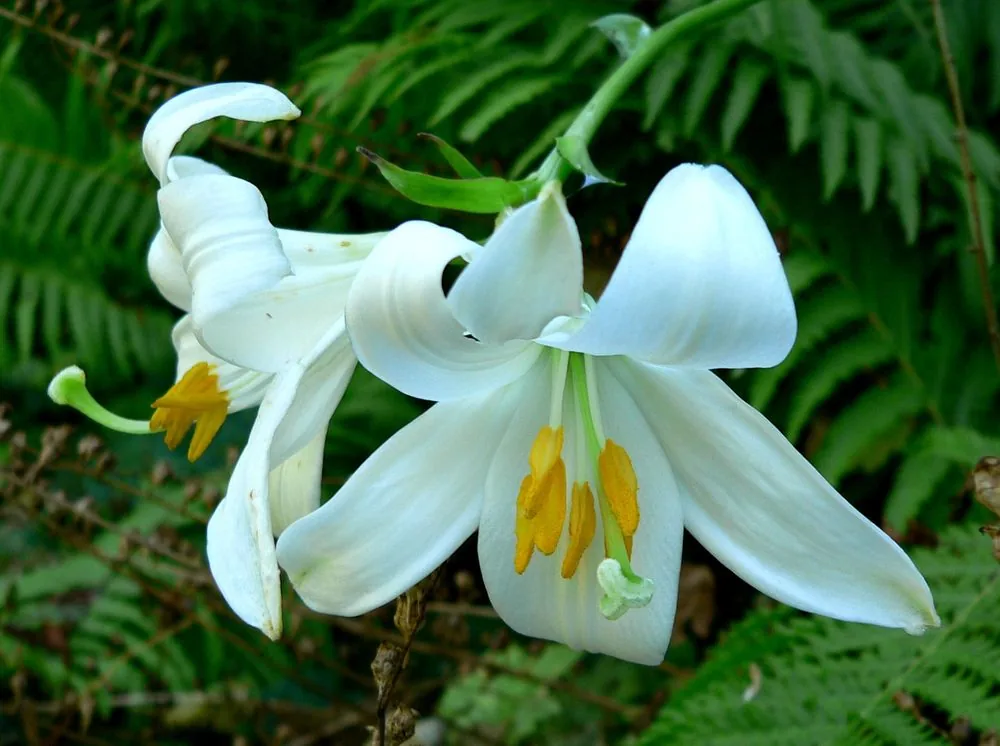
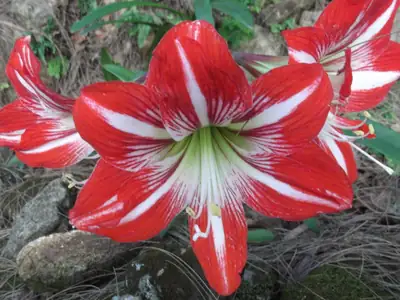
White trumpet-shaped Madonna lily flowers with yellow anthers against green foliage

Lily

Lilium spp.
Care level: Easy

True lilies are bulbs of the northern hemisphere, grown for their large, waxy flowers on tall, leafy, unbranched stems in summer. The flowers are trumpets, bowls or recurved turk's caps, in every colour but blue, and many are heavily scented. Each bulb is a cluster of fleshy scales with no protective skin, so it must never dry out. Lilies like their heads in the sun and their roots in cool, well-drained soil, do well in deep pots and come back for years. Every part of every lily is extremely dangerous to cats.

I have this plant

Information

Varieties and related species
Lilium regaleLilium candidumLilium martagonLilium 'Casa Blanca'

Light

Full sun or light afternoon shade for the leaves, with the base of the plant shaded by low plants or a mulch.

Water

Keep the soil moist in growth, but never waterlogged; wet soil rots the bulbs. Do not let it dry out completely.

Humidity

Not a factor for this outdoor plant.

Soil

Fertile, well-drained soil with plenty of leaf mould or garden compost. Oriental lilies need acid soil or ericaceous compost; most others accept neutral soil.

Temperature

Most garden lilies are fully hardy bulbs. Bulbs in pots need protection from hard frost and winter wet.

Size

0.3-1.8m tall and 20-60cm wide.

Growth speed

Fast

Toxic to pets

Toxic to cats and dogs if eaten.

Extremely dangerous for cats: any part of the plant, the pollen and even the water in the vase can cause fatal kidney failure. The risk is to cats above all.

If your pet has eaten some, contact your vet.

Source: NC State Extension, Pet Poison Helpline

Safety note

Do not grow lilies or bring cut lilies into a home with cats. A cat that chews a leaf or petal, licks pollen off its fur or drinks water from the vase can suffer fatal kidney failure. Treat any contact as an emergency and call a vet at once.

Care by Season

Spring

Shoots emerge. Protect them from slugs, check for lily beetles and stake tall kinds.

Summer

Flowering from early to late summer, depending on the group. Deadhead, water and feed.

Autumn

Leave the stems until they yellow, then cut them down. Plant new bulbs.

Winter

Bulbs rest in the ground. Keep pots out of hard frost and heavy rain.

Growing & Maintenance

Planting

Plant the bulbs in autumn or early spring, about 20cm deep and 15-30cm apart, on a layer of grit in heavy soil. In pots, use a deep container and a free-draining compost.

Fertilising

Mulch with garden compost in spring. Feed lilies in pots with a high-potash liquid fertiliser every two weeks from the time buds form until the leaves start to yellow.

Pruning

Snap off faded flowers. Cut the stems to the ground only when they have yellowed in autumn.

Support

Stake tall varieties individually with a cane, pushed in clear of the bulb.

Propagation

By dividing crowded clumps in autumn, by detaching the small bulbs that form around the base of the stem, or by scales.

Pests & Diseases

Common problems

Leaves and buds eaten, with black slime

Most likely cause: Scarlet lily beetle.
What to do: Hand-pick adults and grubs regularly.

No shoots in spring

Most likely cause: Bulb rot in wet soil, or slugs.
What to do: Improve the drainage and protect the emerging shoots.

Fewer flowers each year

Most likely cause: Crowded bulbs, hungry soil or foliage cut down too early.
What to do: Divide in autumn, feed and leave the stems until they yellow.

Stems lean or snap

Most likely cause: Tall varieties in wind or shade.
What to do: Stake early and plant in more sun.

Brown spots spreading up the stem

Most likely cause: Lily disease in wet weather.
What to do: Remove affected leaves and tidy up in autumn.

Yellow leaves with green veins on Oriental lilies

Most likely cause: Soil that is too limy.
What to do: Grow them in ericaceous compost in pots.

Pests & Diseases

Scarlet lily beetle

Signs: Bright red beetles and grubs coated in black slime; leaves, buds and flowers eaten from spring to autumn.
Treatment: Pick adults and grubs off by hand as often as you can from the first warm days.

Slugs and snails

Signs: Young shoots eaten as they emerge, and holes in the bulbs.
Treatment: Protect the emerging shoots and plant on grit in heavy soil.

Lily disease

Signs: Oval brown spots on the leaves, which wither from the bottom of the stem up in wet weather.
Treatment: Remove affected leaves, clear all debris in autumn and space plants so that air moves between them.

Aphids and virus

Signs: Aphids on shoot tips and buds; streaked, mottled leaves and distorted flowers can follow.
Treatment: Rinse or rub aphids off early and destroy plants that show virus symptoms.

Bulb rot

Signs: Shoots fail to appear or collapse; the bulb is soft and brown.
Treatment: Discard rotten bulbs and replant fresh ones in a better-drained spot or in pots.

FAQ

Are lilies really that dangerous to cats?

Yes. All parts of true lilies are toxic to cats, including the pollen and the water in the vase, and a very small amount is enough to cause acute kidney failure. Early treatment is vital, so contact a vet immediately, before any signs appear.

When and how deep do I plant lily bulbs?

Plant in autumn, or in early spring, as soon as you have the bulbs, since they have no dormant skin and dry out fast. Set them about 20cm deep, or two to three times the height of the bulb, in well-drained soil. The Madonna lily is the exception: plant it in early autumn with its tip only just covered.

What are the red beetles on my lilies?

Scarlet lily beetles. The bright red adults and their grubs, which hide under a coat of their own black excrement, strip leaves, buds and flowers. Check plants from spring onwards and pick off beetles and grubs by hand; hold a hand underneath, as the adults drop when disturbed.

Should I cut lilies back after flowering?

Remove the faded flowers so that the plant does not spend energy on seed, but leave the stem and leaves until they yellow in autumn. They feed the bulb for next year. Then cut the stem to the ground.

Can I grow lilies in pots?

Yes, and it suits them well. Use a deep pot with drainage holes, three bulbs to a 30cm pot, and keep the compost moist but never wet. Repot into fresh compost every two years.

Which lilies are scented?

Oriental and trumpet lilies are strongly scented. Asiatic lilies, the easiest and earliest group, usually have no scent.

How do I stop the pollen staining?

Pull off the anthers with a tissue as each flower opens. On fabric, lift dry pollen with sticky tape; do not rub or wet it.

You might also like