No results. Is a plant missing? Tell uscontact@wikiplant.net
Lupin
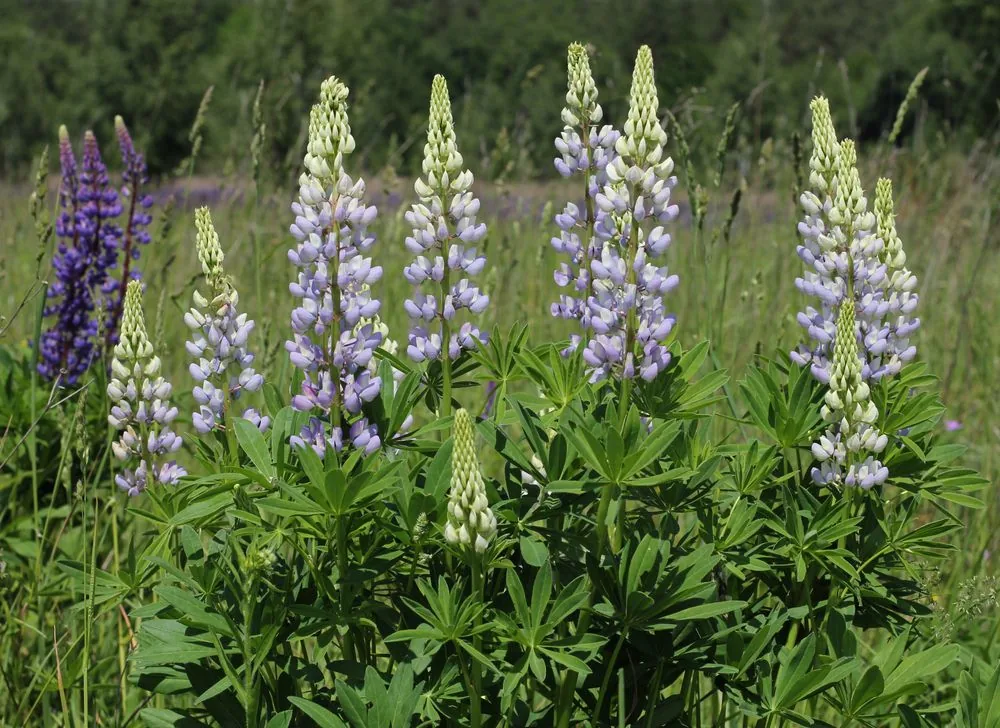
Lupinus polyphyllus
Care level: Easy
The garden lupin is a strong, upright perennial from western North America, grown for its tall, dense spikes of pea-like flowers in early summer. The species is blue to purple; the garden hybrids bred from it come in almost every colour, often in two tones. The flowers stand above a mound of large leaves divided like the fingers of a hand, which hold drops of rain and dew at their centre. It likes sun and light, slightly acid soil, and it is a member of the pea family, so its roots fix nitrogen and it thrives in poor ground.
It can make cats and dogs unwell, so keep it out of their reach.
If your pet has eaten some, contact your vet.
Source: RHS, Pet Poison Helpline
Signature feature
Cut the main spike off as soon as it fades, down to a side shoot, and the plant often flowers a second time on smaller spikes. Deadheading also stops it scattering seed.
Care by Season
Spring
Leaves emerge. Protect young shoots from slugs, take basal cuttings and put supports in place.
Summer
Flowering in early summer. Cut off faded spikes for a second, smaller flush.
Autumn
Cut the plant back after the leaves die down and collect any seed you want.
Winter
Dormant below ground and fully hardy. Keep the crown free of standing water.
Growing & Maintenance
Planting
Plant young plants in spring or early autumn, 30-45cm apart, in sun and free-draining soil. Do not add manure; rich soil gives soft growth.
Pruning
Cut faded spikes back to a side shoot or to the base to encourage more flowers. Cut the whole plant down in autumn.
Support
Stake clumps in exposed gardens with twiggy sticks or a ring support put in early.
Propagation
By seed in early to mid spring, or by basal stem cuttings in mid to late spring, which is the only way to keep a named variety true.
Pests & Diseases
Common problems
The plant rots at the base in winter
Most likely cause: Heavy, waterlogged soil.
What to do: Replant in free-draining soil or a raised bed.
Yellow leaves with green veins
Most likely cause: Chalky or limy soil.
What to do: Grow it in neutral to acid soil, or in a pot of lime-free compost.
Spikes bend or snap
Most likely cause: Wind and rain on unsupported plants.
What to do: Put supports in place in spring.
Fewer and smaller spikes each year
Most likely cause: An ageing plant.
What to do: Replace it with young plants from cuttings or seed.
Seedlings do not match the parent
Most likely cause: Hybrids do not come true from seed.
What to do: Take basal cuttings instead.
Twisted stems with brown patches
Most likely cause: Anthracnose.
What to do: Remove the plant and do not replant lupins in the same spot.
Pests & Diseases
Lupin aphid
Signs: Dense colonies of large, grey-green aphids on the spikes and under the leaves; the plant can wilt and collapse.
Treatment: Check from late spring and squash or rinse off colonies early, before they build up.
Slugs and snails
Signs: Young shoots and seedlings eaten to the ground in spring.
Treatment: Protect new growth and pick slugs off in the evening.
Lupin anthracnose
Signs: Brown, sunken patches on leaves and stems; leaf stalks and spikes twist in a corkscrew and collapse, mostly in wet weather.
Treatment: Remove and destroy affected plants at once and do not save their seed.
Powdery mildew
Signs: A white powdery coating on the leaves after flowering, in dry spells.
Treatment: Cut the foliage back after flowering; fresh leaves usually come clean.
FAQ
Are lupins poisonous to dogs and cats?
Yes. All parts are harmful if eaten, and the seeds and pods most of all. Remove the seed pods before they ripen in a garden where pets or small children chew plants.
Do lupins come back every year?
They are perennials, but short-lived ones: expect about five or six good years. Keep new plants coming from basal cuttings or seed.
Why did my lupin rot over winter?
Winter wet. Lupins need free-draining soil and rot at the crown in heavy, waterlogged ground. They also dislike chalky soil, where the leaves turn yellow.
How do I grow lupins from seed?
Nick the hard seed coat or soak the seeds overnight, then sow in early to mid spring. Seedlings of named varieties do not come true; for an exact copy take basal cuttings.
Can I move an established plant?
Not easily. Lupins have a deep tap root and resent disturbance. Plant them young where they are to stay.
Does it spread?
It self-seeds freely, and in parts of northern Europe it has escaped along roadsides and into meadows, where it crowds out wild flowers. Deadhead it and never dump garden waste in the countryside.
Do I need to stake it?
In an open, windy position, yes. Push twiggy sticks or a support ring around the clump in spring before the spikes rise.