No results. Is a plant missing? Tell uscontact@wikiplant.net
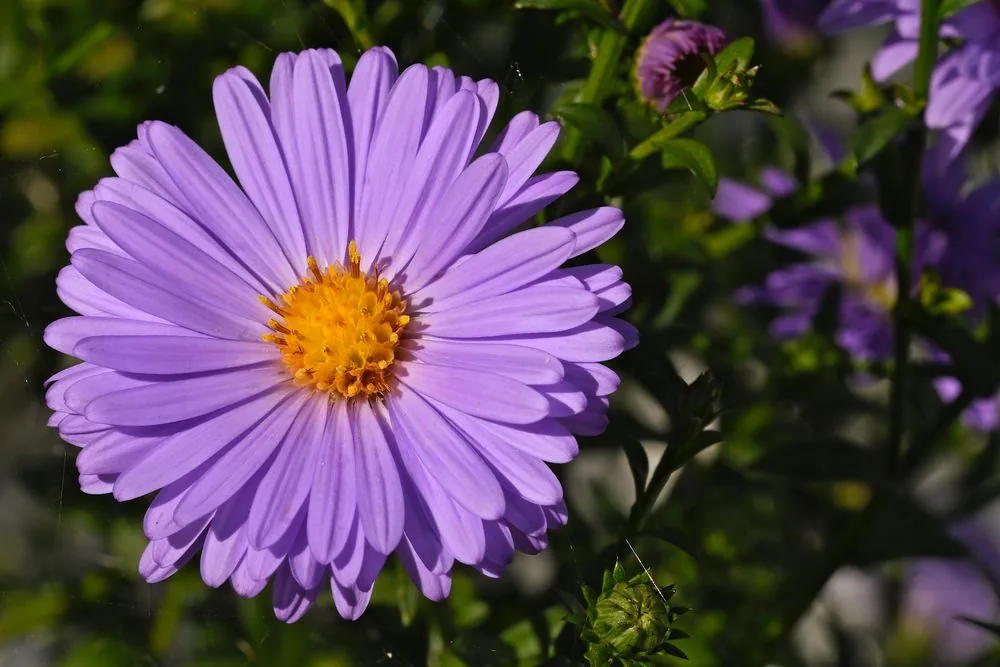
The Michaelmas daisy is a clump-forming perennial from eastern North America that fills the gap at the end of the garden year. From late summer to mid-autumn its branching stems are covered in masses of small daisies in purple, lavender-blue, pink or white, each with a yellow centre, above narrow, smooth, lance-shaped leaves. Its name comes from Michaelmas, 29 September, when it is at its peak. It is fully hardy and easy in fertile, moist soil in sun, and its hundreds of garden varieties range from knee-high edging plants to back-of-border clumps of 1.5m.
I have this plantSign in to add this plant to your library
As a precaution, keep it out of reach of children and pets.
It flowers when little else does. In September and October the open daisies are one of the last rich sources of nectar and pollen of the year, and on a sunny afternoon a clump is covered in butterflies, bees and hoverflies stocking up before winter.
From late summer to mid-autumn, with most varieties at their best around the end of September. Flowering lasts four to six weeks.
You can. Cutting the stems back by about a third in late spring makes the plant shorter, bushier and less likely to need staking, and delays flowering by a week or two. Leave some stems uncut for a longer display.
Every two or three years, in spring. The centre of an old clump weakens and flowers poorly. Lift it, discard the woody middle and replant only the vigorous young shoots from the outside.
Michaelmas daisy mite, a microscopic mite that feeds in the shoot tips and flower buds. The stems are scarred brown and the flowers turn into leafy rosettes. There is no cure; dig up and destroy affected plants and replant with healthy stock elsewhere.
Tall varieties do, especially in rich soil or an exposed position. Put twiggy sticks or a support ring in place in spring so that the stems grow up through it.
Yes, slowly, by creeping roots, and it seeds itself. It has escaped from gardens along riverbanks and waste ground in much of Europe, so cut it down after flowering before it sheds seed and never dump the roots in the wild.