No results. Is a plant missing? Tell uscontact@wikiplant.net
Money Tree
Pachira aquatica
Care level: Easy
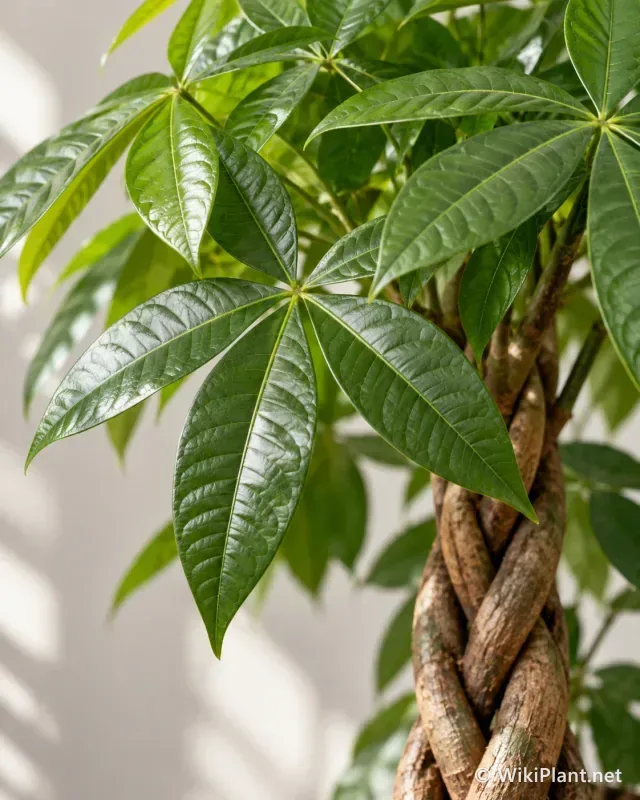
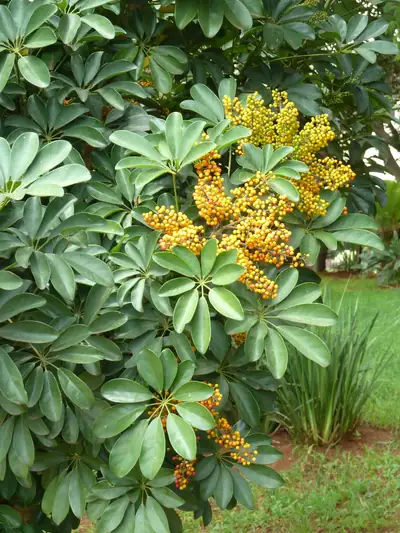
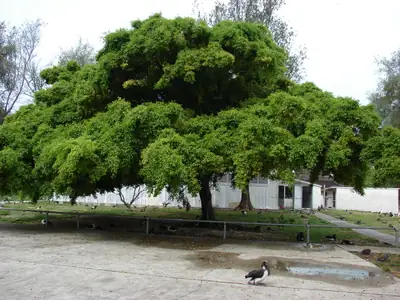
In the wild, Pachira aquatica grows as a wetland tree along swamps and riverbanks in Central and South America, producing large edible seed pods that taste faintly of peanuts when roasted, a far cry from the compact, braided-trunk houseplant sold worldwide as a symbol of good fortune.
Bright, indirect light is ideal; tolerates medium light but grows slower.
Water
Water when the top half of the soil is dry, roughly every 1-2 weeks; sensitive to overwatering.
Humidity
Appreciates moderate to high humidity but adapts to average indoor conditions.
Soil
Well-draining, peat-based potting mix.
Temperature
18-24°C. Bring it indoors before it drops to 7°C.
Growth speed
Fast
Best position
east / south-east-facing windowanywhere up to about 2 m from the window
north / north-east / north-west-facing windowanywhere up to about 1 m from the window
south / west-facing windowabout 1 m from the window or further back
Watch for strong direct sun at south / west windows.
See every window directionHide window directions
Best position
right by the window
about 1 m
about 2 m
about 4 m
4 m or more
north
works well✓
works well✓
too dark○
too dark○
too dark○
north-east
works well✓
works well✓
too dark○
too dark○
too dark○
east
works well✓
works well✓
works well✓
too dark○
too dark○
south-east
works well✓
works well✓
works well✓
too dark○
too dark○
south
just about~
works well✓
works well✓
too dark○
too dark○
south-west
just about~
just about~
works well✓
too dark○
too dark○
west
just about~
works well✓
works well✓
too dark○
too dark○
north-west
works well✓
works well✓
too dark○
too dark○
too dark○
✓works well~just about○too dark☼too much direct sun
A rough guide based on window direction and typical daylight through the year. Window size, curtains and whatever stands outside matter just as much.
✓Non-toxic to pets
Considered non-toxic to cats and dogs.
Source: ASPCA
Did you know?
The braided trunk seen on nearly every Money Tree isn't natural, nursery growers weave together several young, still-flexible Pachira stems while they're small, and as the trunks thicken with age the braid becomes permanent.
Care by Season
Spring
Resume regular watering and begin monthly feeding as new leaves emerge.
Summer
Water consistently and keep in bright light; wipe leaves to keep them dust-free.
Autumn
Reduce watering frequency and stop feeding by mid-autumn.
Winter
Water sparingly, keep away from cold drafts, and hold off on fertilizer.
Growing & Maintenance
Soil and pot
A moist, well-drained mix of peat, perlite and loam or sand, in a pot with drainage holes. It does not tolerate standing water.
Fertilising
Feed once a month in spring and summer. Stop by mid-autumn.
Pruning
Trim long shoots back in spring to keep the crown compact.
Propagation
From softwood cuttings, by layering or from seed.
Pests & Diseases
Common problems
Leaves dropping
Most likely cause: The compost has dried out too far.
What to do: Water when the top half of the compost is dry and do not leave it longer.
Yellow leaves
Most likely cause: Air that is too dry, too little feed or overwatering.
What to do: Raise the humidity, feed monthly in the growing season and check that the pot drains.
Soft trunk base
Most likely cause: Root rot from standing water.
What to do: Take it out of the wet compost, trim the rotten roots and repot in fresh, free-draining mix.
Scorched leaves
Most likely cause: Direct sun.
What to do: Give it bright, indirect light.
Long, sparse shoots
Most likely cause: Too little light.
What to do: Move it to a brighter spot and trim the shoots back in spring.
Pests & Diseases
Spider mites
Signs: Fine webbing and speckled, dull leaves in dry air
Treatment: Increase humidity, wipe leaves, and apply insecticidal soap if needed. Check the undersides of the leaves and the crevices where the leaf stem meets the main stalk.
Mealybugs
Signs: White cottony clumps at leaf joints and trunk crevices
Treatment: Dab with rubbing-alcohol cotton swab, repeating weekly until clear. Check the undersides of the leaves and the crevices where the leaf stem meets the main stalk.
Root rot
Signs: Yellowing leaves and a soft, dark trunk base from overwatering
Treatment: Remove from wet soil, trim rotten roots, and repot in fresh, well-draining mix.
FAQ
Why is my Money Tree's trunk braided, and can I unbraid it?
The braid is done artificially by growers while the stems are young and pliable; once trunks thicken with age they lock into that shape, so it's not practical to unbraid a mature plant without damaging it.
How many leaflets should each leaf of my Money Tree have?
A classic Money Tree leaf has five leaflets, which is considered especially lucky in feng shui; occasional leaves with seven leaflets do occur and are prized even more, though most leaves settle at five once the plant matures.
Is the Money Tree safe for cats and dogs?
Yes, the Money Tree is not toxic to cats or dogs.
How often should I water a Money Tree?
Roughly every 1-2 weeks, when the top half of the compost is dry. It is sensitive to overwatering, so empty the saucer and never let it stand in water.
Does a Money Tree flower indoors?
Rarely, if ever. Trees grown outdoors in the tropics flower after four to five years, but houseplants almost never do.
How do I propagate a Money Tree?
From softwood cuttings taken in the growing season. Layering and seed work too.