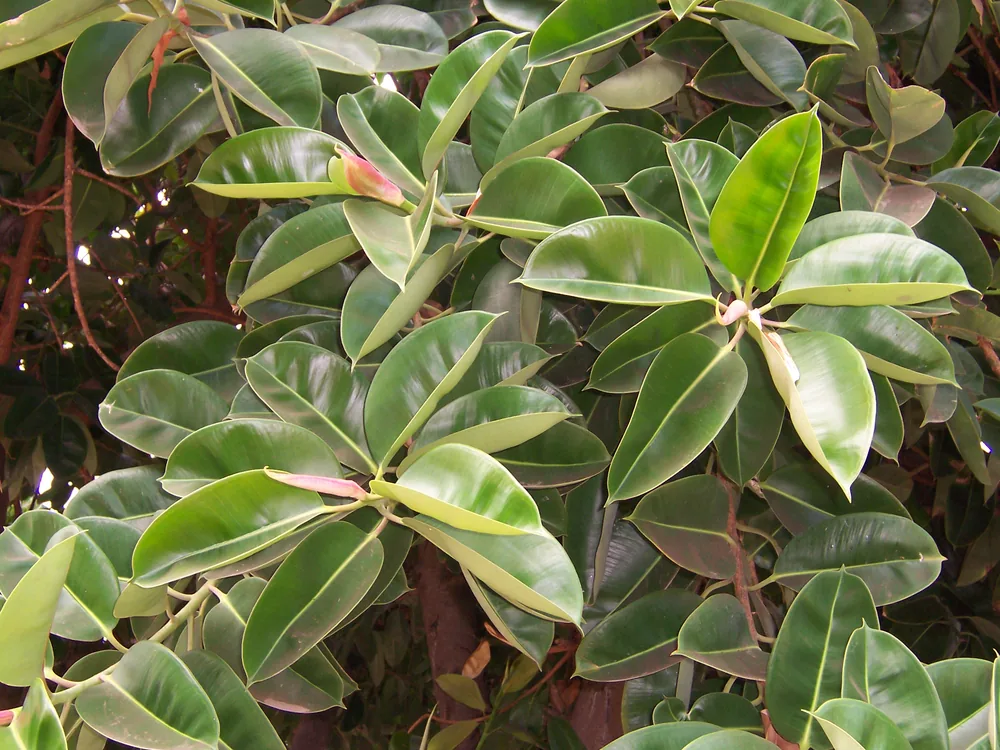
Rubber Plant (Ficus elastica)

Rubber Plant

Ficus elastica
Care level: Easy

Ficus elastica was the original source of commercial natural rubber before Brazilian rubber trees took over the trade, and the milky white latex sap that oozes from a cut leaf or stem is the same substance early rubber production relied on.

I have this plant

Information

Varieties and related species
Ficus elastica 'Tineke'Ficus elastica 'Burgundy'Ficus elastica 'Ruby'

Light

Grows best in bright, indirect light; tolerates some medium light but variegated forms need more brightness.

Water

Water when the top 3-4cm of soil is dry, roughly every 1-2 weeks; reduce in winter.

Humidity

Tolerates average home humidity but benefits from occasional misting.

Soil

Well-draining, general-purpose potting mix.

Temperature

Above 13°C. It dislikes cold draughts and sudden drops in temperature.

Size

Usually kept at 0.6-3m indoors. In the wild it is a large tree.

Growth speed

Fast

Best position

  • east / south-east-facing windowanywhere up to about 2 m from the window
  • north / north-east / north-west-facing windowanywhere up to about 1 m from the window
  • south / west-facing windowabout 1 m from the window or further back

Watch for strong direct sun at south / west windows.

See every window direction Hide window directions
Best positionright by the windowabout 1 mabout 2 mabout 4 m4 m or more
northworks wellworks welltoo darktoo darktoo dark
north-eastworks wellworks welltoo darktoo darktoo dark
eastworks wellworks wellworks welltoo darktoo dark
south-eastworks wellworks wellworks welltoo darktoo dark
southjust aboutworks wellworks welltoo darktoo dark
south-westjust aboutjust aboutworks welltoo darktoo dark
westjust aboutworks wellworks welltoo darktoo dark
north-westworks wellworks welltoo darktoo darktoo dark

works well just about too dark too much direct sun

A rough guide based on window direction and typical daylight through the year. Window size, curtains and whatever stands outside matter just as much.

Toxic to pets

Toxic to cats and dogs if eaten.

Mostly mild mouth and stomach irritation.

If your pet has eaten some, contact your vet.

Source: ASPCA

Did you know?

The milky sap that leaks from a cut or damaged rubber plant leaf is a latex compound that can mildly irritate skin, so it's worth wiping cuttings or pruning wounds with a cloth rather than touching the sap directly.

Care by Season

Spring

Resume feeding monthly and wipe leaves clean as new growth appears.

Summer

Water regularly and provide bright light for best leaf color and growth.

Autumn

Reduce watering frequency as growth slows.

Winter

Water sparingly and keep away from cold drafts; stop fertilizing.

Growing & Maintenance

Soil and pot

General-purpose potting compost with some added perlite, in a pot with drainage holes. Choose a heavy pot: a tall plant becomes top-heavy.

Repotting

Every 2-3 years in spring. For a plant too large to move, replace the top 5cm of compost each spring instead.

Fertilising

A balanced liquid feed once a month in spring and summer. No feeding in winter.

Pruning

Cut the main stem just above a leaf in late spring to limit height and encourage side branches. The milky sap irritates skin, so wear gloves and dab the cut with a damp cloth until it stops.

Propagation

Tip cuttings with two or three leaves in late spring or summer, set in moist compost under a clear bag. Air-layering works better for a tall, bare stem.

Pests & Diseases

Common problems

Lower leaves turning yellow and dropping

Most likely cause: An occasional lower leaf is normal ageing. Several at once usually means overwatering.
What to do: Let the top 3-4cm of compost dry before watering again and water much less in winter.

Sudden leaf drop

Most likely cause: A cold draught, a drop in temperature or a move to a new spot.
What to do: Find it a warm, bright, draught-free place and leave it there. It prefers to stay in one position.

Tall, bare stem with leaves only at the top

Most likely cause: The plant naturally grows upward on a single stem.
What to do: Cut the main stem back just above a leaf in late spring to make it branch.

Dull, dusty leaves

Most likely cause: Dust settling on the large leaf surfaces.
What to do: Wipe the leaves with a damp, soft cloth every few weeks.

Variegated leaves fading to green

Most likely cause: Too little light. Variegated forms need more brightness than plain green ones.
What to do: Move it to brighter, indirect light, shielded from hot afternoon sun.

Pests & Diseases

Scale insects

Signs: Small brown bumps along stems and undersides of leaves.
Treatment: Scrape off and wipe with rubbing alcohol or insecticidal soap.

Spider mites

Signs: Fine webbing and stippled, dull leaves.
Treatment: Rinse leaves and increase humidity; treat with insecticidal soap. Check the undersides of the leaves and the crevices where the leaf stem meets the main stalk.

Root rot

Signs: Yellow, dropping leaves and mushy dark roots from overwatering.
Treatment: Remove from wet soil, trim rotten roots, and repot in fresh, well-draining mix.

FAQ

Why are the lower leaves of my rubber plant yellowing and dropping?

An occasional lower leaf falling is normal, but several at once usually point to overwatering. Let the top few centimetres of compost dry out between waterings. Cold draughts and temperature drops cause leaf loss too.

How do I keep the leaves of my rubber plant glossy?

Wipe them with a damp, soft cloth every few weeks. Dust dulls the leaves and blocks light. Leaf-shine sprays are not needed.

How do I make a rubber plant branch?

Cut the main stem just above a leaf. The plant then sends out side shoots below the cut and becomes bushier. Left unpruned it grows tall and narrow, like a small tree.

How often should I water a rubber plant?

Roughly every 1-2 weeks, when the top 3-4cm of compost is dry. Water regularly in the growing season and much less from autumn to late winter. Avoid overwatering.

Is the rubber plant toxic to cats and dogs?

Yes, the rubber plant is toxic to cats and dogs. Its milky sap is an irritant. Wear gloves when pruning and keep cut stems away from pets.

How big does a rubber plant get indoors?

Indoors it is usually kept between 0.6 and 3m. In the wild it is a tree that can reach 30m. Pruning the top keeps it at the height you want.

You might also like