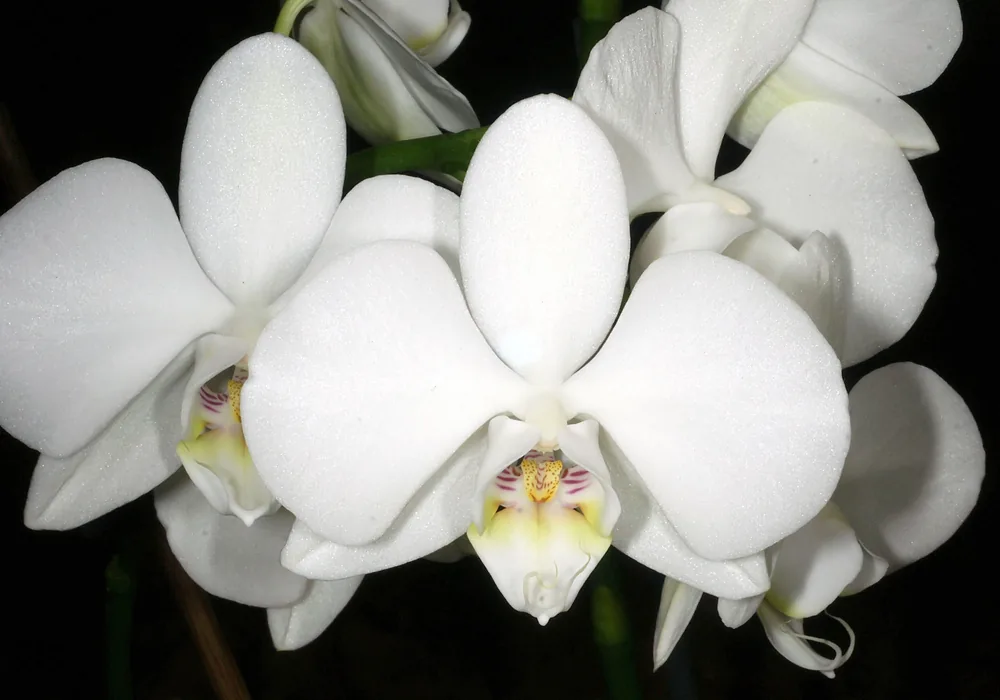
Moth Orchid (Phalaenopsis amabilis)

Moth Orchid

Phalaenopsis amabilis
Care level: Moderate

Phalaenopsis amabilis grows as an epiphyte in Southeast Asian rainforests, clinging to tree bark rather than rooting in soil, which is exactly why the thick, silvery-green roots of a potted Moth Orchid are meant to be exposed to air and light in a chunky bark mix rather than buried in dense potting soil the way most houseplants are.

I have this plant

Information

Varieties and related species
Phalaenopsis SchillerianaPhalaenopsis StuartianaMini Phalaenopsis Hybrids

Light

Bright, indirect light; direct sun burns the leaves, while too little light prevents reblooming.

Water

Water about once a week by soaking roots briefly, then drain fully; never let roots sit in water.

Humidity

Prefers 50-70% humidity to mimic its tropical epiphytic habitat.

Soil

Chunky orchid bark mix, not regular potting soil, for excellent air flow around roots.

Size

Up to 60cm tall in flower, with a spread of 15-60cm.

Best position

  • north / north-east-facing windowanywhere up to about 1 m from the window
  • east-facing windowabout 1 m from the window or further back
  • west-facing windowabout 2 m from the window or further back

Watch for strong direct sun at east / west windows.

See every window direction Hide window directions
Best positionright by the windowabout 1 mabout 2 mabout 4 m4 m or more
northworks wellworks welltoo darktoo darktoo dark
north-eastworks wellworks welltoo darktoo darktoo dark
eastjust aboutworks wellworks welltoo darktoo dark
south-easttoo much direct sunjust aboutjust abouttoo darktoo dark
southtoo much direct suntoo much direct suntoo much direct suntoo darktoo dark
south-westtoo much direct suntoo much direct sunjust abouttoo darktoo dark
westtoo much direct suntoo much direct sunworks welltoo darktoo dark
north-westtoo much direct sunjust abouttoo darktoo darktoo dark

works well just about too dark too much direct sun

A rough guide based on window direction and typical daylight through the year. Window size, curtains and whatever stands outside matter just as much.

Non-toxic to pets

Considered non-toxic to cats and dogs.

Source: ASPCA

Common mistake

Cutting off the flower spike right down to the base as soon as blooms fade is often unnecessary; on a healthy plant, trimming the spike back to just above a node can prompt a secondary flush of flowers from that same spike within a couple of months.

Care by Season

Spring

After flowers fade, resume light feeding every 2 weeks with diluted orchid fertilizer.

Summer

Water and feed regularly during active root and leaf growth; avoid hot direct sun.

Autumn

A slight nighttime temperature drop can help trigger a new flower spike.

Winter

Reduce feeding, keep away from cold drafts and windows, and maintain bright but indirect light.

Growing & Maintenance

Soil and pot

A bark-based orchid mix, never ordinary potting compost. A clear plastic pot suits it, because the roots can photosynthesise and are easy to check.

Repotting

About every two years, after the flowers have faded or as new leaves begin to appear. A plant sold in pure sphagnum moss is better moved into bark, since dried moss is hard to wet again.

Fertilising

A balanced fertiliser at half strength twice a month, or at quarter strength every week.

Pruning

After flowering, cut the spike back to just above a healthy node to encourage a second flush. Cut it off at the base only once it has turned brown and dry.

Support

Tie the flower spike loosely to a thin cane as it grows, so the weight of the flowers does not bend or snap it.

Pests & Diseases

Common problems

No new flower spike

Most likely cause: Too little light, or nights that never cool down.
What to do: Move it to an east-facing windowsill or a well-shaded south or west one. A slight drop in night temperature in autumn helps to set a spike.

Mushy brown or black roots

Most likely cause: Root rot from overwatering or from standing in water.
What to do: Trim the rotten roots, repot in fresh bark and let the pot drain completely after every watering.

Limp, wrinkled leaves

Most likely cause: The plant is not taking up enough water, either from underwatering or because the roots have rotted.
What to do: Check the roots. Firm roots: water more regularly. Rotten roots: trim them and repot.

Scorched patches on the leaves

Most likely cause: Direct sunlight.
What to do: Shade the window or move the plant to bright, indirect light.

Silvery-grey roots

Most likely cause: Normal. Healthy roots are silvery when dry and turn green when wet.
What to do: Nothing to do. Use the colour as a guide to when to water.

Pests & Diseases

Mealybugs

Signs: White cottony fluff at leaf bases and along flower spikes.
Treatment: Dab with an alcohol-soaked swab and repeat weekly. Check the undersides of the leaves and the crevices where the leaf stem meets the main stalk.

Scale insects

Signs: Small brown bumps on leaf undersides and stems.
Treatment: Scrape off and treat with horticultural oil.

Root rot

Signs: Mushy, brown or black roots instead of firm green-silver ones.
Treatment: Trim away rotten roots and repot in fresh, dry orchid bark, then water less frequently.

FAQ

Should I cut off the flower spike of my Moth Orchid after the blooms fall?

Cut it back to just above a healthy node rather than removing it completely. This often produces a second round of flowers from the same spike. Cut it off at the base only if the spike has turned brown and dry.

Why are the roots of my Moth Orchid grey or silvery instead of green?

That is completely normal. Healthy roots look silvery-grey when dry and turn bright green when wet. It is only a problem if the roots also feel mushy or hollow.

How often should I water a Moth Orchid?

About once a week, and more often in the heat of summer. Water in the morning with tepid water, letting it run through the bark, then drain the pot completely. The bark should dry a little between waterings.

How do I get my Moth Orchid to flower again?

Give it more light and slightly cooler nights in autumn. An east-facing windowsill is ideal. Keep feeding regularly at a weak dose while it is growing leaves and roots.

When should I repot a Moth Orchid?

About every two years, once the flowers have faded or when new leaves start to grow. Use fresh bark-based orchid mix, not potting compost.

Is the Moth Orchid safe for cats and dogs?

Yes, the Moth Orchid is not toxic to cats or dogs.

Where should I put a Moth Orchid?

On an east-facing windowsill, where it gets bright light without hot sun. A south or west window also works if it is well shaded.

You might also like