No results. Is a plant missing? Tell uscontact@wikiplant.net
Mother of Thousands
Kalanchoe daigremontiana
Care level: Very easy
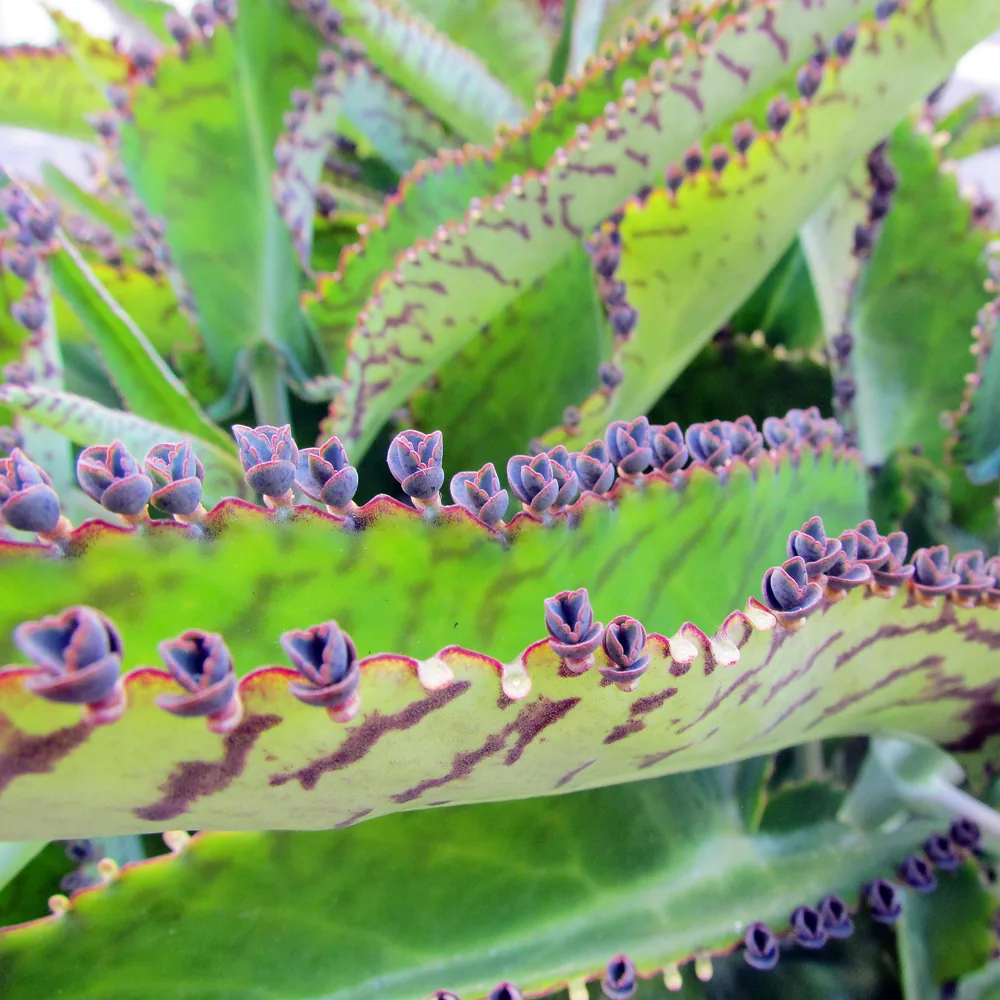
Kalanchoe daigremontiana is famous for a reproductive trick almost no other houseplant pulls off: dozens of perfectly formed miniature plantlets grow directly along the notches of each leaf edge, drop off, and root wherever they land, a strategy that earned it the nickname 'Mexican hat plant' in its native Madagascar.
Kalanchoe x houghtoniiKalanchoe daigremontiana 'Variegata'
Light
Thrives in bright light with some direct sun; leggy growth signals too little light.
Water
Drought-tolerant; water deeply only when soil is fully dry, about every 2-3 weeks.
Humidity
Prefers average to low humidity and dislikes damp, stagnant air.
Soil
Well-draining cactus or succulent mix.
Temperature
18-24°C. Keep it above 10°C; it is not frost-tolerant.
Size
30-90cm tall and 30-60cm wide.
Best position
south-east / south-facing windowanywhere up to about 1 m from the window
east / west-facing windowright by the window
south-west-facing windowabout 1 m from the window or further back
Watch for strong direct sun at south-west windows.
See every window directionHide window directions
Best position
right by the window
about 1 m
about 2 m
about 4 m
4 m or more
north
too dark○
too dark○
too dark○
too dark○
too dark○
north-east
too dark○
too dark○
too dark○
too dark○
too dark○
east
works well✓
too dark○
too dark○
too dark○
too dark○
south-east
works well✓
works well✓
too dark○
too dark○
too dark○
south
works well✓
works well✓
too dark○
too dark○
too dark○
south-west
just about~
works well✓
too dark○
too dark○
too dark○
west
works well✓
too dark○
too dark○
too dark○
too dark○
north-west
too dark○
too dark○
too dark○
too dark○
too dark○
✓works well~just about○too dark☼too much direct sun
A rough guide based on window direction and typical daylight through the year. Window size, curtains and whatever stands outside matter just as much.
!Toxic to pets
Toxic to cats and dogs if eaten.
Can cause vomiting and diarrhoea, and more rarely affects heart rhythm.
If your pet has eaten some, contact your vet.
Source: ASPCA
Safety note
Mother of Thousands contains bufadienolide compounds that are toxic if ingested by cats, dogs, and other pets, and the tiny plantlets that scatter from the leaves make it easy for a curious animal to nibble one without you noticing, keep it well out of reach.
Care by Season
Spring
Resume normal watering as new plantlets begin forming along leaf edges.
Summer
Water when dry and keep in a bright spot; remove excess plantlets to control spread.
Autumn
Taper off watering as growth slows.
Winter
Water sparingly and keep above 10°C, away from cold drafts.
Growing & Maintenance
Soil and pot
A sandy, well-drained cactus or succulent mix in a pot with drainage holes.
Pruning
Pick off surplus plantlets before they fall and root in neighbouring pots. Cut a leggy stem back in spring.
Propagation
From the plantlets that form along the leaf edges. Set them on well-drained mix, ideally in spring, and they root by themselves.
Pests & Diseases
Common problems
Plantlets rooting everywhere
Most likely cause: Normal. Each notch along the leaf edge produces a plantlet that drops and roots.
What to do: Remove the plantlets you do not want and keep the plant apart from other pots.
Tall, leggy growth
Most likely cause: Too little light.
What to do: Give it bright light with some direct sun.
Scorched leaves
Most likely cause: Prolonged or intense afternoon sun.
What to do: Give it morning sun and shade from hot midday and afternoon sun.
Mushy stem and leaves
Most likely cause: Overwatering, which leads to root rot.
What to do: Let the compost dry out completely, trim the rotten roots and repot in dry mix.
The plant dies after flowering
Most likely cause: Normal. It flowers once and then dies.
What to do: Keep a few plantlets to carry it on.
Pests & Diseases
Mealybugs
Signs: White waxy clusters at leaf junctions
Treatment: Wipe off with alcohol-dipped cotton swab and repeat as needed. Check the undersides of the leaves and the crevices where the leaf stem meets the main stalk.
Aphids
Signs: Small clustered insects on new growth and flower stalks
Treatment: Rinse with water and apply insecticidal soap if they persist.
Root rot
Signs: Blackened, mushy base and wilting despite moist soil
Treatment: Remove from soggy soil, trim rotten roots, repot in dry succulent mix and water sparingly.
FAQ
Why are tiny plantlets falling all over my other pots?
This is completely normal, each notch along the leaf edge produces a baby plantlet that detaches and roots on contact with soil. Pinch off unwanted plantlets regularly, or grow the plant somewhere its 'babies' can't spread into other containers.
Is Mother of Thousands dangerous to pets?
Yes, all parts of the plant, including the fallen plantlets, contain cardiac glycosides that are toxic if chewed or eaten by cats and dogs, so it's best kept in a room pets can't access.
How often should I water a Mother of Thousands?
About every 2-3 weeks, deeply, and only when the compost is fully dry. Water sparingly in winter, when it rests.
Does a Mother of Thousands flower?
Rarely as a houseplant. When it does, the plant dies afterwards, leaving its plantlets to take over.
How big does a Mother of Thousands get?
Between 30 and 90cm tall and 30 to 60cm wide. In low light it grows taller and leggier.
How much light does a Mother of Thousands need?
It needs bright light. Some direct sun is fine, but hot midday and afternoon sun scorches the leaves.