No results. Is a plant missing? Tell uscontact@wikiplant.net
Norfolk Island Pine
Araucaria heterophylla
Care level: Moderate
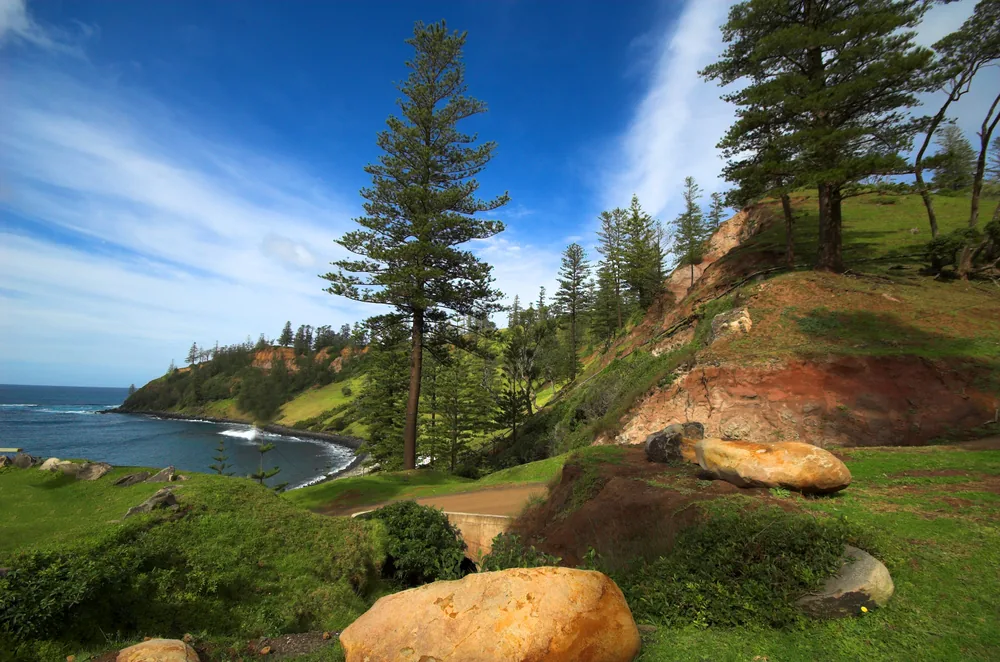
Despite the name and its pine-like silhouette, Araucaria heterophylla isn't a true pine at all but a member of the ancient Araucariaceae family, whose relatives date back to the age of dinosaurs. In the wild it grows only on tiny, isolated Norfolk Island in the South Pacific, which is why it's a subtropical plant sold everywhere as a "living Christmas tree" despite having zero frost tolerance.
Bright indirect light with a little gentle morning sun; rotate regularly since it grows toward the light source.
Water
Keep soil lightly moist, watering when the top few centimeters feel dry, roughly every 1-2 weeks.
Humidity
Prefers higher humidity than typical living rooms; mist or use a pebble tray, especially near heaters.
Soil
Well-draining, slightly acidic potting mix with good organic content.
Temperature
A bright, cool room at 13-18°C suits it best. It does not survive frost.
Size
About 2.7m tall indoors, with time.
Best position
east / south-east-facing windowanywhere up to about 2 m from the window
north / north-east / north-west-facing windowanywhere up to about 1 m from the window
south / west-facing windowabout 1 m from the window or further back
Watch for strong direct sun at south / west windows.
See every window directionHide window directions
Best position
right by the window
about 1 m
about 2 m
about 4 m
4 m or more
north
works well✓
works well✓
too dark○
too dark○
too dark○
north-east
works well✓
works well✓
too dark○
too dark○
too dark○
east
works well✓
works well✓
works well✓
too dark○
too dark○
south-east
works well✓
works well✓
works well✓
too dark○
too dark○
south
just about~
works well✓
works well✓
too dark○
too dark○
south-west
just about~
just about~
works well✓
too dark○
too dark○
west
just about~
works well✓
works well✓
too dark○
too dark○
north-west
works well✓
works well✓
too dark○
too dark○
too dark○
✓works well~just about○too dark☼too much direct sun
A rough guide based on window direction and typical daylight through the year. Window size, curtains and whatever stands outside matter just as much.
✓Non-toxic to pets
Considered non-toxic to cats and dogs.
Source: ASPCA
Common mistake
Because it looks like a hardy outdoor pine, people often plant it outside in temperate climates or leave it in a cold spot after the holidays; a single hard frost can kill it, since it's genuinely a tender houseplant that needs warmth year-round.
Care by Season
Spring
Resume light feeding and regular watering as growth restarts.
Summer
Keep humidity up and water consistently; avoid letting the pot dry out fully.
Autumn
Reduce feeding and slightly ease off watering as growth slows.
Winter
Keep away from heating vents and cold drafts, which cause needle drop; maintain humidity and steady, moderate watering.
Growing & Maintenance
Soil and pot
A fertile, porous, slightly acidic potting mix with sand and peat, in a pot with drainage holes.
Fertilising
A dilute liquid feed every week or two from spring to autumn.
Pruning
Do not cut the top: the tree does not replace its leader and loses its shape. Only remove dead lower branches.
Propagation
From seed.
Pests & Diseases
Common problems
Lower branches turning brown and dropping
Most likely cause: Dry air near heating, soggy compost or several years in very low light.
What to do: Raise the humidity, let the compost dry slightly between waterings and give the tree more light. Lost branches do not grow back.
Needles dropping
Most likely cause: A heating vent or a cold draught.
What to do: Move it away from both.
Leaning to one side
Most likely cause: It grows toward the light.
What to do: Turn the pot regularly.
Yellowish needles
Most likely cause: Too much hot sun.
What to do: Give it light shade in the afternoon.
Soft, drooping growth
Most likely cause: Too little light.
What to do: Move it to the brightest spot you have.
Pests & Diseases
Spider mites
Signs: Fine webbing between branches and dry, dropping needles, worsened by heater-dried air
Treatment: Raise humidity, rinse foliage, and apply insecticidal soap if needed. Check the undersides of the leaves and the crevices where the leaf stem meets the main stalk.
Scale insects
Signs: Small brown bumps on stems and branches with sticky residue
Treatment: Scrape off gently and treat with horticultural oil.
Root rot
Signs: Browning, dropping lower branches with soggy soil
Treatment: Let soil dry out more between waterings and improve drainage; trim affected roots if repotting.
FAQ
Can I plant my Norfolk Island Pine outside after Christmas?
Only if you live somewhere frost-free year-round; despite its pine-tree look, it's tropical/subtropical and will not survive freezing temperatures, so in most climates it needs to stay indoors as a permanent houseplant.
Why are the lower branches on my Norfolk Island Pine turning brown and dropping?
This is most often caused by low humidity, especially near heating vents, or by soggy soil from overwatering; raise humidity, keep it away from drafts and heaters, and let the top of the soil dry slightly between waterings.
Is the Norfolk Island Pine safe for cats and dogs?
Yes, the Norfolk Island Pine is not toxic to cats or dogs.
How often should I water a Norfolk Island Pine?
Roughly every 1-2 weeks, when the top few centimetres of compost feel dry. Water regularly from spring to autumn, without making the compost soggy, and sparingly in winter.
How big does a Norfolk Island Pine get indoors?
About 2.7m with time. Outdoors in a frost-free climate it is a tree of 18m and more.
Can I prune a Norfolk Island Pine?
Only to remove dead lower branches. Never cut the top, because the tree does not grow a new leader and its tiered shape is lost for good.