No results. Is a plant missing? Tell uscontact@wikiplant.net
Norway spruce
Picea abies
Care level: Easy
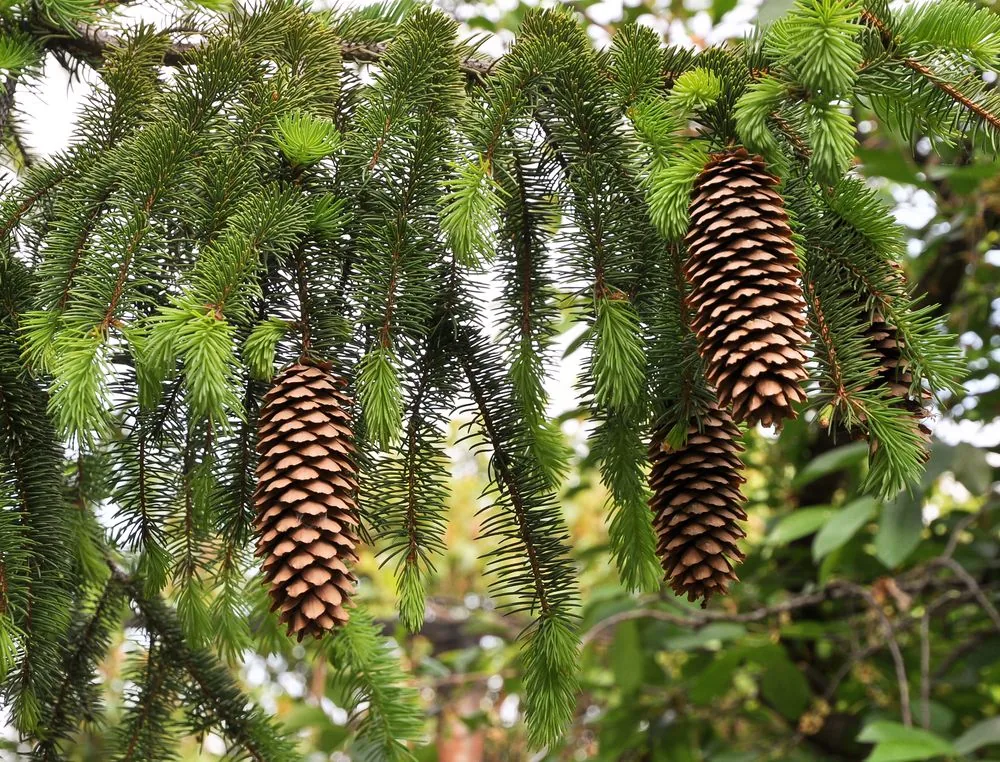
The Norway spruce is the classic European Christmas tree and one of the continent's main forest conifers. It is fast and dense, a narrow cone when young that broadens with age, with drooping branchlets covered in short, stiff, glossy dark green needles. Mature trees carry long, cylindrical, light brown cones that hang from the upper branches and fall whole. It likes cool, moist climates and deep, moist, acid to neutral soil, and it suffers in heat and drought. For gardens, the many dwarf forms are usually a better fit than the forest tree.
As a precaution, keep it out of reach of children and pets.
Did you know?
Spruce or fir? Spruce needles are stiff and sharp, sit on small woody pegs and can be rolled between finger and thumb because they are four-sided. Spruce cones hang down and fall whole. Fir needles are flat and soft, and fir cones stand upright and break up on the tree.
Care by Season
Spring
Soft, bright green new shoots open at the branch tips.
Summer
Growth hardens. Water in dry spells and watch for mites in hot weather.
Autumn
Cones ripen and fall. Planting time begins.
Winter
Dormant and fully hardy. Plant young trees and potted Christmas trees after hardening off.
Growing & Maintenance
Planting
Plant young trees between autumn and spring in moist, well-drained soil in sun, well away from buildings and drains. Water and mulch for the first few years.
Pruning
No pruning is needed. Remove dead lower branches at the trunk and never cut back into bare wood.
Propagation
By seed sown in spring. Dwarf and named forms are grown from semi-hardwood cuttings or grafted.
Pests & Diseases
Common problems
Inner needles brown and drop in spring
Most likely cause: Green spruce aphid after a mild winter.
What to do: Water and wait; new growth covers the damage.
Needles bronze and fall in summer
Most likely cause: Spider mite, heat and drought.
What to do: Water deeply and hose the foliage of small trees.
A tall tree leans or falls
Most likely cause: Shallow roots in wet soil and wind.
What to do: Do not plant the species in exposed gardens; choose a dwarf form.
Bare lower branches
Most likely cause: Shade from neighbouring trees or its own crown.
What to do: They will not regrow; remove them cleanly.
A potted Christmas tree browns after planting
Most likely cause: Too long in a warm room, or a rootball that dried out.
What to do: Limit its time indoors, water well and harden off before planting.
Pests & Diseases
Green spruce aphid
Signs: Older needles mottled yellow, then brown, falling in spring after a mild winter; small green aphids with red eyes under the needles.
Treatment: No treatment is practical on a large tree. Keep it watered; new growth is not attacked and fills in.
Spruce gall adelgid
Signs: Green, pineapple-shaped swellings at the base of new shoots that turn brown and woody.
Treatment: Cut off the galls on a small tree while they are green. The tree is not seriously harmed.
Conifer red spider mite
Signs: Needles turn dull, mottled yellow-bronze and drop in hot, dry summers, with fine webbing.
Treatment: Water the tree in drought and hose down small or dwarf plants. Check the undersides of the leaves and the crevices where the leaf stem meets the main stalk.
Honey fungus
Signs: The tree declines and dies, with white fungal sheets under the bark at the base and resin oozing from the trunk.
Treatment: Remove the tree with as much root as possible.
FAQ
Can I plant my Christmas tree in the garden?
Only if it was grown in its pot or sold with an intact rootball. Keep it indoors for as short a time as possible, in a cool room and well watered, then harden it off in a sheltered spot outside before planting. Cut trees have no roots and cannot be planted.
Why does a Norway spruce drop its needles so fast indoors?
It holds its needles less well than firs once cut, especially in warm, dry rooms. Buy it late, saw a slice off the base, stand it in water and keep it away from radiators.
How big does it get?
The species becomes a forest tree of 30m or more with a spread of 8m or more, and it grows fast. In a garden choose a dwarf form unless you have a great deal of room.
Can I prune it or cut the top off?
No pruning is needed, and topping spoils the tree: it responds with several competing leaders. Like most conifers it does not regrow from bare wood. Light trimming of the current year's green shoots is possible.
Why are the needles turning brown from the inside?
Often green spruce aphid, which feeds in mild winters and causes older needles to mottle yellow, brown and drop in spring. Drought and waterlogging give similar browning. New growth usually covers the gaps over a few years.
Does it suit a dry or windy garden?
Not well. It roots shallowly, so tall trees blow over on exposed, wet sites and suffer quickly in long droughts and heat.