No results. Is a plant missing? Tell uscontact@wikiplant.net
Ornamental allium
Allium giganteum
Care level: Easy
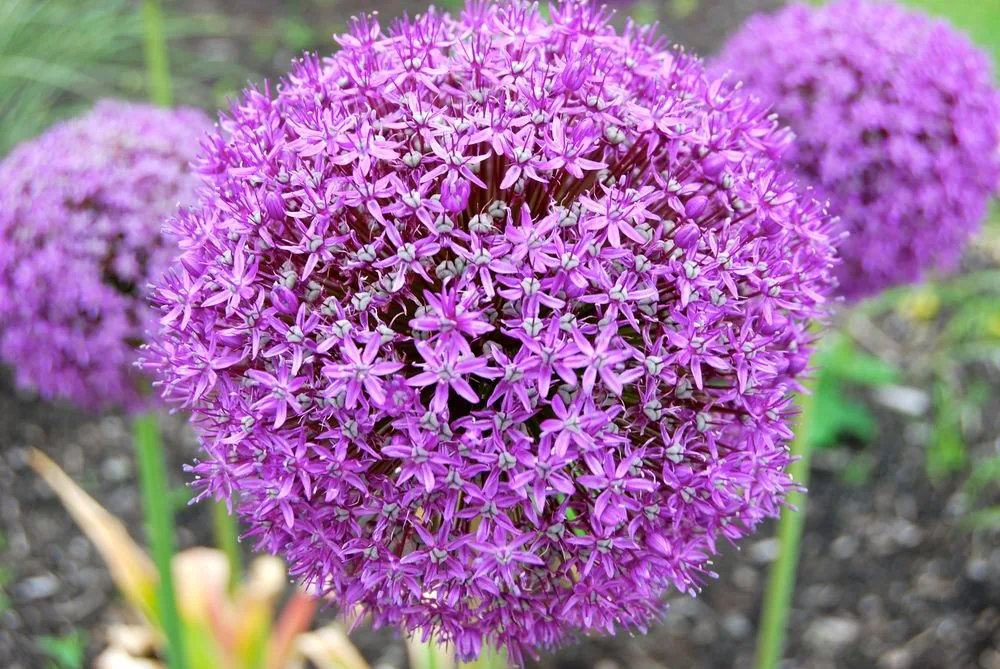
The giant allium is the tallest of the ornamental onions: a bulb that sends a bare, straight stem up to 2m high, topped in early summer by a dense lilac-purple globe about 10cm across, made of hundreds of tiny star-shaped flowers. The strap-shaped leaves grow first and are already dying back by the time the flowers open. It wants full sun and soil that drains well, and the dried seed heads stay decorative long after the colour has gone.
Like onion and garlic, it can damage red blood cells and cause anaemia, along with vomiting and diarrhoea.
If your pet has eaten some, contact your vet.
Source: NC State Extension, Pet Poison Helpline
Signature feature
The leaves wither just as the flowers open, and that is normal. Plant alliums among lower perennials or grasses that hide the yellowing foliage, and the flower globes will seem to float above them.
Care by Season
Spring
Leaves appear, then the flower stems rise. Water in a dry spell.
Summer
Flowering in early summer, as the leaves fade. Leave the seed heads to dry on the stems.
Autumn
Planting time for new bulbs. Lift and separate offsets from crowded clumps.
Winter
The bulbs are dormant. Keep pots from standing in water.
Growing & Maintenance
Planting
Plant bulbs in autumn about 20cm deep, in full sun and fertile, well-drained soil, or in a large pot where the garden soil is heavy.
Pruning
None, other than removing old flower stems and dead leaves once they have dried.
Propagation
By lifting the bulbs after flowering and detaching the offsets, or by seed sown when ripe.
Pests & Diseases
Common problems
Leaves yellowing at flowering time
Most likely cause: Normal for this plant.
What to do: Hide the foliage with neighbouring plants; do not cut it while green.
Bulbs that rotted over winter
Most likely cause: Soil that stays wet.
What to do: Plant in well-drained soil or in pots.
Fewer or smaller flowers each year
Most likely cause: Too much shade, or crowded bulbs.
What to do: Move to full sun and divide clumps after flowering.
Stems leaning or snapped
Most likely cause: Wind, or bulbs planted too shallowly.
What to do: Plant deep and give shelter.
No flower from a new bulb
Most likely cause: A small or dried-out bulb.
What to do: Buy large, firm bulbs and plant them promptly in autumn.
Pests & Diseases
Allium leaf miner
Signs: Rows of tiny white dots on the leaves, followed by twisted foliage with small brown pupae inside.
Treatment: Remove and destroy affected leaves. Do not compost them.
Onion white rot
Signs: Leaves yellow and wilt early, and the bulb base is covered in white, fluffy mould with tiny black specks.
Treatment: Lift and destroy affected bulbs with the soil around them, and grow no alliums in that spot for many years.
Onion downy mildew
Signs: Pale patches on the leaves that turn grey and fuzzy in damp weather.
Treatment: Remove affected leaves and give the plants more space and air.
FAQ
When and how deep do I plant allium bulbs?
In autumn, in full sun and well-drained soil. Large bulbs like these go deep, about 20cm, which also helps to anchor the tall stems. In heavy clay that lies wet in winter, grow them in large pots instead.
Why are the leaves yellow when it flowers?
That is how this plant grows. The leaves do their work in spring and die down before or during flowering. Do not cut them off while they are still green.
Are ornamental alliums toxic to cats and dogs?
Yes. Like onions, garlic and chives, ornamental alliums can damage a pet's red blood cells and cause anaemia, with vomiting and diarrhoea. All parts are affected, the bulbs included, so store bulbs out of reach.
Do alliums come back every year?
In well-drained soil in sun, yes. Bulbs that sit wet over winter rot, and bulbs in shade or poor soil flower less each year.
Should I cut off the flower heads after flowering?
Only if you want to. The seed heads dry on the stem and look good for months, and they are popular in dried arrangements. Remove the old stems and leaves once they are fully dry.
Do the tall stems need staking?
Usually not, as the stems are stiff. In a windy garden, plant them among other plants or beside a wall for shelter.