No results. Is a plant missing? Tell uscontact@wikiplant.net
Panda Plant
Kalanchoe tomentosa
Care level: Easy
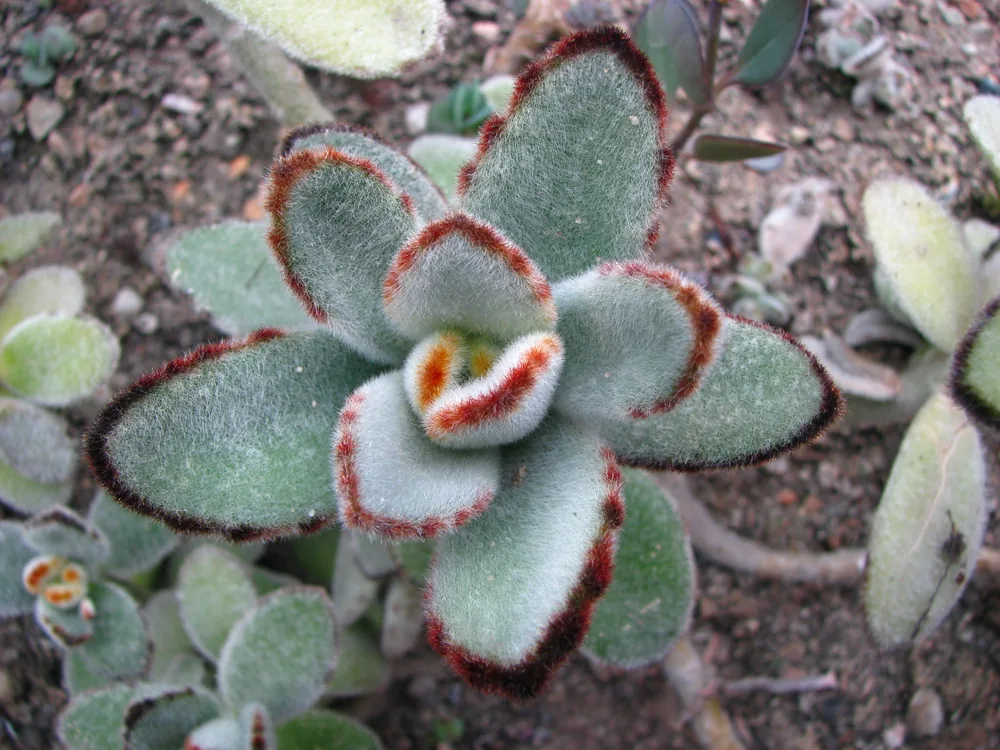
Native to dry, rocky slopes in Madagascar, Kalanchoe tomentosa is covered in a dense coat of silvery fuzz that reduces water loss and reflects intense sun, the same adaptation that gives it a soft, velvety look and its panda-inspired common name from the chocolate-brown markings along each leaf edge.
Needs bright light with some direct sun; a south or west-facing window keeps it compact and well-colored.
Water
Let soil dry out completely between waterings, roughly every 2-3 weeks; avoid wetting the fuzzy leaves as water can sit and cause spotting.
Humidity
Prefers low humidity and good airflow, typical of average dry rooms.
Soil
Fast-draining succulent or cactus mix.
Temperature
16-24°C. Keep it above 10°C; it is not cold-hardy.
Size
30-90cm tall and 60-90cm wide with age.
Growth speed
Slow
Best position
south-east / south / south-west-facing windowanywhere up to about 1 m from the window
east / west-facing windowright by the window
See every window directionHide window directions
Best position
right by the window
about 1 m
about 2 m
about 4 m
4 m or more
north
too dark○
too dark○
too dark○
too dark○
too dark○
north-east
too dark○
too dark○
too dark○
too dark○
too dark○
east
works well✓
too dark○
too dark○
too dark○
too dark○
south-east
works well✓
works well✓
too dark○
too dark○
too dark○
south
works well✓
works well✓
too dark○
too dark○
too dark○
south-west
works well✓
works well✓
too dark○
too dark○
too dark○
west
works well✓
too dark○
too dark○
too dark○
too dark○
north-west
too dark○
too dark○
too dark○
too dark○
too dark○
✓works well~just about○too dark☼too much direct sun
A rough guide based on window direction and typical daylight through the year. Window size, curtains and whatever stands outside matter just as much.
!Toxic to pets
Toxic to cats and dogs if eaten.
Can cause vomiting and diarrhoea, and more rarely affects heart rhythm.
If your pet has eaten some, contact your vet.
Source: ASPCA
Propagation tip
A single healthy leaf, twisted off cleanly at the base and left to callous for a couple of days before resting on dry succulent soil, will often root and sprout a tiny new plantlet at its base within a few weeks.
Care by Season
Spring
Resume regular watering as growth picks up and give as much bright light as possible.
Summer
Water when fully dry and protect from intense midday sun through glass, which can scorch leaves.
Autumn
Reduce watering frequency as growth slows going into cooler months.
Winter
Water sparingly, keep it warm and bright, and avoid cold windowsills below about 10°C.
Growing & Maintenance
Soil and pot
A fast-draining cactus or succulent mix in a pot with drainage holes.
Pruning
Cut stretched stems back in spring to keep the plant compact.
Propagation
From leaf cuttings or offsets. Let a leaf dry for a couple of days and rest it on dry mix; it roots more slowly than most succulents.
Pests & Diseases
Common problems
Wet-looking spots or mushy patches on the leaves
Most likely cause: Water trapped in the fuzzy leaves.
What to do: Water the compost only, never the leaves, and do not mist.
Tall, stretched growth
Most likely cause: Too little light.
What to do: Move it to a south- or west-facing window with some direct sun.
Yellow or mushy leaves and stems
Most likely cause: Overwatering, which leads to root rot.
What to do: Let the compost dry out completely, trim the rotten roots and repot in fresh mix.
Shrivelled leaves
Most likely cause: Underwatering.
What to do: Water thoroughly, then let the compost dry out again.
Scorched leaves
Most likely cause: Hot, full sun, especially through glass at midday.
What to do: Give it bright light with shade from the hottest sun.
Pests & Diseases
Mealybugs
Signs: White cottony fuzz tucked between leaf clusters
Treatment: Dab affected spots with a rubbing-alcohol cotton swab and repeat weekly. Check the undersides of the leaves and the crevices where the leaf stem meets the main stalk.
Root rot
Signs: Soft, discolored base and leaves falling off from overwatering
Treatment: Remove from wet soil, trim rotten roots, and repot in dry succulent mix.
Powdery mildew
Signs: Whitish coating on leaf surfaces, worsened by moisture on foliage
Treatment: Keep water off the leaves and improve air circulation around the plant.
FAQ
Why do the leaf edges on my Panda Plant look wet or spotted?
Fuzzy Kalanchoe leaves trap water that lands on them, so overhead watering or misting often leaves dark, mushy-looking spots; water at the soil level only and keep the foliage dry.
Why is my Panda Plant getting tall and stretched out?
This is classic etiolation from too little light; move it to a brighter spot with some direct sun, since low light causes the stems to stretch and space out with smaller, paler leaves.
Is the Panda Plant toxic to cats and dogs?
Yes, the Panda Plant is toxic to cats and dogs, and it can affect the heart. Keep it out of reach of pets and children.
How often should I water a Panda Plant?
Roughly every 2-3 weeks, once the compost has dried out completely. Water the compost, not the fuzzy leaves, and water sparingly in winter.
How do I propagate a Panda Plant?
From a leaf cutting or an offset. Twist off a healthy leaf, let it dry for a couple of days and rest it on dry succulent mix. Be patient: it roots slowly.
Does a Panda Plant flower?
Rarely indoors. It is grown for its felted, silver-grey leaves with brown tips.