No results. Is a plant missing? Tell uscontact@wikiplant.net
Trailing Jade Peperomia
Peperomia rotundifolia
Care level: Easy
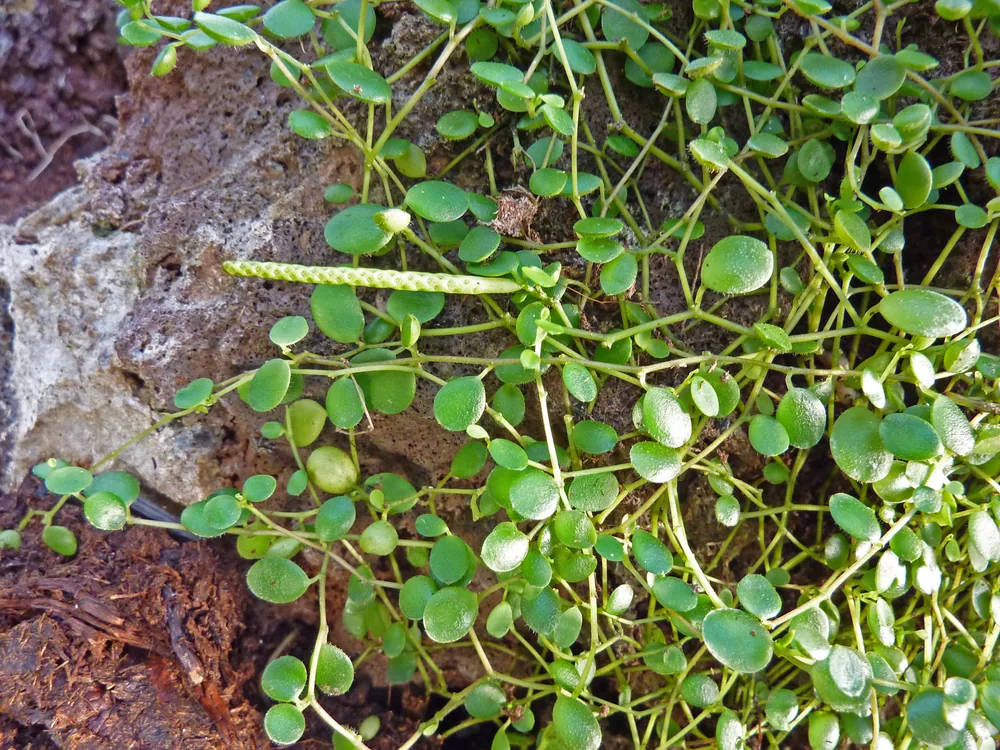
In its native South and Central American rainforests, Peperomia rotundifolia grows as an epiphyte, draping its thread-thin stems and tiny coin-shaped leaves over tree bark and mossy branches rather than rooting in soil, which is why it thrives in shallow, chunky, fast-draining mixes rather than dense potting soil.
Bright, indirect light suits it best; too little light causes sparse, stretched stems.
Water
Allow soil to dry out between waterings, about every 1-2 weeks, as it stores water in its succulent leaves.
Humidity
Appreciates moderate humidity but tolerates average indoor air.
Soil
Well-draining, light potting mix with added perlite.
Size
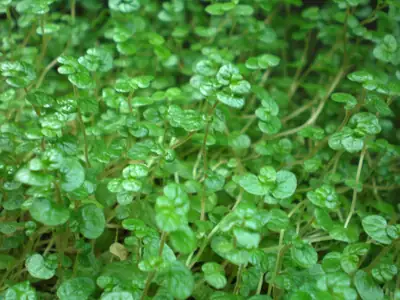
Trailing stems up to about 30cm long.
Growth speed
Slow
Best position
east / south-east-facing windowanywhere up to about 2 m from the window
north / north-east / north-west-facing windowanywhere up to about 1 m from the window
south / west-facing windowabout 1 m from the window or further back
Watch for strong direct sun at south / west windows.
See every window directionHide window directions
Best position
right by the window
about 1 m
about 2 m
about 4 m
4 m or more
north
works well✓
works well✓
too dark○
too dark○
too dark○
north-east
works well✓
works well✓
too dark○
too dark○
too dark○
east
works well✓
works well✓
works well✓
too dark○
too dark○
south-east
works well✓
works well✓
works well✓
too dark○
too dark○
south
just about~
works well✓
works well✓
too dark○
too dark○
south-west
just about~
just about~
works well✓
too dark○
too dark○
west
just about~
works well✓
works well✓
too dark○
too dark○
north-west
works well✓
works well✓
too dark○
too dark○
too dark○
✓works well~just about○too dark☼too much direct sun
A rough guide based on window direction and typical daylight through the year. Window size, curtains and whatever stands outside matter just as much.
?Pet safety not confirmed
As a precaution, keep it out of reach of children and pets.
Did you know?
Those small, round, slightly fleshy leaves are actually water-storage organs, similar in function to a succulent's, an adaptation that lets this epiphytic Peperomia survive the drier spells between rains high up in the rainforest canopy.
Care by Season
Spring
Resume regular watering as new trailing stems begin to grow.
Summer
Water when dry and keep in bright, indirect light to avoid leaf drop.
Autumn
Reduce watering frequency as growth slows.
Winter
Water sparingly, letting soil dry more between waterings, and avoid cold drafts.
Growing & Maintenance
Soil and pot
A light, well-drained, slightly acidic potting mix with added perlite, in a shallow pot or hanging basket.
Pruning
Trim stems that grow too long. Cutting just above a leaf makes them branch.
Propagation
From stem cuttings laid on moist mix.
Pests & Diseases
Common problems
Curling leaves
Most likely cause: Low humidity or dry compost.
What to do: Water when the compost has dried and stand the pot on a pebble tray.
Yellow leaves
Most likely cause: Overwatering.
What to do: Let the compost dry out between waterings and make sure the pot drains.
Sparse, stretched stems
Most likely cause: Too little light.
What to do: Move it to bright, indirect light.
Leaves dropping
Most likely cause: A cold draught, or too little light.
What to do: Move it to a brighter, draught-free spot.
Scorched leaves
Most likely cause: Direct sun.
What to do: Give it bright light without direct sun.
Pests & Diseases
Mealybugs
Signs: Small white cottony clumps at leaf and stem junctions
Treatment: Dab with rubbing-alcohol soaked cotton swab and repeat weekly. Check the undersides of the leaves and the crevices where the leaf stem meets the main stalk.
Spider mites
Signs: Fine webbing and dull, speckled leaves in dry air
Treatment: Increase humidity and treat with insecticidal soap if needed. Check the undersides of the leaves and the crevices where the leaf stem meets the main stalk.
Root rot
Signs: Mushy, translucent leaves and soft stems from overwatering
Treatment: Remove from wet soil, trim affected roots, and repot in dry, well-draining mix.
FAQ
Why does my Trailing Jade Peperomia have such thin, wiry stems?
That's completely normal for this species, in the wild it grows as an epiphyte draping over branches rather than a plant that supports itself from the ground, so thin, trailing stems are its natural habit rather than a sign of poor health.
Should I water it like a succulent?
Close to it, the round, slightly plump leaves store water similarly to a succulent's, so letting the soil dry out between waterings suits it far better than keeping it constantly moist, which quickly leads to root and stem rot.
How much light does a Trailing Jade Peperomia need?
It needs bright, indirect light. Direct sun scorches the small leaves, and too little light makes the stems sparse.
How do I propagate a Trailing Jade Peperomia?
From stem cuttings. Lay a length of stem on moist mix and keep it humid until it roots.
How long do the stems of a Trailing Jade Peperomia get?
Up to about 30cm. It grows slowly and stays a small, trailing plant, well suited to a shelf or a small hanging pot.
Does a Trailing Jade Peperomia flower?
Rarely indoors. When it does, the flowers are short, yellowish spikes.