No results. Is a plant missing? Tell uscontact@wikiplant.net
Petunia
Petunia × atkinsiana
Care level: Easy
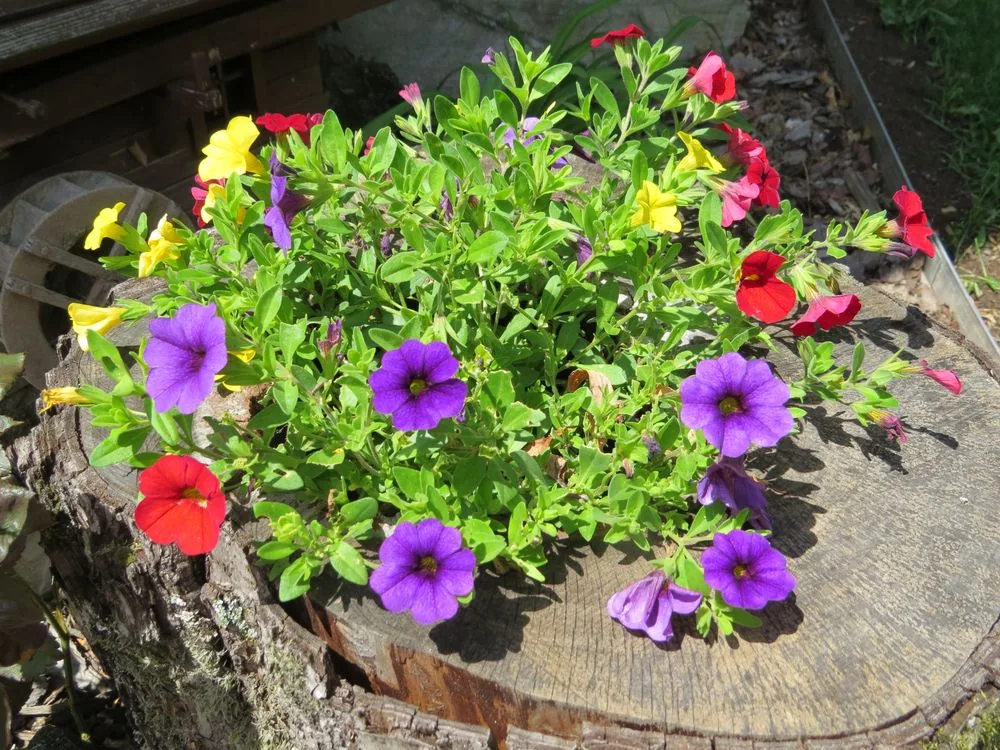
Petunia is the trumpet-flowered South American hybrid that fills European hanging baskets, window boxes and bedding displays from late spring to the first frost. The garden petunias sold today are complex hybrids grouped as Petunia × atkinsiana, ranging from compact, mounding bedding types to trailing or spreading forms bred for baskets, in almost every colour except true blue and orange. It is a tender perennial grown everywhere as a summer annual, flowering continuously and heavily for as long as it is deadheaded and fed.
Full sun. At least 5–6 hours of direct sun a day for strong flowering; in shade it grows soft and flowers poorly.
Water
Water when the surface of the compost dries, more often in a hanging basket than a border, since baskets dry out fast in summer heat. Avoid letting it wilt repeatedly, which checks flowering.
Humidity
Average outdoor humidity is fine. Good airflow matters more than ambient moisture, since still, humid conditions encourage grey mould on the soft stems and flowers.
Soil
A free-draining, fertile compost. Petunias in containers exhaust the nutrients in ordinary compost within weeks, which is why regular feeding matters more than soil type once they are established.
Temperature
Not frost-hardy. Plant out only after the last frost.
Size
15-45cm tall, spreading 30-90cm depending on the type.
Growth speed
Fast
✓Non-toxic to pets
Considered non-toxic to cats and dogs.
Source: ASPCA
Signature feature
Modern spreading and trailing petunias are mostly self-cleaning, meaning spent flowers drop or shrivel on their own without the deadheading older bedding petunias need. The trade-off is that they are heavy feeders: a basket or trough in full flower through summer needs feeding roughly weekly, and skipping it for even a couple of weeks shows as fewer, smaller blooms within days.
Care by Season
Spring
Plant out only after the last frost, since young plants have no frost tolerance at all. Pinch the tips of young plants once to encourage bushier growth before the first flowers open.
Summer
Peak flowering. Feed weekly with a high-potash liquid feed and water regularly, especially in containers; a midsummer trim revives a plant that has gone leggy.
Autumn
Flowering continues until the first frost in a mild autumn, then stops abruptly. The plant is almost always discarded rather than overwintered, since few gardeners have the bright, frost-free space it would need.
Winter
Not winter-hardy; a garden petunia left outside in a European winter will not survive the first hard frost.
Growing & Maintenance
Planting
Plant out after the last frost, in full sun and light, well-drained soil or compost. Pinch young plants back before planting to keep them bushy.
Fertilising
A high-potash liquid feed every week for plants in containers, which exhaust their compost quickly.
Pruning
Deadhead older varieties and pinch back leggy stems. In midsummer, cut tired trailing stems back by a third to a half to bring on a new flush.
Propagation
From seed sown under glass between January and March at 22-24°C. Most gardeners buy young plants instead.
Pests & Diseases
Common problems
Leggy and bare in the middle by late summer
Most likely cause: Normal mid-season decline.
What to do: Cut the stems back by a third to a half, then water and feed. New flowers follow within a few weeks.
No flowers after a week of rain
Most likely cause: Rain damages the thin petals and waterlogs the compost.
What to do: Remove the spoiled flowers and let the compost drain. Flowering resumes in dry weather.
Few flowers
Most likely cause: Too little sun.
What to do: Give the plants at least five to six hours of direct sun a day.
Wilting in a hanging basket
Most likely cause: The compost has dried out.
What to do: Water thoroughly and check baskets daily in hot weather.
Pale leaves and slowing growth in a container
Most likely cause: The compost has run out of nutrients.
What to do: Start feeding weekly with a high-potash liquid feed.
Plants collapsing at the base
Most likely cause: Root or stem rot in wet, poorly drained compost.
What to do: Remove affected plants and replant in fresh, free-draining compost.
Pests & Diseases
Aphids
Signs: Clusters of small green insects on soft new growth and flower buds, often with sticky honeydew and sooty mould following.
Treatment: A strong jet of water or an insecticidal soap spray controls light infestations. Check plants before buying, since aphids spread quickly between crowded bedding trays.
Grey mould (Botrytis)
Signs: Fuzzy grey mould on spent flowers and soft stems, worst in damp, still, crowded conditions.
Treatment: Remove affected flowers and any decaying plant material promptly, and space plants to improve air movement. Avoid overhead watering late in the day, which leaves the foliage wet overnight.
Slugs and snails
Signs: Ragged holes in leaves and flowers and silvery slime trails
Treatment: Pick them off after dark and protect young plants with barriers or traps.
FAQ
My petunias looked full in June but have gone leggy and bare in the middle by August. What happened?
This is normal mid-season decline rather than a problem, and it responds well to a hard trim. Cutting the trailing stems back by a third to a half in midsummer, even though it removes open flowers, forces fresh branching from lower down and the plant is back in full flower within two to three weeks, usually fuller than before.
Why do my petunias stop flowering after a week of rain?
Heavy rain physically damages the thin petals and can waterlog the compost in a container, both of which slow flowering independently of light or feed. Older, non-weather-resistant varieties are more affected than modern ones bred for rain tolerance; deadheading any rain-damaged flowers and letting the compost dry a little before the next watering usually brings flowering back within days of the weather clearing.
Are petunias safe for cats and dogs?
Yes, petunias are not toxic to cats or dogs.
Do petunias need deadheading?
Older bedding types do, since removing faded flowers brings on more buds. Modern spreading and trailing petunias largely clean themselves.
Do petunias survive the winter?
Not outdoors. They are tender perennials grown as annuals and die at the first hard frost, though a plant can be overwintered indoors in a bright spot away from heated air.
How often should I feed and water petunias?
Water when the surface of the compost dries, and feed container plants every week. Baskets dry out and run out of nutrients much faster than a border.