No results. Is a plant missing? Tell uscontact@wikiplant.net
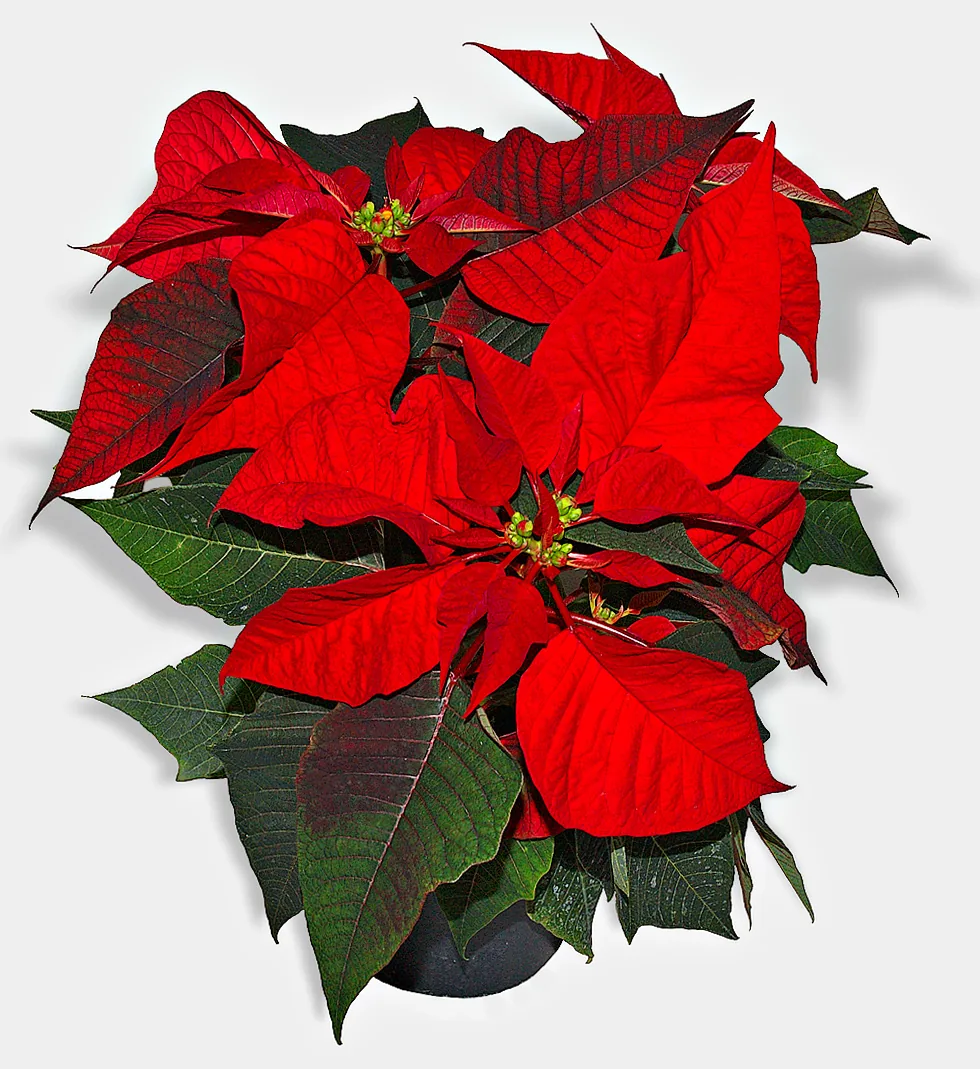
Poinsettia
Euphorbia pulcherrima
Care level: Moderate
What look like Poinsettia's flowers are actually colored bracts, modified leaves surrounding the tiny true flowers clustered at the center; the plant is native to Mexico, where it grows as a leggy shrub up to several meters tall, and it only became a Christmas symbol after American ambassador Joel Roberts Poinsett introduced it to the United States in the 1820s.
Bright indirect light; a few hours of gentle morning sun is beneficial.
Water
Water when the top of the soil feels dry, about once a week, and never let it sit in water.
Humidity
Prefers moderate humidity; keep away from dry heating vents.
Soil
Rich, well-draining potting mix.
Temperature
18-21°C, away from heating vents, fireplaces and cold draughts.
Size
A potted plant rarely exceeds 60-90cm.
Best position
east / south-east-facing windowanywhere up to about 2 m from the window
north / north-east / north-west-facing windowanywhere up to about 1 m from the window
south / west-facing windowabout 1 m from the window or further back
Watch for strong direct sun at south / west windows.
See every window directionHide window directions
Best position
right by the window
about 1 m
about 2 m
about 4 m
4 m or more
north
works well✓
works well✓
too dark○
too dark○
too dark○
north-east
works well✓
works well✓
too dark○
too dark○
too dark○
east
works well✓
works well✓
works well✓
too dark○
too dark○
south-east
works well✓
works well✓
works well✓
too dark○
too dark○
south
just about~
works well✓
works well✓
too dark○
too dark○
south-west
just about~
just about~
works well✓
too dark○
too dark○
west
just about~
works well✓
works well✓
too dark○
too dark○
north-west
works well✓
works well✓
too dark○
too dark○
too dark○
✓works well~just about○too dark☼too much direct sun
A rough guide based on window direction and typical daylight through the year. Window size, curtains and whatever stands outside matter just as much.
!Toxic to pets
Toxic to cats and dogs if eaten.
Mostly mild mouth and stomach irritation.
If your pet has eaten some, contact your vet.
Source: ASPCA
Safety note
Despite its enduring reputation as deadly, Poinsettia is only mildly toxic; the milky sap can irritate the skin or cause mouth and stomach upset if chewed, but it is not lethal to pets or children, though a trip to the vet or a call to poison control is still wise if a large amount is eaten.
Care by Season
Spring
After bracts fade, cut back stems and resume light feeding as new growth starts.
Summer
Water regularly and feed every 2-4 weeks; can be moved to a shaded outdoor spot.
Autumn
Give 14+ hours of complete uninterrupted darkness nightly for 8-10 weeks to trigger bract coloring.
Winter
Keep in bright light during the day, away from drafts, to maintain colorful bracts through the season.
Growing & Maintenance
Soil and pot
A rich, well-drained potting mix with organic matter and peat, in a pot with drainage holes.
Fertilising
Feed every 2-4 weeks from spring through summer, once new growth starts.
Pruning
Cut the stems back after the bracts fade, then pinch the new shoots back through summer to keep the plant bushy. The sap can irritate skin.
Propagation
From stem cuttings taken in early summer.
Pests & Diseases
Common problems
Leaves dropping
Most likely cause: A cold draught, a heating vent or a sudden change of temperature.
What to do: Keep it at an even 18-21°C, away from doors, radiators and fireplaces.
Wilting with yellow lower leaves
Most likely cause: Overwatering, which causes root and stem rot.
What to do: Water only when the surface of the compost feels dry and never leave it standing in water.
No coloured bracts the following year
Most likely cause: No long nights. It needs 14 or more hours of complete darkness each night for 8-10 weeks in autumn.
What to do: From early autumn, cover it or put it in a dark cupboard every evening, and return it to bright light by day.
Broken stems
Most likely cause: The stems are brittle and snap easily.
What to do: Handle the plant gently and keep it out of busy walkways.
Tall, bare plant by late summer
Most likely cause: No pruning.
What to do: Cut it back in spring and pinch the shoots through summer.
Pests & Diseases
Whiteflies
Signs: Tiny white flying insects that scatter when the plant is disturbed.
Treatment: Use yellow sticky traps and apply insecticidal soap to the undersides of leaves.
Spider mites
Signs: Fine webbing and speckled, dull leaves.
Treatment: Increase humidity and wipe leaves; treat with insecticidal soap if needed. Check the undersides of the leaves and the crevices where the leaf stem meets the main stalk.
Root rot
Signs: Wilting and yellowing leaves despite moist soil.
Treatment: Check drainage, remove from soggy soil, and repot in fresh mix.
FAQ
Is Poinsettia really as poisonous as people say?
No, this is a widely repeated myth; while the sap can cause mild skin irritation or an upset stomach and mouth if chewed, Poinsettia is not lethal and serious poisoning cases are extremely rare.
How do I get my Poinsettia to turn red again next year?
Starting in early autumn, give the plant 14 or more hours of complete, uninterrupted darkness every night for about 8-10 weeks, alongside bright light during the day; this darkness cycle is what triggers the bracts to develop their color.
How often should I water a Poinsettia?
About once a week, when the top of the compost feels dry. Do not overwater it, and empty the saucer or decorative sleeve after each watering.
Where should I put a Poinsettia?
In bright, indirect light at 18-21°C. Keep it away from heating vents, fireplaces and cold draughts, all of which make it drop its leaves.
Can I keep a Poinsettia after Christmas?
Yes. Cut the stems back once the bracts fade, feed and water it through summer, and pinch the shoots to keep it bushy.
How do I propagate a Poinsettia?
From stem cuttings taken in early summer. Wear gloves, as the milky sap can irritate skin.