No results. Is a plant missing? Tell uscontact@wikiplant.net
Polka Dot Begonia
Begonia maculata
Care level: Moderate
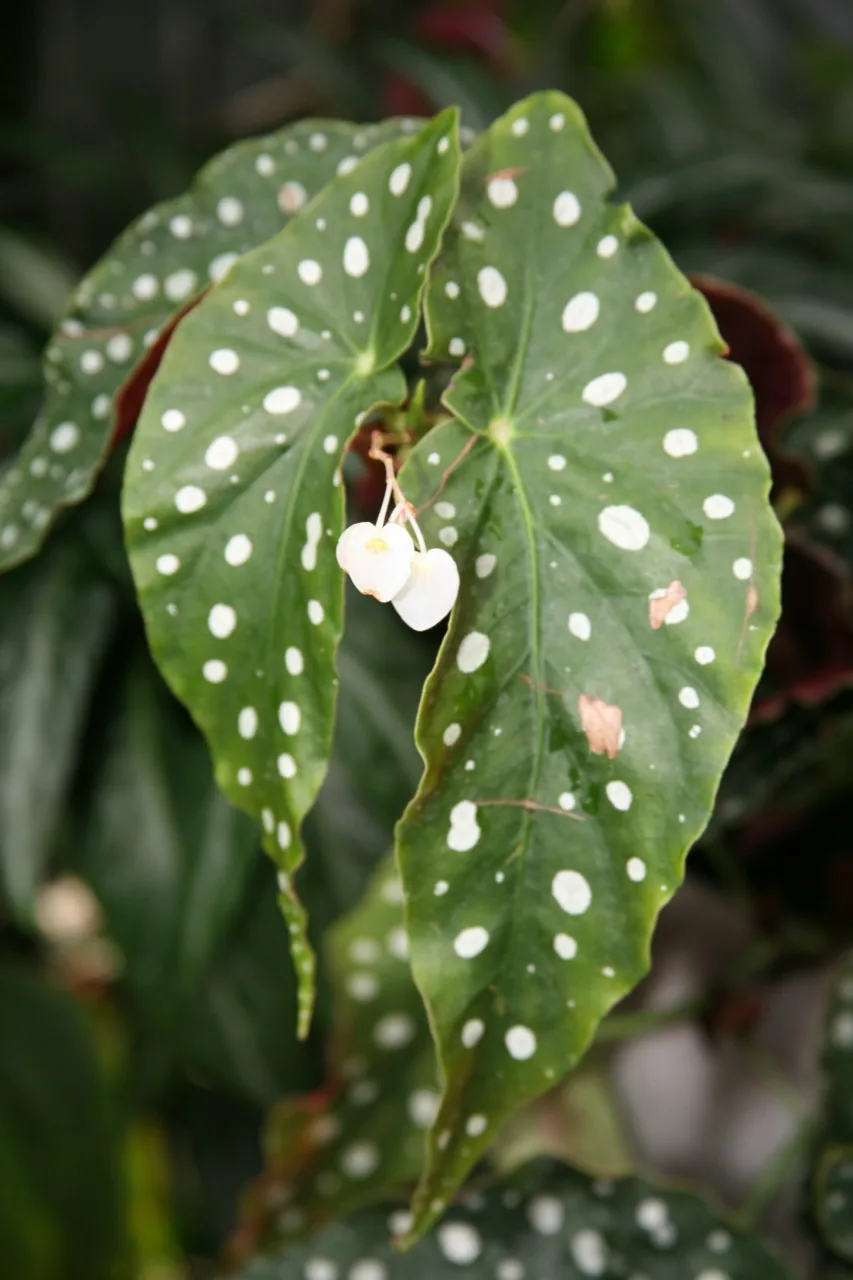
The silver polka dots on Begonia maculata's wing-shaped leaves aren't pigment at all - they're small pockets of air trapped between the leaf's upper cell layers that scatter light, a trait shared with several other spotted begonias from the understory of Brazilian rainforests.
Prefers bright, indirect light; direct sun scorches its silver-spotted leaves.
Water
Let the top 2-3cm of soil dry before watering, roughly every 1-2 weeks; avoid wetting the leaves.
Humidity
Needs moderate to high humidity around 45-60% to prevent leaf edge browning.
Soil
Light, well-draining potting mix with added perlite.
Best position
north / north-east-facing windowanywhere up to about 1 m from the window
east-facing windowabout 1 m from the window or further back
west-facing windowabout 2 m from the window or further back
Watch for strong direct sun at east / west windows.
See every window directionHide window directions
Best position
right by the window
about 1 m
about 2 m
about 4 m
4 m or more
north
works well✓
works well✓
too dark○
too dark○
too dark○
north-east
works well✓
works well✓
too dark○
too dark○
too dark○
east
just about~
works well✓
works well✓
too dark○
too dark○
south-east
too much direct sun☼
just about~
just about~
too dark○
too dark○
south
too much direct sun☼
too much direct sun☼
too much direct sun☼
too dark○
too dark○
south-west
too much direct sun☼
too much direct sun☼
just about~
too dark○
too dark○
west
too much direct sun☼
too much direct sun☼
works well✓
too dark○
too dark○
north-west
too much direct sun☼
just about~
too dark○
too dark○
too dark○
✓works well~just about○too dark☼too much direct sun
A rough guide based on window direction and typical daylight through the year. Window size, curtains and whatever stands outside matter just as much.
!Toxic to pets
Toxic to cats and dogs if eaten.
Eating it can cause vomiting and an upset stomach.
If your pet has eaten some, contact your vet.
Source: ASPCA
Did you know?
The eye-catching silver spots on polka dot begonia leaves come from air-filled cells rather than pigment, while the deep red undersides are a genuine pigment that likely helps the leaf capture extra light in the dim rainforest understory.
Care by Season
Spring
Resume feeding lightly every few weeks as new cane growth appears.
Summer
Water consistently and keep humidity elevated; avoid direct afternoon sun.
Autumn
Reduce feeding and watering slightly as growth slows.
Winter
Water sparingly and keep away from cold drafts and dry heater air.
Growing & Maintenance
Soil and pot
A light, well-draining potting mix with added perlite, in a pot with drainage holes.
Fertilising
Feed lightly every few weeks in spring and summer. Reduce in autumn.
Pruning
Cut tall canes back just above a leaf joint in spring to make the plant branch.
Support
Tall canes get top-heavy. Tie them loosely to a thin stake.
Propagation
From cane cuttings with at least one leaf joint, rooted in water or moist mix.
Pests & Diseases
Common problems
Brown, crispy leaf edges
Most likely cause: Dry air.
What to do: Raise the humidity to 45-60% with a humidifier or pebble tray, without wetting the leaves.
White, powdery patches
Most likely cause: Powdery mildew, from still air and wet leaves.
What to do: Give it more airflow, water at the soil and remove the affected leaves.
Leaves dropping
Most likely cause: Overwatering, or a cold draught.
What to do: Let the top 2-3cm of compost dry before watering and move it away from draughts.
Scorched patches
Most likely cause: Direct sun.
What to do: Move it to bright, indirect light.
Tall, bare canes
Most likely cause: No pruning. Cane begonias grow upward and lose their lower leaves.
What to do: Cut the canes back above a leaf joint in spring.
Pests & Diseases
Powdery mildew
Signs: White powdery patches on leaves, often from poor air circulation.
Treatment: Improve airflow, avoid wetting foliage, and treat with a fungicide if severe.
Spider mites
Signs: Fine webbing and stippled leaves in dry air.
Treatment: Increase humidity and apply insecticidal soap. Check the undersides of the leaves and the crevices where the leaf stem meets the main stalk.
Mealybugs
Signs: White cottony clumps at leaf and stem joints.
Treatment: Dab with an alcohol-soaked cotton swab and repeat weekly. Check the undersides of the leaves and the crevices where the leaf stem meets the main stalk.
FAQ
Why does my polka dot begonia keep developing powdery white patches?
This is usually powdery mildew, triggered by poor air circulation combined with wet leaves. Water at the soil level rather than overhead and space the plant away from other foliage to keep air moving.
Why are my polka dot begonia's leaves losing their silver spotting?
Reduced spotting often means the plant isn't getting enough bright, indirect light. The contrast between the spots and the leaf's green tissue tends to fade in lower light conditions.
Is the Polka Dot Begonia toxic to cats and dogs?
Yes, the Polka Dot Begonia is toxic to cats and dogs. Eating it can cause stomach upset, so keep it out of reach of pets.
How often should I water a Polka Dot Begonia?
Roughly every 1-2 weeks, when the top 2-3cm of compost has dried. Water at the soil and keep the leaves dry.
How do I propagate a Polka Dot Begonia?
From cane cuttings. Take a piece of stem with at least one leaf joint and root it in water or moist mix.
Should I prune a Polka Dot Begonia?
Yes, once a year in spring. Cutting the tall canes back above a leaf joint makes the plant branch and stay full.