No results. Is a plant missing? Tell uscontact@wikiplant.net
Prickly pear
Opuntia ficus-indica
Care level: Easy
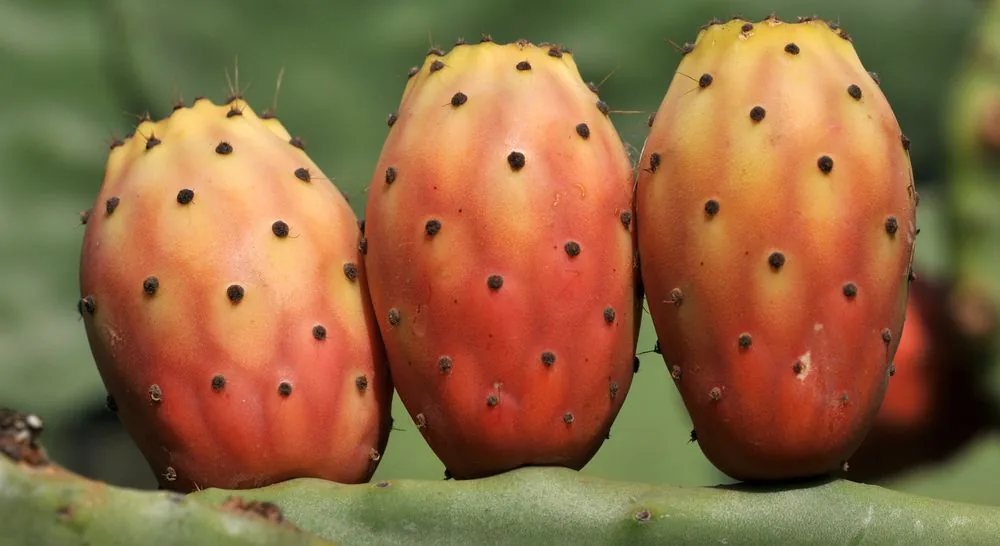
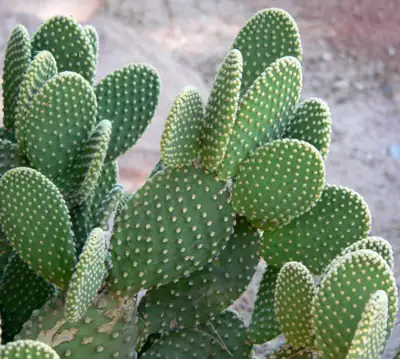
The prickly pear, or Indian fig, is a large, branching cactus from Mexico made of flat, oval, grey-green pads joined end to end. Bowl-shaped yellow or orange flowers open along the pad edges from spring to summer and are followed by egg-shaped fruits that ripen to yellow, orange, red or purple. Both the fruits and the young pads are eaten. It is planted across the Mediterranean, where it has run wild, and elsewhere it is grown in a pot in full sun and kept dry and frost free in winter.
As a precaution, keep it out of reach of children and pets.
Safety note
The real hazard is not the long spines but the glochids: tufts of hair-fine, barbed bristles in every dot on the pads and fruits. They come off at a touch, lodge in skin and are hard to see. Handle pads with tongs or folded newspaper, never bare hands, and keep the plant away from pets and children.
Care by Season
Spring
Resume watering as growth starts. New pads and flower buds form on the edges of last year's pads.
Summer
Stand the pot outdoors in full sun. Water when dry and feed a few times.
Autumn
Fruits ripen where summers are long and hot. Reduce watering and bring the pot under cover before the first frost.
Winter
Keep it cool, bright and completely dry. Shrivelled pads plump up again in spring.
Growing & Maintenance
Repotting
Repot every two or three years in spring into a heavy clay pot. Wrap the plant in folded newspaper or use tongs to lift it.
Fertilising
Apply a balanced liquid fertiliser three or four times between spring and early autumn.
Pruning
No pruning is needed. Remove pads at the joint to limit size or shape the plant.
Propagation
By rooting detached pads in summer after letting the cut callus, or by seed sown in spring after soaking, at about 21°C.
Pests & Diseases
Common problems
Soft, yellowing pads at the base
Most likely cause: Root rot from wet compost, usually in winter.
What to do: Re-root healthy pads and keep the plant dry in the cold months.
Narrow, pale, stretched pads
Most likely cause: Too little light.
What to do: Move it to full sun and remove the weak growth.
Wrinkled, drooping pads in winter
Most likely cause: Normal water loss during the dry rest.
What to do: Do not water; they recover in spring.
Brown, corky patches
Most likely cause: Sunburn after a sudden move outdoors, or old age at the base.
What to do: Harden the plant off gradually; corking at the base is natural.
No flowers
Most likely cause: A young plant, low light or a warm, watered winter.
What to do: Give full sun and a cool, dry rest.
The plant leans or tips over
Most likely cause: Heavy pads on one side in a light pot.
What to do: Repot into a heavier pot and remove pads to rebalance it.
Pests & Diseases
Mealybugs
Signs: White, woolly tufts at the joints between pads and around the areoles.
Treatment: Dab them off with a cotton bud dipped in alcohol and repeat weekly. Check the undersides of the leaves and the crevices where the leaf stem meets the main stalk.
Scale insects
Signs: Small grey or brown bumps scattered over the pads, with yellowing around them.
Treatment: Scrub them off with a soft brush and soapy water.
Root rot
Signs: Pads that turn soft, yellow and translucent from the base, in wet or poorly drained compost.
Treatment: Cut off healthy pads, let them callus and re-root them in fresh, dry, gritty compost.
FAQ
Can you eat prickly pear fruit?
Yes. The pulp is sweet and juicy, full of hard seeds. Pick the fruit with tongs, rub or burn off the glochids, then cut off both ends, slit the skin lengthwise and peel it away.
Will it fruit in a pot?
Rarely in a cool climate. It needs to be several years old, with many pads, and to have a long, hot, sunny summer. Grow it for its shape and count any fruit as a bonus.
Can it stay outside in winter?
Only where frost is rare and light and the soil stays dry. Cold combined with wet kills it. In most of Europe keep it in a pot and bring it under cover, cool, bright and completely dry, from autumn to spring.
How do I get glochids out of my skin?
Do not rub. Lift them off with sticky tape or pull them out with tweezers under a strong light, then wash the area. Take the same care with a pet's paw or muzzle and see a vet if bristles are in the mouth or eyes.
How often should I water it?
In spring and summer water thoroughly, then let the compost dry out completely before watering again. Stop altogether in winter.
How do I propagate it?
Cut off a whole pad in summer, let the cut dry for a week or two until it has callused, then stand it upright in dry, gritty compost. Water lightly once roots have formed.
Why are the pads thin and elongated?
Too little light. New pads grown in shade are narrow, pale and weak. Move the plant to full sun and cut off the stretched pads.