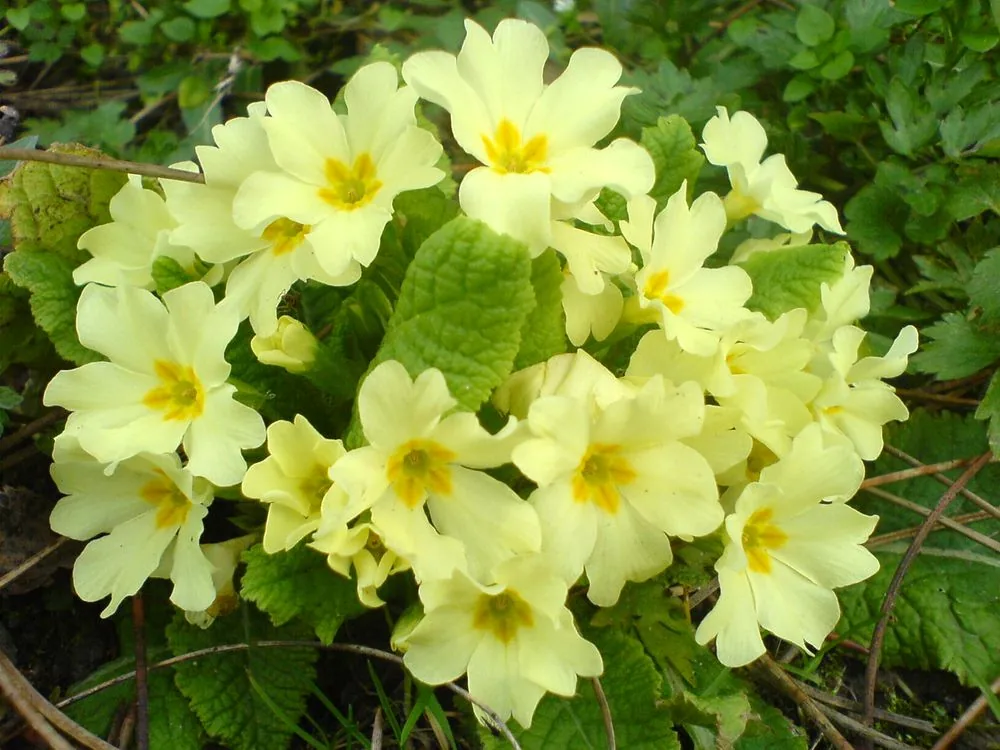
A clump of wild primroses with pale yellow, five-petalled flowers and wrinkled green leaves

Primrose

Primula vulgaris
Care level: Easy

The primrose is one of the first wild flowers of the European spring: a low rosette of tongue-shaped, wrinkled, bright green leaves with soft, pale yellow flowers on single hairy stalks, each with a deeper yellow eye and a light scent. It grows on shady banks, in hedge bottoms and open woodland, and in gardens it settles under shrubs and deciduous trees, in grass and along paths. It is fully hardy, evergreen in mild winters and long-lived in soil that stays moist, and it slowly spreads into drifts by seed.

I have this plant

Information

Varieties and related species
Primula vulgaris subsp. sibthorpiiPrimula verisPrimula Polyanthus Group

Light

Partial shade, or sun where the soil stays moist. Dappled shade under deciduous trees is ideal.

Water

Keep the soil moist. Water in dry spells in spring and summer; the plant wilts quickly when dry.

Humidity

Not a factor for this outdoor plant.

Soil

Moist, humus-rich soil that does not dry out in summer or lie waterlogged in winter. It tolerates heavy clay.

Size

10-20cm tall and 15-30cm wide.

Growth speed

Medium

Hardiness

Hardy below -20°C. Source: RHS

Toxic to pets

Toxic to cats and dogs if eaten.

Eating it can cause vomiting and an upset stomach.

If your pet has eaten some, contact your vet.

Source: NC State Extension, Pet Poison Helpline

Signature feature

It flowers from late winter into spring, when there is very little else for the first queen bumblebees and other early insects. Planted under deciduous shrubs, it gets sun when it flowers and shade when it rests in summer, which is what it wants.

Care by Season

Spring

Flowering from late winter to mid-spring. Divide clumps straight after flowering.

Summer

The plant rests. Water in drought and keep it shaded.

Autumn

New leaves form. Plant, divide and mulch with leaf mould.

Winter

The rosette overwinters and the first flowers open in mild spells.

Growing & Maintenance

Planting

Plant in autumn or early spring, 15-20cm apart, in groups, with the crown at soil level. Work leaf mould or garden compost into the soil first.

Fertilising

Mulch with leaf mould or garden compost in autumn. No other feeding is needed in the ground.

Pruning

No pruning is needed. Remove dead and yellow leaves in late winter so that the flowers show.

Propagation

By division after flowering or in early autumn, or by seed sown fresh in summer on the surface of the compost and kept cool; old seed needs a period of cold to germinate.

Pests & Diseases

Common problems

Flowers pecked or shredded

Most likely cause: Birds, or slugs.
What to do: String black thread over the plants and pick off slugs.

Leaves yellow and wilt in summer

Most likely cause: Dry soil or too much sun.
What to do: Water, mulch and move the plant to shade in autumn.

The plant comes loose with no roots

Most likely cause: Vine weevil grubs.
What to do: Clear the grubs and replant rooted pieces.

Few flowers on an old clump

Most likely cause: A congested crown.
What to do: Divide after flowering.

The crown rots in winter

Most likely cause: Waterlogged soil, or leaves smothering the crown.
What to do: Improve the drainage and clear fallen leaves off the rosettes.

Seedlings flower pink or red

Most likely cause: Crossing with coloured garden primulas nearby.
What to do: Remove them if you want to keep the wild yellow form.

Pests & Diseases

Vine weevil

Signs: Plants wilt and come away in the hand with no roots; cream, C-shaped grubs in the soil, mostly in pots.
Treatment: Remove the grubs, replant any rosettes that still have roots in fresh soil and check pots in autumn and spring.

Slugs and snails

Signs: Ragged holes in petals and young leaves.
Treatment: Pick them off in the evening and clear dead leaves from around the crowns.

Primula leaf spot

Signs: Round brown spots with a yellow edge on the leaves in wet weather.
Treatment: Remove affected leaves; the plant is rarely weakened.

Grey mould

Signs: Fluffy grey mould on flowers and leaf bases in cold, damp, still conditions.
Treatment: Remove affected parts and thin crowded clumps to let air in.

Aphids

Signs: Clusters of small insects under the leaves and around the flower buds.
Treatment: Rub them off or rinse them away.

FAQ

Where does primrose grow best?

In partial shade, in soil rich in leaf mould that stays moist. Under deciduous trees and shrubs, on a north- or east-facing bank or in thin grass is ideal. It copes with sun in cool, damp climates but scorches and wilts in a hot, dry border.

Does it come back every year?

Yes. It is a perennial and a clump lasts for many years, getting wider. It also seeds itself; the seeds are carried off by ants, which is why seedlings appear some distance away.

When and how do I divide it?

Straight after flowering, in late spring, or in early autumn. Lift the clump, pull it apart into single rosettes with roots, replant them at once and water well. Dividing every few years keeps plants vigorous.

Why are the flowers being torn off?

Usually sparrows and other birds, which peck at yellow primrose flowers in early spring. Slugs also eat the petals. Stretching black thread above the plants deters birds.

What is the difference between a primrose and a polyanthus?

The wild primrose carries each flower on its own stalk from the base. Polyanthus, the brightly coloured bedding primulas, are hybrids with the cowslip and hold a bunch of flowers on one stout stem. They are showier but shorter-lived.

Is primrose toxic to pets?

It can cause vomiting, drooling and diarrhoea if eaten, and the hairs on the leaves can irritate skin. Signs are usually mild, but keep pets from chewing it.

Why do the leaves go yellow and limp in summer?

Drought and heat. The plant rests in summer and suffers if the soil dries out. Water in dry spells, mulch with leaf mould and give more shade.

You might also like