No results. Is a plant missing? Tell uscontact@wikiplant.net
Rowan
Sorbus aucuparia
Care level: Easy
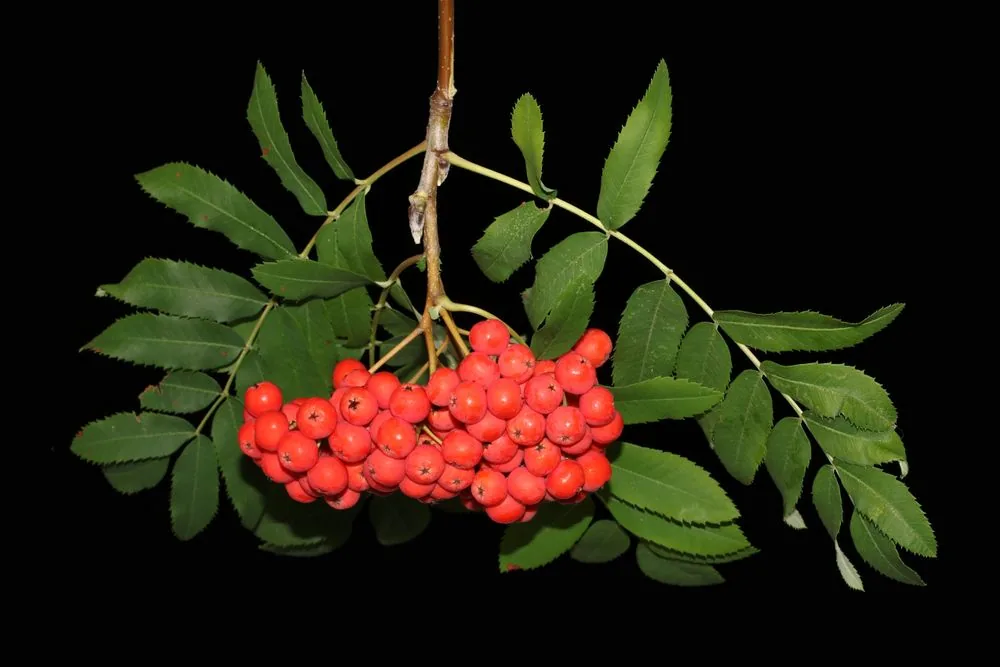
The rowan, or mountain ash, is a slender deciduous tree of European hills and woodland edges, with feathery leaves made up of many toothed leaflets, flat heads of creamy-white flowers in late spring and heavy bunches of orange-red berries from late summer. The leaves turn yellow and red in autumn. It stays small enough for most gardens, tolerates town air and cold, exposed sites, and gives a great deal for its size: blossom for insects, colour in autumn and berries for birds.
It can make cats and dogs unwell, so keep it out of their reach.
If your pet has eaten some, contact your vet.
Source: RHS
Signature feature
The berries are one of the best wild bird foods of early autumn. Blackbirds, thrushes and, in some winters, waxwings strip a tree in days, so a rowan near a window brings them into view.
Care by Season
Spring
Leaves open, followed by flat heads of creamy-white flowers in late spring.
Summer
Berries swell and colour from late summer. Water young trees in dry weather and watch for scorched shoot tips.
Autumn
The leaves turn yellow and red and birds take the berries. Planting time begins.
Winter
The tree is dormant. Plant bare-root trees and do any pruning.
Growing & Maintenance
Planting
Plant between autumn and early spring in well-drained, humus-rich soil in sun or light shade. Stake for the first two years and keep the base free of grass.
Pruning
Little is needed. Remove dead, damaged or crossing branches in winter.
Propagation
By seed, which needs a period of cold before it germinates; named forms are grafted.
Pests & Diseases
Common problems
Scorched, blackened shoot tips
Most likely cause: Fireblight.
What to do: Cut well back into healthy wood and clean the blades.
Leaves browning at the edges in summer
Most likely cause: Heat, drought or compacted soil.
What to do: Water deeply, mulch and keep the root area open.
No berries
Most likely cause: A young tree, or flowers caught by late frost.
What to do: Wait; trees berry reliably once established.
Berries gone within days
Most likely cause: Birds.
What to do: Nothing to do; that is the tree at work.
Shoots from the base of the trunk
Most likely cause: Suckers from the rootstock of a grafted tree.
What to do: Cut them off flush as soon as they appear.
Pests & Diseases
Fireblight
Signs: Shoot tips and flower clusters wilt and turn brown-black as if scorched, and the dead leaves stay on the branch.
Treatment: Cut affected branches out at least 30cm below the damage, into healthy wood, and disinfect the blades between cuts.
Aphids
Signs: Curled young leaves with clusters of small insects in spring.
Treatment: No treatment is needed on a tree; predators arrive and the growth recovers.
Pear blister mite
Signs: Raised pale green or pink blisters on the leaves in spring that turn brown-black by summer.
Treatment: The damage is cosmetic. Pick off affected leaves on a small tree if it bothers you.
Sawfly larvae
Signs: Leaves eaten to the midrib by small caterpillar-like larvae in summer.
Treatment: Pick them off a young tree; an established tree tolerates the loss.
FAQ
Is rowan a good tree for a small garden?
Yes, it is one of the best. It grows to 8-15m with a light, narrow crown that casts little shade, has something to show in three seasons, and tolerates poor soil, cold and wind.
Can you eat rowan berries?
Not raw. They are bitter and upset the stomach, and they should be kept away from pets and children. Cooked, they are traditionally made into a sharp jelly served with game.
Are rowan berries toxic to dogs and cats?
They are harmful if eaten and can make a pet unwell. Clear up fallen berries where a dog is inclined to eat them.
Why are the shoot tips brown and scorched-looking?
That can be fireblight, a bacterial disease of rowans, apples, pears and hawthorns. Shoots wilt and blacken as if burnt, and the dead leaves hang on. Cut affected branches out well below the damage, into healthy wood, and clean the blades between cuts.
Why does my rowan look tired in summer?
It is a tree of cool hills and dislikes heat, drought and compacted soil. Mulch the root area, water in long dry spells and avoid paving close to the trunk.
Does it need pruning?
Very little. Remove dead, damaged or crossing branches in winter. Cut off shoots that come from the base or from below a graft.