No results. Is a plant missing? Tell uscontact@wikiplant.net
Silver birch
Betula pendula
Care level: Easy
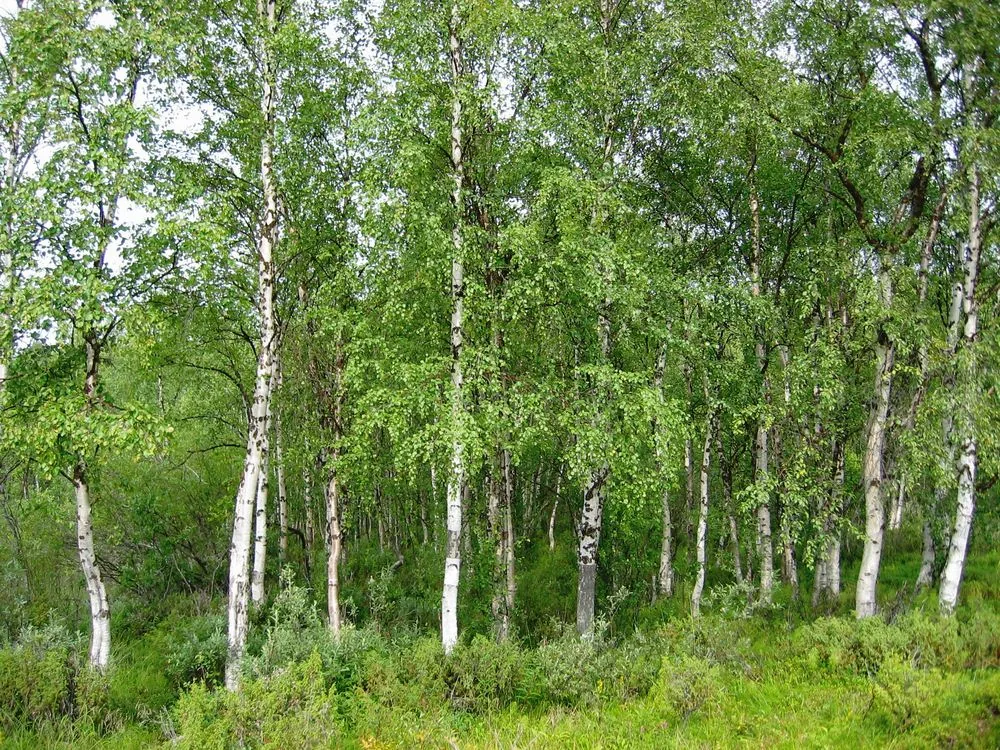
The silver birch is a slender, fast-growing deciduous tree with white, peeling bark that turns black and rugged at the base with age, and fine twigs that hang at the tips. Its small, diamond-shaped, toothed leaves cast only light shade and turn clear yellow in autumn, and catkins hang from the branches in spring. It grows in almost any soil and situation, tolerates severe cold, and is one of the most graceful trees for a medium-sized garden, planted alone or in a small group.
As a precaution, keep it out of reach of children and pets.
Common mistake
Pruning a birch in late winter or spring is the mistake to avoid. The sap rises early and strongly, and cuts made then bleed heavily for weeks. If a branch has to come off, do it between late summer and midwinter.
Care by Season
Spring
Catkins and new leaves appear. Do not prune now; the sap is rising.
Summer
Water young trees in dry weather. Pruning is possible from late summer.
Autumn
The leaves turn yellow and fall. A good time to plant.
Winter
The white bark is at its best. Plant bare-root trees, and finish any pruning before midwinter.
Growing & Maintenance
Planting
Plant between autumn and early spring in an open, sunny position, well away from buildings. Stake young trees for the first two years. A group of three planted close together makes a multi-stemmed effect.
Pruning
Prune only between late summer and midwinter, removing dead, damaged or crossing branches. Do not top the tree; it spoils the shape for good.
Propagation
By seed; named forms are grafted.
Pests & Diseases
Common problems
Sap dripping from pruning cuts
Most likely cause: Pruning in late winter or spring.
What to do: Leave the cut alone; it stops when the leaves open. Prune in late summer or autumn in future.
Yellow leaves falling in summer
Most likely cause: Drought.
What to do: Water young trees deeply; established trees usually recover the following year.
Dieback in the top of the crown
Most likely cause: Drought stress, old age or honey fungus.
What to do: Have the tree checked if the dieback spreads.
Sticky deposits under the tree
Most likely cause: Aphid honeydew.
What to do: Wash it off; it is harmless to the tree.
A young tree rocking in the wind
Most likely cause: No stake, or a loose tie.
What to do: Stake it low down for the first two years.
Pests & Diseases
Aphids
Signs: Sticky honeydew dripping from the leaves in summer, sometimes with black sooty mould on whatever stands below.
Treatment: No treatment is practical on a tree, or needed; avoid parking or seating directly underneath.
Leaf-mining sawflies
Signs: Brown, papery blotches in the leaves in summer.
Treatment: The damage is cosmetic and the tree is not harmed.
Birch rust
Signs: Small orange pustules under the leaves in late summer, followed by early leaf fall.
Treatment: Rake up and dispose of fallen leaves. No other treatment is needed.
Honey fungus
Signs: Branches die back, the leaves are sparse and white fungal sheets lie under the bark at the base.
Treatment: Have the tree inspected; an affected tree usually has to be removed with its roots.
FAQ
When can I prune a silver birch?
Between late summer and midwinter, while the tree is in full leaf or fully dormant. Cuts made in late winter and spring bleed sap. Birch needs little pruning in any case, beyond removing dead, damaged or crossing branches.
How big does a silver birch get?
Up to about 25m tall, with a narrow crown when young that broadens with age. It grows fast, so allow for its final size and plant it well away from buildings and drains.
Is silver birch suitable for a small garden?
The species is too tall for a very small garden, but its light canopy lets grass and other plants grow underneath, so it takes less from a garden than most trees of its height. For a small space choose a weeping form that stays low.
Why is the bark of my young birch brown?
Young trees have reddish-brown bark. It turns white and starts to peel after several years, as the trunk thickens.
What can I plant under a birch?
Spring bulbs, woodland perennials and grass all do well in its dappled shade. Bear in mind that the roots are shallow and take a good deal of water, so new plants under it need watering until they are established.
Why are the leaves spotted orange underneath in late summer?
That is birch rust, a fungal disease that shows as small orange pustules under the leaves and makes them drop early. It looks worse than it is and needs no treatment; rake up the fallen leaves.