No results. Is a plant missing? Tell uscontact@wikiplant.net
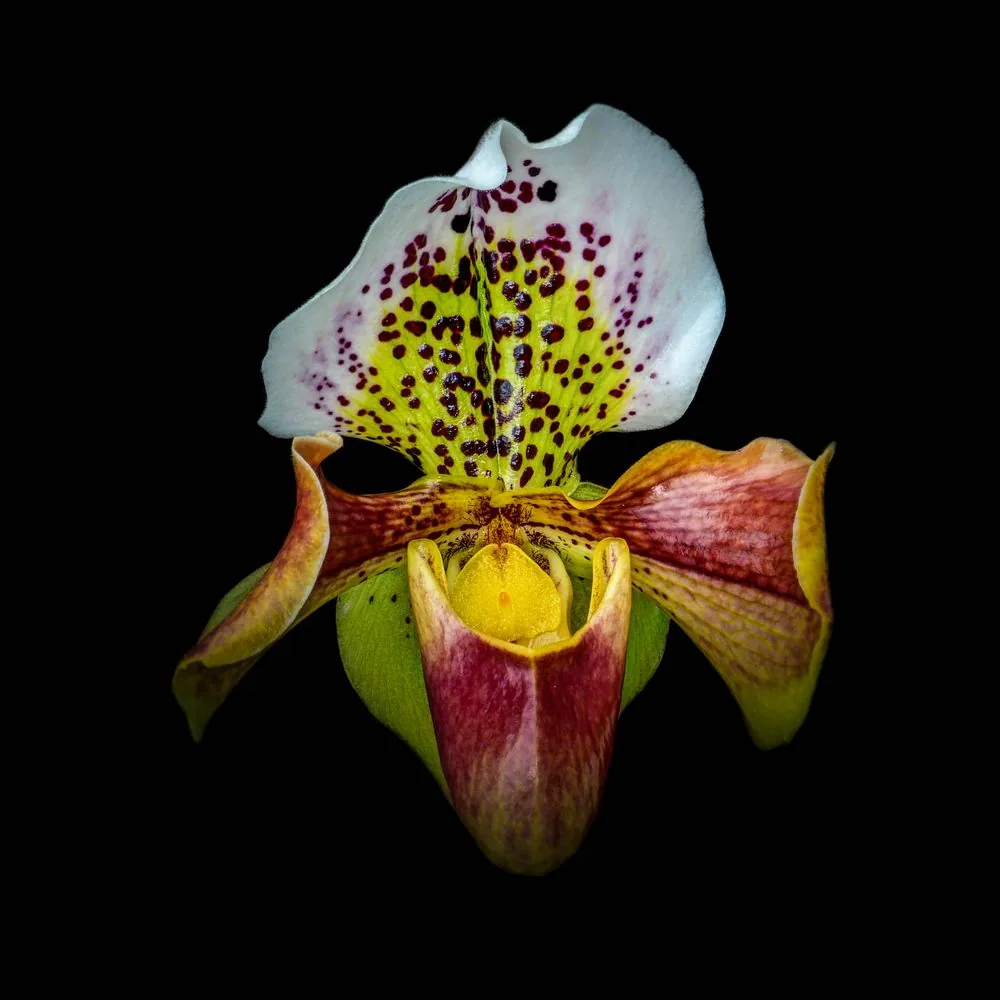
Slipper orchid
Paphiopedilum hybrids
Care level: Moderate
Slipper orchids are named after the pouch-shaped lip of their flower, which sits below a broad, upright sepal and two outstretched petals, often striped, spotted or warted and with a waxy shine. Each fan of strap-shaped leaves produces a single flower stem, and the flower lasts for many weeks. Unlike most houseplant orchids they grow in the leaf litter of the forest floor in tropical Asia, not on trees: they have no water-storing bulbs, tolerate low light, and want compost that never dries out completely.
Low to medium light, out of direct sun. An east- or north-facing window is ideal.
Water
Keep the compost evenly moist all year and never let it dry out completely. Let the pot drain after watering.
Humidity
Moderate to high. Stand the pot on a tray of wet pebbles and keep air moving.
Soil
Fine-grade orchid bark that holds some moisture and drains freely.
Temperature
Normal room temperature without cold draughts. Plain-leaved types like cooler nights than mottled-leaved ones.
?Pet safety not confirmed
As a precaution, keep it out of reach of children and pets.
Beginner tip
Treat it differently from a moth orchid. A slipper orchid has no pseudobulbs or fat roots to store water, so it must not dry out between waterings. Keep the compost evenly moist, and water before it dries, not after.
Care by Season
Spring
New fans of leaves grow. Repot after flowering if the compost is breaking down, and resume feeding.
Summer
Keep the compost moist and shade the plant from sun. Feed lightly.
Autumn
Growth matures and many types begin to form flower buds. Keep watering evenly.
Winter
Many types flower now. Water a little less often in cool rooms, without letting the compost dry.
Growing & Maintenance
Soil and pot
Use fine-grade orchid bark, with a little added moss or perlite to hold moisture, in a small pot with drainage holes.
Repotting
Repot every one to two years after flowering to renew the compost, into a pot one size larger at most.
Fertilising
Feed with orchid fertiliser at half strength every second or third watering in spring and summer, and less often in winter.
Propagation
By dividing large plants when repotting, keeping at least three fans of leaves on each piece.
Pests & Diseases
Common problems
No flowers
Most likely cause: Too little light, or fans that are not yet mature.
What to do: Give a little more light, out of direct sun, and wait for the new fans to grow up.
Yellowish leaves
Most likely cause: Too much light.
What to do: Move it further from the window.
Limp, wrinkled leaves
Most likely cause: The compost dried out, or the roots have rotted in old compost.
What to do: Water more regularly; repot if the compost has turned to mush.
A rotting leaf base
Most likely cause: Water standing in the crown.
What to do: Water the compost only and blot the crown dry.
Brown leaf tips
Most likely cause: A build-up of fertiliser salts or hard water.
What to do: Flush the pot with plain water once a month and use rainwater if you can.
Pests & Diseases
Mealybugs
Signs: White, cottony tufts at the base of the leaves and under the flower.
Treatment: Wipe them off with a cotton bud dipped in rubbing alcohol and repeat weekly. Check the undersides of the leaves and the crevices where the leaf stem meets the main stalk.
Spider mites
Signs: Fine silvery speckling on the undersides of the leaves in dry air.
Treatment: Wipe the leaves with a damp cloth and raise the humidity. Check the undersides of the leaves and the crevices where the leaf stem meets the main stalk.
Crown rot
Signs: The base of a leaf fan turns brown and soft and the leaves pull away.
Treatment: Cut away the rotted fan, keep water out of the crowns and repot into fresh bark.
FAQ
How often should I water a slipper orchid?
Often enough that the compost stays lightly moist all the time, usually about once a week, more in a warm room. Let the pot drain fully each time and never leave it standing in water.
How much light does it need?
Less than most orchids. An east- or north-facing window, or a bright spot out of direct sun, suits it. Leaves that turn yellowish are getting too much light; dark green, floppy leaves and no flowers point to too little.
Does it need warm or cool conditions?
It depends on the type. As a rule, those with mottled leaves like an evenly warm room, while those with plain green leaves prefer it cooler, especially at night.
Will the same growth flower again?
No. Each fan of leaves flowers once. The plant then makes new fans beside the old one, and these flower when they are mature. Cut the old flower stem off at the base when the flower fades.
When and how do I repot it?
Every one to two years, after flowering, because it needs fresh, open compost more than space. Use fine-grade orchid bark and a pot only a little larger, and set the base of the leaves level with the surface.
Why is the base of the plant rotting?
Water has been sitting in the centre of the leaf fan, or the compost has broken down and stays wet. Water the compost rather than the leaves, blot out any water lodged in the crown, and repot into fresh bark.