No results. Is a plant missing? Tell uscontact@wikiplant.net
Small-leaved lime
Tilia cordata
Care level: Easy
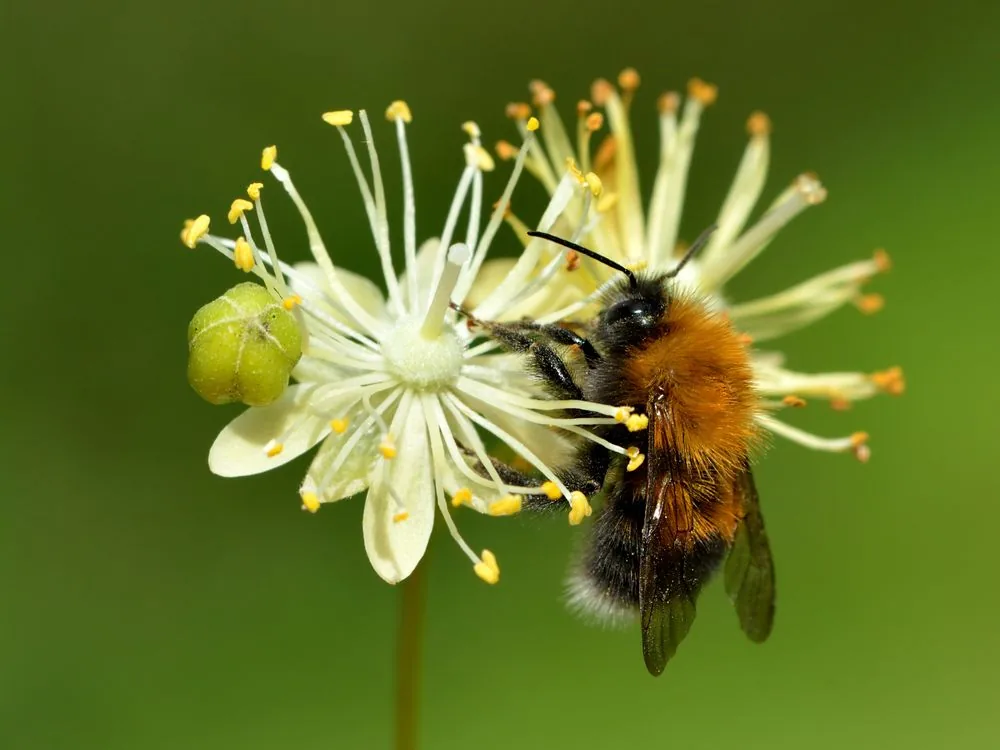
The small-leaved lime, or linden, is a large, long-lived deciduous tree native to Europe, with a dense, rounded crown and glossy, dark green, heart-shaped leaves up to 8cm long that turn yellow in autumn. In midsummer it is covered in small, creamy-yellow, sweetly scented flowers that hum with bees. It is a tree for parks, avenues and very large gardens, but it also takes hard pruning so well that it has been pleached, pollarded and coppiced for centuries.
As a precaution, keep it out of reach of children and pets.
Signature feature
In midsummer a lime in flower can be heard before it is seen. The scented flowers are among the richest nectar sources of any European tree, and dried they make the traditional lime-flower tea.
Care by Season
Spring
Leaves open. Water recently planted trees in dry weather.
Summer
Scented flowers in midsummer. Honeydew drips from the leaves in warm weather.
Autumn
The leaves turn yellow and fall. Planting time begins.
Winter
Prune pleached and pollarded trees while they are dormant. Plant bare-root trees.
Growing & Maintenance
Planting
Plant between autumn and early spring in moist, well-drained soil in sun or partial shade, with room for a very large crown, and stake for the first two years.
Pruning
Free-growing trees need only dead or crossing branches removed in winter. Pleached and pollarded trees are cut back to the same framework every one to three years in winter.
Propagation
By seed, which needs a period of cold before it germinates; named forms are grafted.
Pests & Diseases
Common problems
Sticky drips under the tree
Most likely cause: Honeydew from aphids.
What to do: Wash it off surfaces; plant away from terraces and parking.
Black coating on the leaves
Most likely cause: Sooty mould growing on honeydew.
What to do: It is harmless to the tree and washes off in rain.
A thicket of shoots at the base
Most likely cause: Suckers, far more typical of common lime than of this species.
What to do: Cut them off flush with the trunk in winter.
Red spikes on the leaves
Most likely cause: Nail galls.
What to do: Nothing is needed.
Scorched leaf edges in summer
Most likely cause: Drought, or drying wind on a young tree.
What to do: Water deeply and mulch the root area.
Pests & Diseases
Lime aphids
Signs: Sticky honeydew on leaves and on everything below the tree in summer, followed by black sooty mould.
Treatment: No treatment is practical or needed on a tree. Site the tree away from parking and seating.
Gall mites
Signs: Red or yellow-green pointed galls standing up from the upper side of the leaves.
Treatment: No treatment is needed; the galls are harmless.
Caterpillars and sawflies
Signs: Holes and skeletonised patches in the leaves in early summer.
Treatment: The tree outgrows the damage. The larvae are food for birds.
Honey fungus
Signs: Dieback of branches and sparse foliage, with white fungal sheets under the bark at the base.
Treatment: Have the tree inspected; a badly affected tree has to be removed with its roots.
FAQ
How do I tell a small-leaved lime from other limes?
By the leaves. They are small, 3-8cm long, with tufts of rust-brown hairs in the angles of the veins underneath, and the flower clusters stand out sideways or upwards rather than hanging. Large-leaved and common limes have bigger leaves with pale hairs.
Why is everything under the tree sticky?
Aphids feeding on the leaves drip a sugary liquid called honeydew, and a black mould then grows on it. The tree itself is not harmed. Do not plant a lime over a parking space, terrace or seat.
Can I keep a lime small?
Yes, by pruning it as a formal shape. Lime is the classic tree for pleaching into a raised screen and for pollarding, which means cutting the branches back to the same points every one to three years in winter. A free-growing tree cannot be kept small by occasional trimming.
How big does it get?
About 25m tall with a broad crown. It suits parks and very large gardens and should be planted well away from buildings.
What are the red spikes standing up from the leaves?
Nail galls, caused by microscopic gall mites. They are common on limes and do the tree no harm.
When can I harvest the flowers?
In midsummer, just as the flowers open. Pick whole clusters with their pale, papery bract on a dry day and dry them in an airy, shaded place.