No results. Is a plant missing? Tell uscontact@wikiplant.net
Snowdrop
Galanthus nivalis
Care level: Easy
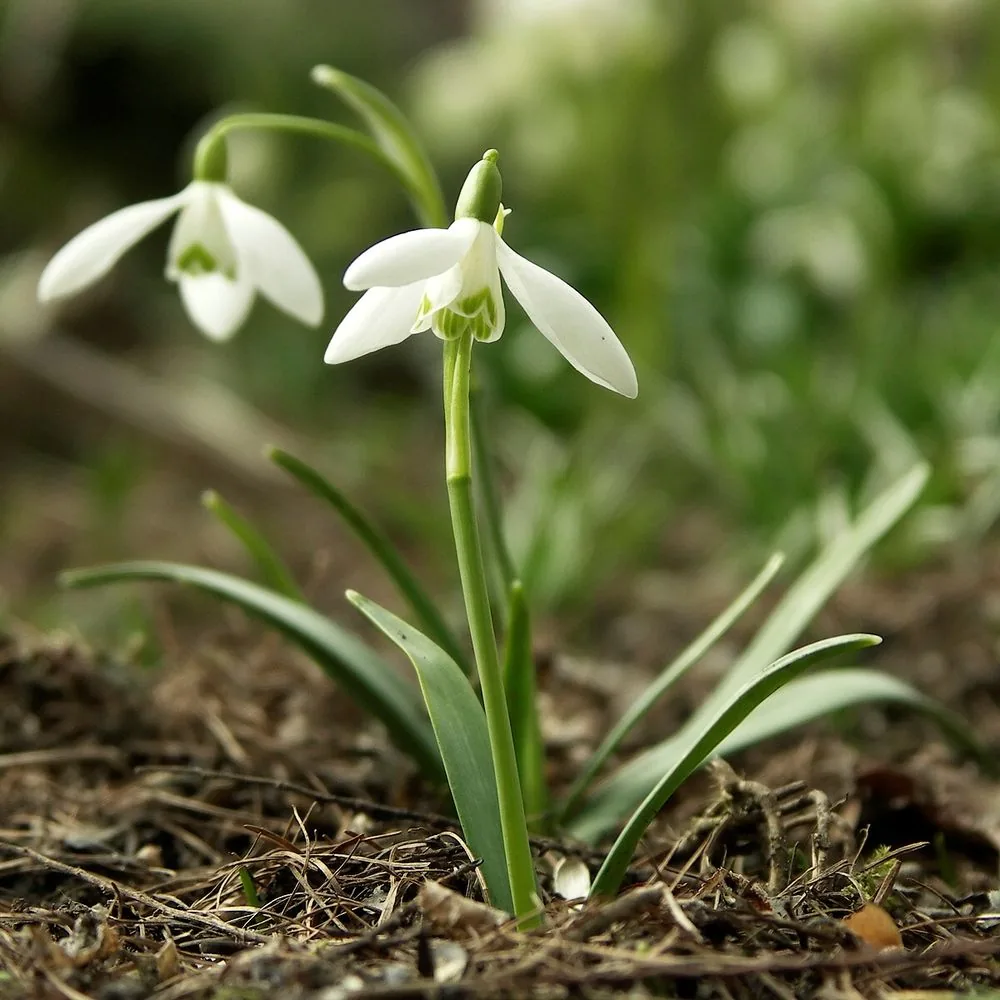
The snowdrop is the small white bulb that flowers while winter is still going: a single nodding bloom on each stem, with three long outer petals and three short inner ones tipped with green, above two or three narrow grey-green leaves. It is native to Europe and south-west Asia and is at home under deciduous trees and shrubs, where it gets light in late winter and shade in summer. Left undisturbed, a clump slowly spreads into a drift by offsets and seed.
Eating it can cause vomiting and an upset stomach.
If your pet has eaten some, contact your vet.
Source: RHS, Pet Poison Helpline
Beginner tip
Snowdrops establish best when they are planted 'in the green': lifted and replanted just after flowering, while they still have leaves. Dry bulbs bought in autumn have often dried out too far and many of them fail.
Care by Season
Spring
Flowering ends and the leaves feed the bulb. This is the time to lift, divide and replant, before the foliage dies back.
Summer
The bulbs are dormant. Keep the soil from drying out completely, which shade and a leaf mulch usually take care of.
Autumn
Dry bulbs are sold now; plant them at once. A layer of fallen leaves over the clumps is welcome.
Winter
Shoots push through cold ground and the flowers open from mid to late winter, even through snow.
Growing & Maintenance
Planting
Plant in the green just after flowering, or dry bulbs as early in autumn as possible, in humus-rich soil in partial shade.
Pruning
None. Let the leaves die back naturally.
Propagation
By dividing clumps as the foliage dies back. Plants also spread slowly by seed.
Pests & Diseases
Common problems
Dry bulbs that never came up
Most likely cause: The bulbs dried out before planting.
What to do: Buy plants in the green, or plant dry bulbs immediately.
Leaves but no flowers
Most likely cause: A congested clump, or bulbs still settling in after planting.
What to do: Divide crowded clumps after flowering and give new plantings a year.
Clumps dwindling year by year
Most likely cause: Soil that dries out in summer.
What to do: Mulch with leaf mould and plant where there is summer shade.
Shoots that rot as they emerge
Most likely cause: Snowdrop grey mould.
What to do: Remove and destroy the clump and its soil.
Fewer flowers under evergreens
Most likely cause: Too much shade all year.
What to do: Move the clump under deciduous trees or shrubs.
Pests & Diseases
Narcissus bulb fly
Signs: A bulb that produces only a few thin leaves or nothing at all, with a fat grub inside when it is dug up.
Treatment: Destroy affected bulbs. Firm the soil around the clumps as the leaves die back so the flies cannot reach the bulbs through the holes left behind.
Snowdrop grey mould
Signs: Leaves and flower stalks covered in grey fuzz as they emerge, after which they collapse and rot.
Treatment: Dig out and destroy affected clumps with the soil around them, and do not replant snowdrops in that spot.
Slugs
Signs: Ragged holes eaten in the petals and leaves in mild, wet spells.
Treatment: Pick them off by torchlight after dark where the damage is worth the trouble.
FAQ
When is the best time to plant snowdrops?
Just after flowering, while the plants are still in leaf. Plants moved at that stage settle in far more reliably than dry bulbs planted in autumn. If you do buy dry bulbs, plant them as soon as you get them.
Where do snowdrops grow best?
In partial shade under deciduous trees or shrubs, in humus-rich soil that stays moist but drains well. The key point is that the soil must not dry out in summer, even though nothing shows above ground.
Are snowdrops toxic to cats and dogs?
Yes. All parts are harmful if eaten, and the bulbs most of all. They cause drooling, vomiting and diarrhoea in cats and dogs. Wear gloves when handling the bulbs.
When should I divide snowdrops?
As the foliage dies back after flowering. Lift a crowded clump, tease it apart into small groups and replant them at the same depth straight away.
Why have my snowdrops stopped flowering?
Usually the clump has become congested or the soil dries out in summer. Divide the clump after flowering and replant in soil enriched with leaf mould.
Do snowdrops spread by themselves?
Yes, slowly. The bulbs produce offsets and the plants also seed around, so a few clumps become a carpet over the years.