No results. Is a plant missing? Tell uscontact@wikiplant.net
Spikemoss
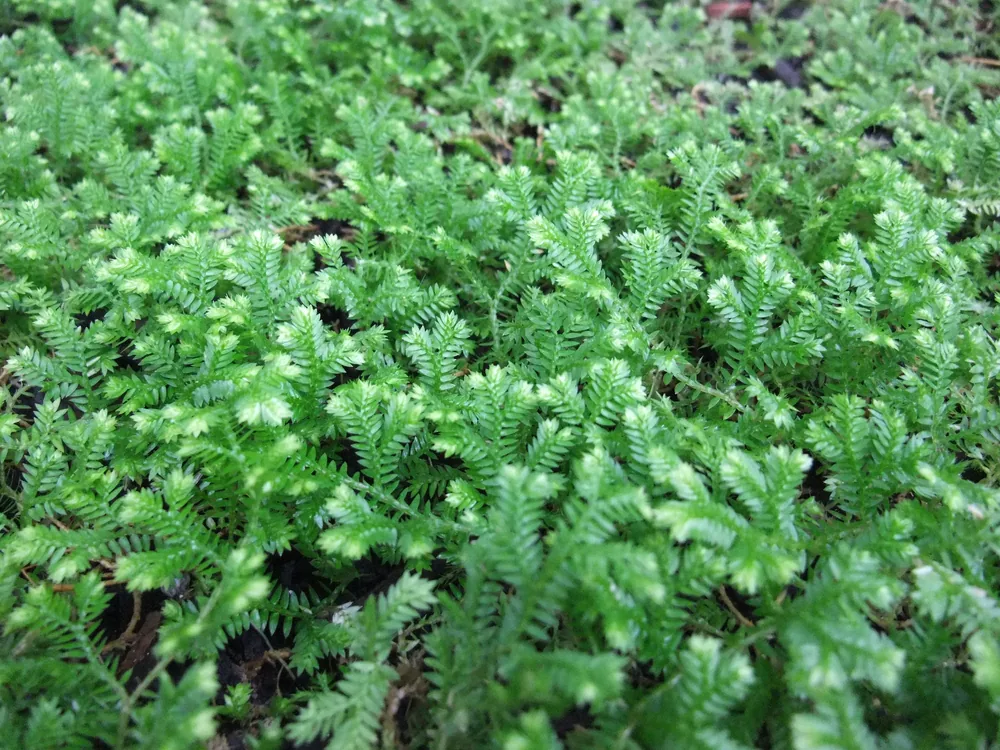
Selaginella kraussiana
Care level: Moderate
Selaginella kraussiana belongs to a lineage of spore-bearing plants called spikemosses that predates flowering plants by hundreds of millions of years, making this soft, moss-like carpet one of the closest living links to the primitive forests that covered the earth long before dinosaurs.
Prefers low to medium indirect light; direct sun scorches the delicate fronds.
Water
Keep soil consistently moist at all times, never fully drying out; water every few days or as the surface begins to dry.
Humidity
Needs high humidity; thrives in terrariums or bathrooms and struggles in dry air.
Soil
Light, moisture-retentive mix such as peat with perlite.
Temperature
Normal room temperatures, away from draughts and heating vents. It is frost tender.
Size
5-10cm tall, spreading 30-45cm wide.
Growth speed
Fast
Best position
north / north-east-facing windowanywhere up to about 2 m from the window
east-facing windowabout 1 m from the window or further back
west-facing windowabout 2 m from the window or further back
Watch for strong direct sun at east / west windows.
See every window directionHide window directions
Best position
right by the window
about 1 m
about 2 m
about 4 m
4 m or more
north
works well✓
works well✓
works well✓
just about~
just about~
north-east
works well✓
works well✓
works well✓
just about~
just about~
east
just about~
works well✓
works well✓
works well✓
works well✓
south-east
too much direct sun☼
just about~
just about~
works well✓
works well✓
south
too much direct sun☼
too much direct sun☼
too much direct sun☼
just about~
works well✓
south-west
too much direct sun☼
too much direct sun☼
just about~
works well✓
works well✓
west
too much direct sun☼
too much direct sun☼
works well✓
works well✓
works well✓
north-west
too much direct sun☼
just about~
works well✓
just about~
just about~
✓works well~just about○too dark☼too much direct sun
A rough guide based on window direction and typical daylight through the year. Window size, curtains and whatever stands outside matter just as much.
?Pet safety not confirmed
As a precaution, keep it out of reach of children and pets.
Did you know?
Spikemoss isn't a true moss at all, it's a fern ally that reproduces by spores rather than seeds, and some related Selaginella species can survive total desiccation, curling into a dry ball for years and 'resurrecting' to green growth within hours of rain.
Care by Season
Spring
Keep consistently moist as fresh growth spreads across the soil surface.
Summer
Watch closely for drying, misting regularly if not grown in a terrarium.
Autumn
Maintain even moisture as growth slows slightly.
Winter
Keep away from cold drafts and heating vents that dry the air; water slightly less but never let it dry fully.
Growing & Maintenance
Soil and pot
A light, moisture-retentive mix such as peat with perlite.
Pruning
Trim the edges to keep the mat within bounds.
Propagation
By division, or from stem cuttings laid on damp mix.
Pests & Diseases
Common problems
Brown, shrivelled tips
Most likely cause: Dry air.
What to do: Grow it in a terrarium or raise the humidity around it.
Whole patches drying out
Most likely cause: The compost has dried out.
What to do: Keep it moist at all times, using room-temperature water.
Pale, scorched fronds
Most likely cause: Direct sun.
What to do: Move it to low or medium indirect light.
Dark, mushy patches
Most likely cause: Waterlogged compost and root rot.
What to do: Improve the drainage and remove the affected sections.
Tiny flies around the pot
Most likely cause: Fungus gnats, which like constantly moist compost.
What to do: Hang yellow sticky traps and let the very surface dry briefly between waterings.
Pests & Diseases
Fungus gnats
Signs: Small flying insects around consistently moist soil
Treatment: Let the surface dry briefly between waterings and use sticky traps to reduce adults.
Root rot
Signs: Blackened, mushy stems and a sour smell from stagnant water
Treatment: Improve drainage, remove affected sections, and reduce standing water.
Powdery mildew
Signs: White powdery patches on fronds in poor air circulation
Why does my Spikemoss keep drying out and browning?
Unlike most houseplants, Spikemoss has no waxy cuticle to slow water loss, so its soil and the surrounding air both need to stay consistently moist, even a few hours of fully dry soil can brown the delicate fronds, which is why it thrives best in terrariums.
Can Spikemoss be grown in a closed terrarium?
Yes, it's one of the best plants for closed or high-humidity terrariums because it evolved in constantly damp forest floor conditions and actually struggles more in typical dry room air than in an enclosed, humid setup.
How often should I water Spikemoss?
Every few days, as soon as the surface begins to dry. The compost must never dry out, and room-temperature water is best because cold water can shock the plant.
How much light does Spikemoss need?
It needs low to medium indirect light. Direct sun scorches the delicate fronds.
How do I propagate Spikemoss?
By division or from stem cuttings. Lay the pieces on damp mix and keep them humid until they root.
How big does Spikemoss get?
Only 5-10cm tall, but it spreads into a mat 30-45cm wide. It grows fast when it is kept moist.