No results. Is a plant missing? Tell uscontact@wikiplant.net
Split-Leaf Philodendron
Thaumatophyllum bipinnatifidum
Care level: Easy
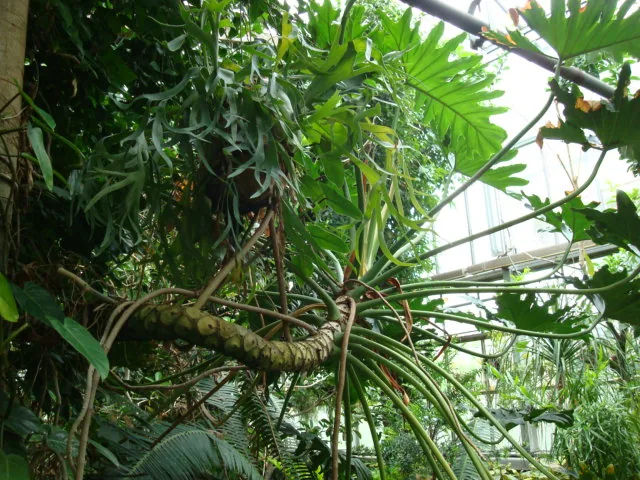
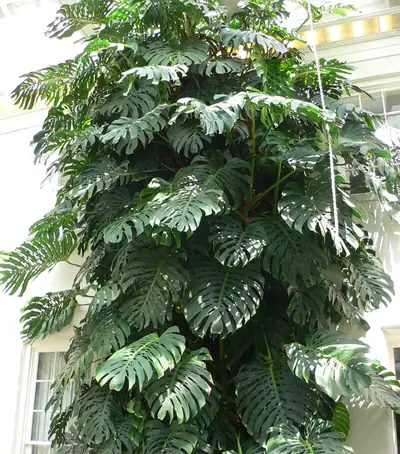
Long sold under the name Philodendron selloum, this Brazilian rainforest native was reclassified into the genus Thaumatophyllum in recent years, though most nurseries and plant lovers still call it split-leaf philodendron; given room to grow, it develops a thick, self-supporting trunk and leaves that can stretch well over half a meter across.
Bright, indirect light supports the biggest, most deeply lobed leaves.
Water
Water when the top 3-4cm of soil is dry, roughly every 1-2 weeks.
Humidity
Prefers moderate to high humidity but tolerates average home levels.
Soil
Rich, well-draining potting mix with added bark or perlite.
Temperature
Normal room temperatures. Keep it above 15°C.
Size
1.2-3m tall and 1.8-3m wide when mature.
Growth speed
Medium
Best position
east / south-east-facing windowanywhere up to about 2 m from the window
north / north-east / north-west-facing windowanywhere up to about 1 m from the window
south / west-facing windowabout 1 m from the window or further back
Watch for strong direct sun at south / west windows.
See every window directionHide window directions
Best position
right by the window
about 1 m
about 2 m
about 4 m
4 m or more
north
works well✓
works well✓
too dark○
too dark○
too dark○
north-east
works well✓
works well✓
too dark○
too dark○
too dark○
east
works well✓
works well✓
works well✓
too dark○
too dark○
south-east
works well✓
works well✓
works well✓
too dark○
too dark○
south
just about~
works well✓
works well✓
too dark○
too dark○
south-west
just about~
just about~
works well✓
too dark○
too dark○
west
just about~
works well✓
works well✓
too dark○
too dark○
north-west
works well✓
works well✓
too dark○
too dark○
too dark○
✓works well~just about○too dark☼too much direct sun
A rough guide based on window direction and typical daylight through the year. Window size, curtains and whatever stands outside matter just as much.
!Toxic to pets
Toxic to cats and dogs if eaten.
It can make cats and dogs unwell, so keep it out of their reach.
If your pet has eaten some, contact your vet.
Source: ASPCA
Did you know?
Mature plants send down long, wandering aerial roots from the stem that, in the wild, anchor the plant and seek out extra moisture and nutrients in the soil; indoors these can simply be tucked back into the pot or trimmed without harming the plant.
Care by Season
Spring
Resume feeding monthly and repot if the sizable root mass has outgrown its pot.
Summer
Water generously during active growth and wipe dust off the large leaves.
Autumn
Reduce watering frequency and stop feeding as growth slows.
Winter
Water sparingly and keep away from cold drafts and heaters.
Growing & Maintenance
Soil and pot
A rich, well-draining potting mix with added bark or perlite, in a large pot with drainage holes.
Repotting
In spring, when the root mass has outgrown its pot.
Fertilising
Feed monthly in spring and summer. Rinse the compost through with plain water now and then, as it dislikes a build-up of salts.
Pruning
Cut old leaves off at the base. Long aerial roots can be tucked into the pot.
Pests & Diseases
Common problems
Small leaves with few lobes
Most likely cause: Low light, or overwatering.
What to do: Move it to bright, indirect light and water only when the top 3-4cm is dry.
Yellow leaves
Most likely cause: Overwatering. The roots rot in damp compost.
What to do: Let the top 3-4cm dry between waterings and check that the pot drains.
Brown leaf tips and edges
Most likely cause: Salts building up in the compost.
What to do: Rinse the compost through with plain water, or water with distilled water.
Scorched patches
Most likely cause: Full sun.
What to do: Give it bright light without direct sun.
Drooping leaves
Most likely cause: The compost has dried out. It does not tolerate drought.
What to do: Water thoroughly and do not leave it dry for long.
Pests & Diseases
Spider mites
Signs: Fine webbing and speckled discoloration on leaves.
Treatment: Wipe leaves down and increase humidity; use insecticidal soap if needed. Check the undersides of the leaves and the crevices where the leaf stem meets the main stalk.
Mealybugs
Signs: White cottony masses in leaf joints and along stems.
Treatment: Remove with an alcohol-soaked swab and repeat weekly. Check the undersides of the leaves and the crevices where the leaf stem meets the main stalk.
Root rot
Signs: Yellowing leaves and mushy, dark roots.
Treatment: Remove from soggy soil, trim rotten roots, and repot in fresh, well-draining mix.
FAQ
Should I cut off the aerial roots growing from my Split-Leaf Philodendron?
It isn't necessary; these roots help anchor the plant and absorb extra moisture, so you can either tuck them into the soil to let them do their job or trim them back if they bother you, without any harm to the plant.
Why don't my Split-Leaf Philodendron's leaves have deep splits yet?
Leaf lobing becomes more pronounced as the plant matures and receives brighter indirect light; young plants naturally have simpler, less deeply cut leaves that develop more dramatic splits over successive years of growth.
How often should I water a Split-Leaf Philodendron?
Roughly every 1-2 weeks, when the top 3-4cm of compost is dry. It does not tolerate drought, but damp compost rots the roots.
How big does a Split-Leaf Philodendron get?
Between 1.2 and 3m tall and 1.8 to 3m wide when mature. It needs a lot of floor space.
How much light does a Split-Leaf Philodendron need?
It prefers bright, indirect light. It tolerates low light, but the leaves then stay smaller and less deeply lobed.
What temperature does a Split-Leaf Philodendron need?
Keep it above 15°C. A plant that spends summer outdoors should come back inside before the temperature drops below that.