No results. Is a plant missing? Tell uscontact@wikiplant.net
Staghorn Fern
Platycerium bifurcatum
Care level: Moderate
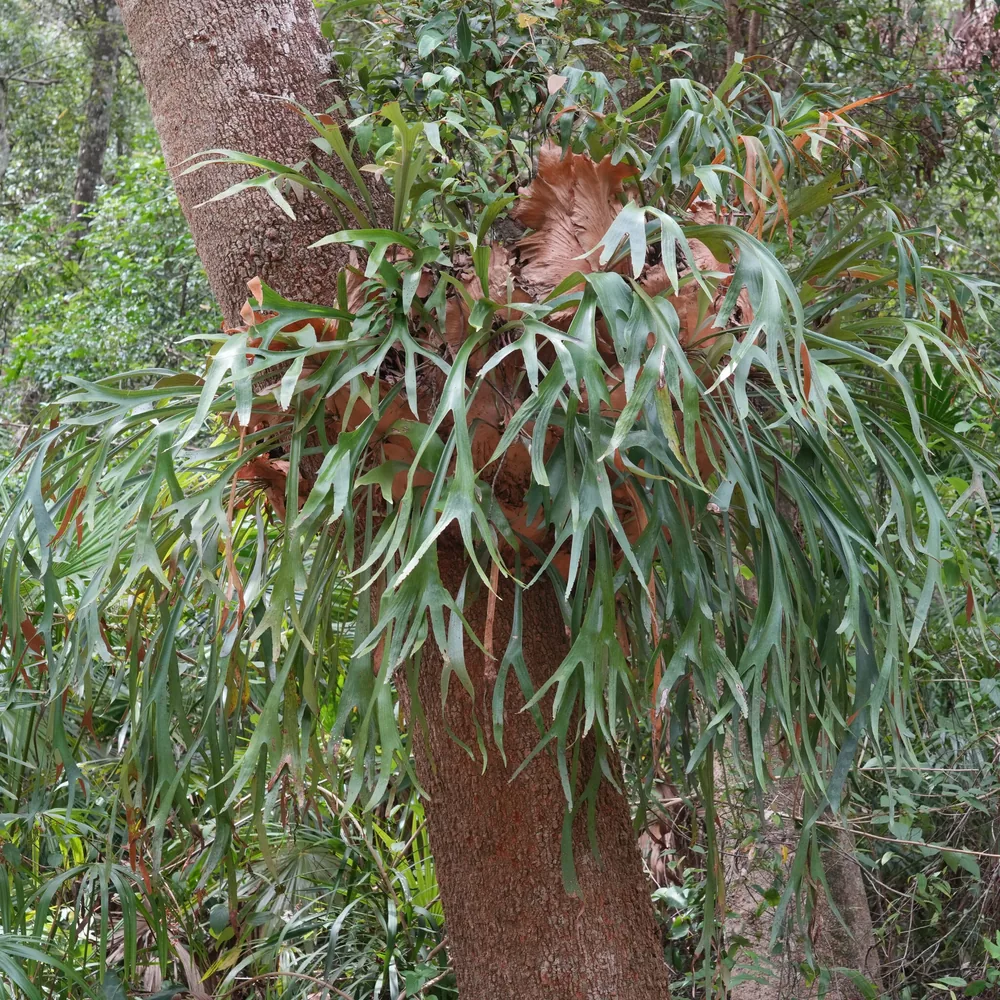
Staghorn ferns produce two completely different frond types: flat, round shield fronds that hug the mount and turn brown by design to protect the roots, and the antler-shaped fertile fronds that give the plant its name and reach outward in search of light. Because it is an epiphyte with no interest in soil, it is traditionally grown mounted on a slab of wood or bark rather than potted, which is part of what makes it feel more like living wall art than a typical houseplant.
Bright, indirect light; a little gentle morning sun is fine, but harsh direct light scorches fronds.
Water
Soak or water thoroughly once the shield fronds feel light and dry, typically every 1-2 weeks.
Humidity
Prefers humidity of 60% or higher, being an epiphyte adapted to humid forest canopies.
Soil
Grown mounted on bark or in a basket with sphagnum moss rather than regular potting soil.
Temperature
Warm room temperatures, away from cold draughts.
Size
60-90cm tall and wide.
Growth speed
Slow
Best position
north / north-east-facing windowanywhere up to about 1 m from the window
east-facing windowabout 1 m from the window or further back
west-facing windowabout 2 m from the window or further back
Watch for strong direct sun at east / west windows.
See every window directionHide window directions
Best position
right by the window
about 1 m
about 2 m
about 4 m
4 m or more
north
works well✓
works well✓
too dark○
too dark○
too dark○
north-east
works well✓
works well✓
too dark○
too dark○
too dark○
east
just about~
works well✓
works well✓
too dark○
too dark○
south-east
too much direct sun☼
just about~
just about~
too dark○
too dark○
south
too much direct sun☼
too much direct sun☼
too much direct sun☼
too dark○
too dark○
south-west
too much direct sun☼
too much direct sun☼
just about~
too dark○
too dark○
west
too much direct sun☼
too much direct sun☼
works well✓
too dark○
too dark○
north-west
too much direct sun☼
just about~
too dark○
too dark○
too dark○
✓works well~just about○too dark☼too much direct sun
A rough guide based on window direction and typical daylight through the year. Window size, curtains and whatever stands outside matter just as much.
?Pet safety not confirmed
As a precaution, keep it out of reach of children and pets.
Common mistake
Removing or trimming the brown, papery shield fronds because they look dead is a common misstep, those basal fronds are meant to turn brown and their job is to shield the roots and trap moisture and debris, so cutting them off actually harms the plant.
Care by Season
Spring
Resume regular watering and light feeding as new antler fronds begin to emerge.
Summer
Water and mist more frequently in warm weather, and watch for quick drying if mounted on bark.
Autumn
Slow down watering and feeding as growth naturally decreases with shorter days.
Winter
Water sparingly, keep in a warm spot away from cold drafts, and skip fertilizer.
Growing & Maintenance
Soil and pot
No ordinary potting soil. Mount it on bark or wood with sphagnum moss, or grow it in a basket of orchid mix.
Fertilising
A light feed in spring and summer. None in winter.
Propagation
By dividing a large plant, or by removing the pups that form at the base.
Pests & Diseases
Common problems
Brown, papery shield fronds
Most likely cause: Normal. The flat fronds at the base turn brown as they age.
What to do: Leave them in place. They protect the roots.
Limp, wilting antler fronds
Most likely cause: The root mass has dried out too far.
What to do: Soak the whole root mass until it is saturated, then let it dry slightly, never fully.
Black spots on the fronds
Most likely cause: Too much moisture with too little airflow.
What to do: Let the mount dry a little more between soakings and give it more air.
Scorched fronds
Most likely cause: Harsh direct sun.
What to do: Move it to bright, indirect light. Gentle morning sun is fine.
Brown frond tips
Most likely cause: Dry air.
What to do: Mist more often and raise the humidity to 60% or more.
Pests & Diseases
Scale insects
Signs: Small brown discs on the undersides of fronds that are hard to scrape off.
Treatment: Remove by hand or with alcohol swabs, then treat with insecticidal soap as needed.
Mealybugs
Signs: White fuzzy clusters hidden between fronds or at the base shield.
Treatment: Treat with a cotton swab dipped in alcohol, repeating every few days until clear. Check the undersides of the leaves and the crevices where the leaf stem meets the main stalk.
Root rot
Signs: Soft, blackened shield frond and a foul smell from overly wet mounting medium.
Treatment: Let the mount dry out fully, cut away rotten tissue, and reduce watering frequency going forward.
FAQ
Should I cut off the brown shield fronds on my staghorn fern?
No, those flat basal fronds naturally turn brown and papery as part of their function, protecting the root ball and holding moisture, so leave them in place even though they look dead.
How do I water a staghorn fern that's mounted on a board instead of in a pot?
Soak the whole root mass under a tap or in a basin every 1-2 weeks until saturated, then let it dry before soaking again, since mounted plants have no soil reservoir and dry out faster than potted ones.
How much light does a Staghorn Fern need?
It needs bright, indirect light. A little gentle morning sun is fine, but harsh direct sun scorches the fronds.
Can a Staghorn Fern grow in a pot?
Yes, in a basket or pot filled with orchid mix or sphagnum moss, not ordinary potting soil. Water a potted plant from below.
How do I propagate a Staghorn Fern?
By division. Split a large plant, or remove the pups that form at the base and mount them separately.
How big does a Staghorn Fern get?
About 60-90cm tall and wide. It grows slowly, so a young plant takes years to reach that size.