No results. Is a plant missing? Tell uscontact@wikiplant.net
Streptocarpus
Streptocarpus x hybridus
Care level: Easy
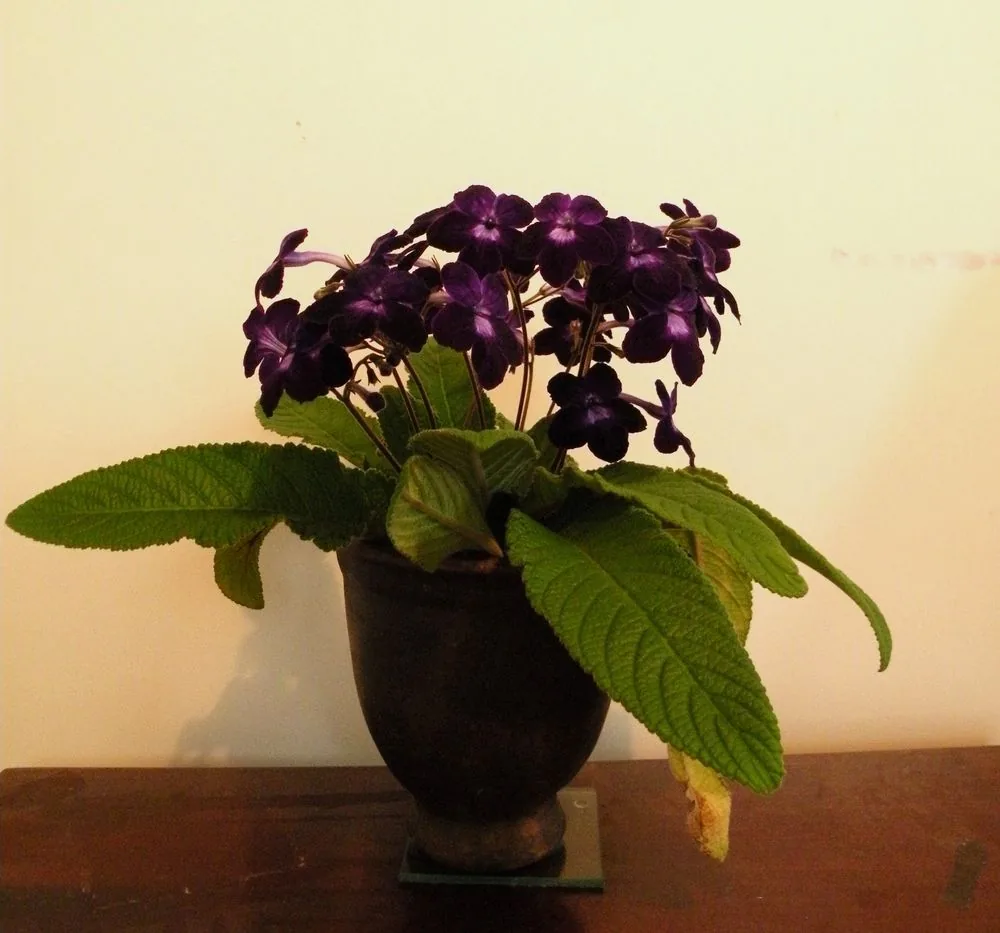
Streptocarpus, the Cape primrose, is a compact flowering houseplant from southern Africa, closely related to the African violet. It forms a low rosette of long, wrinkled, slightly hairy leaves, and from spring to autumn it sends up thin stems of trumpet-shaped flowers in purple, blue, pink, red or white, often with darker veining in the throat. It flowers for months on a bright windowsill out of direct sun and is easier to keep than its delicate looks suggest.
Bright light out of direct summer sun, such as an east- or west-facing window.
Water
Water when the compost is nearly dry, then let it drain. Keep it much drier in winter.
Humidity
Average room humidity suits it. Do not mist the hairy leaves.
Soil
A light, free-draining houseplant compost in a shallow pot.
Temperature
A cool to normal room. It dislikes heat and should be kept above about 10°C.
Size
20-30cm tall and 45-75cm wide.
Growth speed
Medium
?Pet safety not confirmed
As a precaution, keep it out of reach of children and pets.
Common mistake
Overwatering kills more streptocarpus than anything else. Let the compost become almost dry before watering again. A plant that has gone limp from thirst recovers within hours of a drink, but one with rotted roots looks just as limp and does not come back.
Care by Season
Spring
Growth restarts. Repot into fresh compost, begin feeding and take leaf cuttings.
Summer
The main flowering season. Feed every two weeks, remove faded flower stems and shade from hot sun.
Autumn
Flowering slows. Reduce watering and stop feeding.
Winter
Keep it on a bright windowsill and water sparingly. Remove old, tired leaves.
Growing & Maintenance
Soil and pot
Use a light, free-draining compost in a shallow pot; the roots are fine and shallow.
Repotting
Repot each spring into fresh compost, moving up one size only if the roots fill the pot.
Fertilising
Feed every two weeks with a high-potash liquid fertiliser from spring to autumn.
Pruning
Cut faded flower stems off at the base, and remove old leaves or trim their brown tips.
Propagation
By leaf cuttings in spring or summer.
Pests & Diseases
Common problems
Limp leaves in dry compost
Most likely cause: Thirst.
What to do: Water thoroughly; the plant recovers within hours.
Limp leaves in wet compost
Most likely cause: Root rot from overwatering.
What to do: Stop watering, repot into fresh compost and keep it on the dry side.
Leaves but no flowers
Most likely cause: Too little light.
What to do: Move it to a brighter spot out of direct sun.
Brown leaf tips
Most likely cause: Age, or a spell of drought or cold.
What to do: Trim the tips or remove the leaf.
Scorched, bleached patches
Most likely cause: Hot direct sun.
What to do: Move it to an east- or west-facing window.
Flowers that fade quickly
Most likely cause: A hot room.
What to do: Move it somewhere cooler.
Pests & Diseases
Mealybugs
Signs: White, cottony tufts at the base of the leaves and along the midrib underneath.
Treatment: Wipe them off with a cotton bud dipped in rubbing alcohol and repeat weekly. Check the undersides of the leaves and the crevices where the leaf stem meets the main stalk.
Aphids
Signs: Clusters of small green insects on the flower stems and buds.
Treatment: Rinse them off gently with water, or remove the affected flower stems.
Root rot
Signs: The whole plant goes limp while the compost is wet, and the roots are brown and soft.
Treatment: Repot into fresh, barely moist compost after cutting away the rotted roots, and water far less. Take leaf cuttings as insurance.
FAQ
How often should I water a streptocarpus?
Only when the compost is nearly dry and the pot feels light. Water thoroughly, let it drain, and never leave the pot standing in water. In winter it needs very little.
Why are the leaves limp?
Either the plant is dry or the roots have rotted from too much water. Feel the compost: if it is dry, water and the leaves will lift again; if it is wet, stop watering, and repot into fresh compost if the roots are brown and soft.
Where should I put it?
In bright light without direct summer sun, such as an east- or west-facing windowsill. In too little light it makes leaves but few flowers; in hot sun the leaves scorch.
How do I keep it flowering?
Remove each flower stem at the base once its flowers fade, feed with a high-potash fertiliser every two weeks while it is in flower, and keep it in bright light.
Why are the leaf tips brown?
Old leaves brown from the tip as they age, and tips also brown after the plant has been too dry or too cold. Trim the brown part off with scissors, or remove the whole leaf at the base if it is past its best.
How do I propagate a streptocarpus?
From leaf cuttings in spring or summer. Cut a healthy young leaf across into sections, or lengthwise along the midrib, and set the cut edge shallowly in moist cutting compost. Small plantlets form along the cut.