No results. Is a plant missing? Tell uscontact@wikiplant.net
Sunflower
Helianthus annuus
Care level: Easy
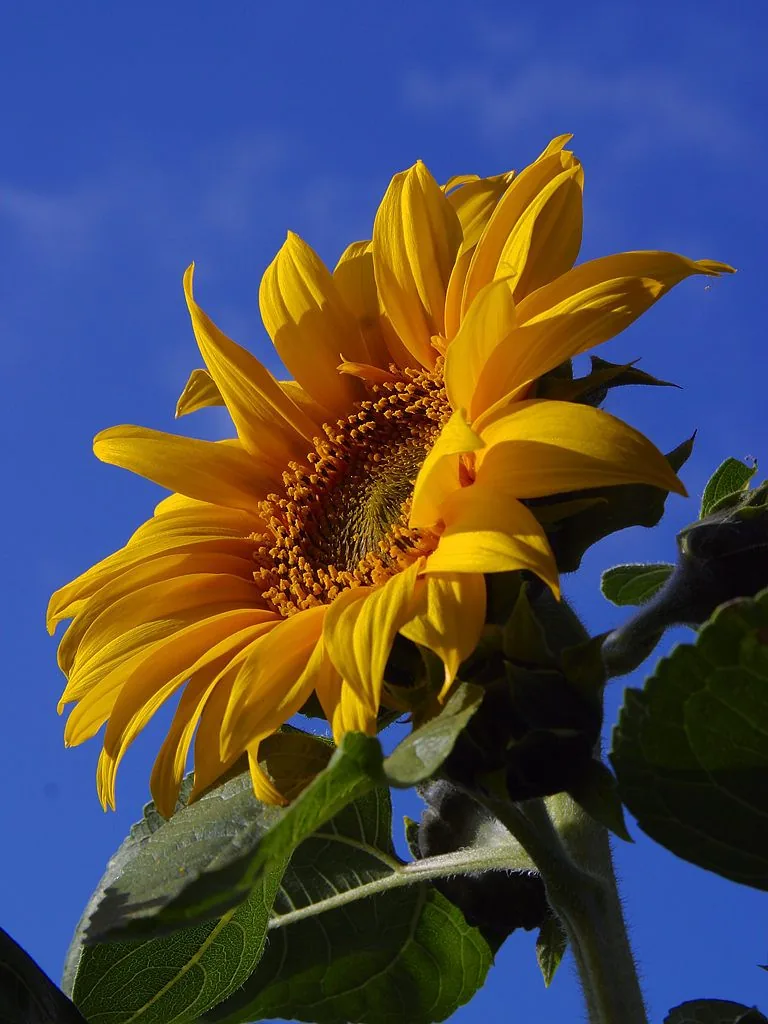
The sunflower is the fast-growing North American annual behind one of the most recognisable flowers in any European garden: a single large, golden-petalled head on a tall, coarse, hairy stem, though modern garden varieties range from dwarf pot plants under 50cm to giants that can top 3–4m in a single season. It is also a significant agricultural crop grown across much of Europe for its seed oil, which is the same species as the garden flower, bred in a different direction. In the garden it is sown or planted each spring and grows astonishingly fast through summer for a single, short-lived autumn flowering before it sets seed and dies.
Full sun. At least 6–8 hours of direct sun a day; a sunflower grown in shade stretches, leans and flowers poorly.
Water
Water regularly, especially while the plant is growing fast and again once the flower bud forms, since drought at bud stage reduces flower size. Established plants tolerate short dry spells better once rooted deeply.
Humidity
Not a significant factor outdoors; this is an open-ground plant unconcerned with ambient humidity.
Soil
Fertile, moisture-retentive and well-drained. Poor, thin soil gives a shorter plant with a smaller flower head rather than killing it outright.
Temperature
Grows best at 21-29°C. Not frost-tolerant.
Size
45cm to 3m tall, depending on the variety.
Growth speed
Fast
✓Non-toxic to pets
Considered non-toxic to cats and dogs.
Source: ASPCA, which lists Helianthus angustifolius, a related species rather than this one.
Signature feature
Young sunflower buds and leaves genuinely do track the sun from east to west through the day, a movement called heliotropism, which is driven by differential growth rates on either side of the stem. This stops once the flower head matures and opens fully: a mature sunflower in bloom settles facing roughly east and stays there, rather than continuing to swivel, which is a common misconception about an otherwise real behaviour.
Care by Season
Spring
Sow directly outdoors after the last frost, once the soil has warmed, or start indoors a few weeks earlier for a head start. Thin seedlings and stake tall varieties early.
Summer
Rapid growth and then flowering, typically from midsummer. Water consistently, especially as the flower bud develops, and feed occasionally if growth looks weak.
Autumn
Flowering finishes and the plant sets seed; leave seed heads for birds or harvest them to dry for next year's sowing or for eating.
Winter
An annual that dies completely after flowering and seeding; the dead stems are cleared away and the plant is started fresh from seed the following spring.
Growing & Maintenance
Planting
Sow directly outdoors after the last frost, once the soil has warmed, or start seed indoors a few weeks earlier. Choose full sun and fertile, well-drained soil.
Support
Stake tall varieties and tie the stem in loosely as it grows. A spot sheltered from wind helps.
Propagation
From seed. Seed saved from F1 hybrid varieties does not grow into the same plant.
Pests & Diseases
Common problems
Stem leaning or snapped
Most likely cause: Wind on a tall plant with no support.
What to do: Stake tall varieties early and grow them in a sheltered spot.
Short plant with a small flower head
Most likely cause: Poor soil, or drought while the bud was forming.
What to do: Grow it in fertile soil and water consistently once the bud appears.
Tall, thin, leaning growth
Most likely cause: Too little sun.
What to do: Give it at least six to eight hours of direct sun a day.
Seedlings eaten overnight
Most likely cause: Slugs and snails.
What to do: Protect young seedlings with a physical barrier until they are well grown.
White powdery coating on the leaves
Most likely cause: Powdery mildew.
What to do: Space the plants for air flow and water the soil, not the leaves.
Flower head drooping after flowering
Most likely cause: Normal. The head bows under the weight of the ripening seed.
What to do: Leave it for the birds, or cut it and dry it to save the seed.
Pests & Diseases
Slugs and snails
Signs: Seedlings and young leaves eaten to ragged holes or disappearing entirely overnight, worst in damp weather.
Treatment: Protect young seedlings with a physical barrier such as a cut-off bottle cloche until they are large enough to outgrow the worst damage; established plants are far less vulnerable than seedlings.
Powdery mildew
Signs: A white, powdery coating on leaves, usually appearing late in the season as plants age and air circulation around crowded stems decreases.
Treatment: Space plants to improve airflow and avoid wetting the foliage when watering. Since mildew usually appears as the plant is finishing flowering anyway, it rarely needs active treatment.
Caterpillars
Signs: Chewed leaves with holes or ragged edges
Treatment: Pick them off by hand. An established plant outgrows moderate damage.
FAQ
My sunflower has grown very tall but the stem has snapped or is leaning badly. What went wrong?
Almost always wind combined with a lack of support, rather than disease. The tallest varieties can reach several metres on a hollow, relatively soft stem, which is vulnerable in open, exposed positions. Staking from early on, before the plant is tall enough to need it, and choosing a sheltered spot or a shorter variety for a windy garden, both reduce the risk considerably; a stem that has already snapped cannot be repaired.
Can I save seed from my sunflowers to grow again next year?
Yes, from the species type, but many popular garden varieties are F1 hybrids, whose seed does not reliably grow into the same plant. Leave the head on the plant until the back turns brown and the seeds feel firm, then cut it and hang it somewhere dry and airy, covered with mesh if birds are a problem, until the seeds can be rubbed out cleanly. Seed from an F1 variety is worth sowing as an experiment but expect more variation than the parent plant showed.
Are sunflowers safe for cats and dogs?
Yes, sunflowers are not toxic to cats or dogs.
How tall does a sunflower grow?
Anything from 45cm to about 3m, depending on the variety. Dwarf types suit pots, while the giants need staking and shelter from wind.
When should I sow sunflowers?
After the last frost, once the soil has warmed up. Sunflowers are not frost-tolerant, so an early start has to be made indoors.
Do sunflowers really follow the sun?
Young ones do. Buds and leaves turn from east to west through the day, but once the flower opens the head stops moving.