No results. Is a plant missing? Tell uscontact@wikiplant.net
Swedish Ivy
Plectranthus verticillatus
Care level: Easy
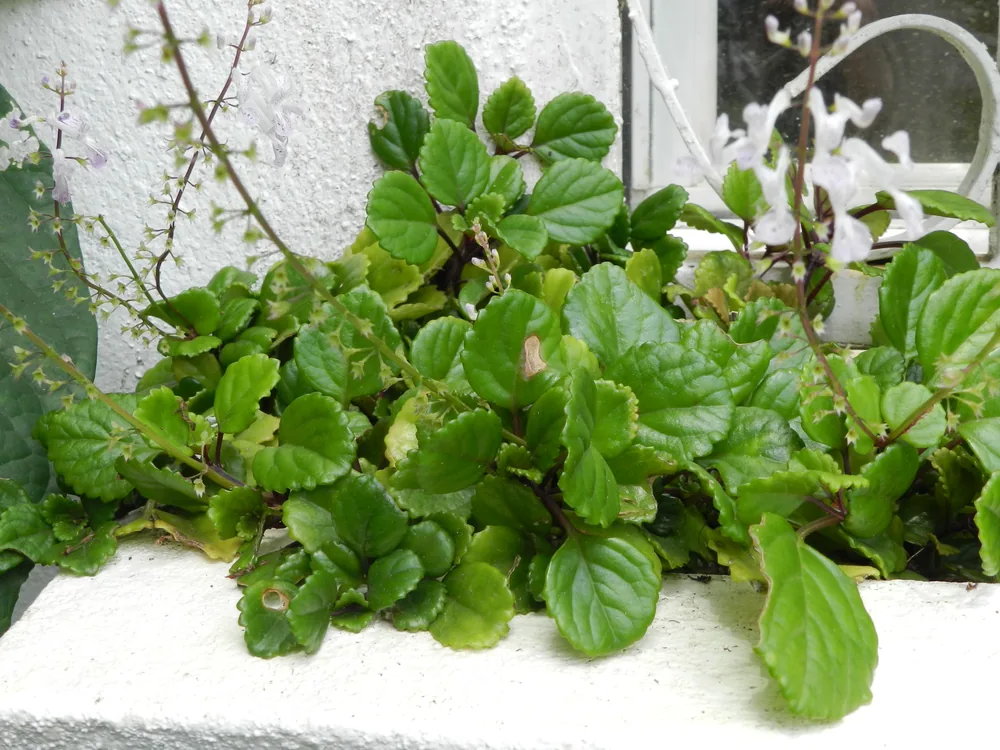
Despite its common name, Swedish Ivy has nothing to do with Sweden or true ivy, it's actually native to southern Africa and belongs to the mint family, a heritage you can confirm by crushing a leaf and noticing its faintly minty-herbal scent; it simply became a beloved hanging-basket staple in Scandinavian homes, which is where the name stuck.
Bright, indirect light produces the fullest growth; tolerates some medium light.
Water
Water when the top 2-3cm of soil is dry, typically weekly; dislikes sitting in soggy soil.
Humidity
Adapts well to average household humidity.
Soil
Well-draining, general-purpose potting mix.
Temperature
Normal room temperatures. Keep it above 10°C.
Growth speed
Fast
Best position
east / south-east-facing windowanywhere up to about 2 m from the window
north / north-east / north-west-facing windowanywhere up to about 1 m from the window
south / west-facing windowabout 1 m from the window or further back
Watch for strong direct sun at south / west windows.
See every window directionHide window directions
Best position
right by the window
about 1 m
about 2 m
about 4 m
4 m or more
north
works well✓
works well✓
too dark○
too dark○
too dark○
north-east
works well✓
works well✓
too dark○
too dark○
too dark○
east
works well✓
works well✓
works well✓
too dark○
too dark○
south-east
works well✓
works well✓
works well✓
too dark○
too dark○
south
just about~
works well✓
works well✓
too dark○
too dark○
south-west
just about~
just about~
works well✓
too dark○
too dark○
west
just about~
works well✓
works well✓
too dark○
too dark○
north-west
works well✓
works well✓
too dark○
too dark○
too dark○
✓works well~just about○too dark☼too much direct sun
A rough guide based on window direction and typical daylight through the year. Window size, curtains and whatever stands outside matter just as much.
?Pet safety not confirmed
As a precaution, keep it out of reach of children and pets.
Propagation tip
Like many of its mint-family relatives, Swedish Ivy roots almost effortlessly from a stem cutting placed in plain water, often producing visible roots within a week or two, making it one of the easiest trailing plants to share or multiply.
Care by Season
Spring
Resume regular watering and begin light feeding as trailing stems grow rapidly.
Summer
Water consistently and pinch tips to encourage bushy, fuller trails.
Autumn
Cut back on watering as growth naturally slows.
Winter
Water sparingly and keep away from cold drafts and heater vents.
Growing & Maintenance
Soil and pot
A well-draining, general-purpose potting mix in a pot with drainage holes.
Fertilising
A light feed in spring and summer. None in winter.
Pruning
Pinch the stem tips to keep the shape and make the trails branch.
Propagation
From stem cuttings, which root easily in water or moist mix.
Pests & Diseases
Common problems
Long trails with few leaves
Most likely cause: Too little light, and no pinching.
What to do: Move it to bright, indirect light and pinch the stem tips.
Yellow leaves and limp stems
Most likely cause: Soggy compost and root rot.
What to do: Let the top 2-3cm dry before watering and never leave the pot standing in water.
Wilting
Most likely cause: The compost has dried out.
What to do: Water thoroughly. It recovers quickly.
Pale, scorched leaves
Most likely cause: Direct sun.
What to do: Give it bright light without direct sun.
Leaves dropping in winter
Most likely cause: Cold draughts or a heater vent.
What to do: Move it away from both and water sparingly.
Pests & Diseases
Mealybugs
Signs: White cottony masses along stems and leaf undersides
Treatment: Dab with rubbing-alcohol soaked cotton swab and repeat weekly. Check the undersides of the leaves and the crevices where the leaf stem meets the main stalk.
Whiteflies
Signs: Tiny white flying insects that scatter when disturbed
Treatment: Use yellow sticky traps and apply insecticidal soap to leaf undersides.
Root rot
Signs: Wilting, blackened stem base despite moist soil
Treatment: Remove from wet soil, trim rotten roots, and repot in fresh, well-draining mix.
FAQ
Is Swedish Ivy related to true ivy (Hedera)?
No, it's a member of the mint family (Lamiaceae), not the ivy family; the resemblance is only in its trailing habit, and you can tell them apart by its square stems and faintly aromatic leaves, both classic mint-family traits.
Why does my Swedish Ivy smell minty when I touch it?
That scent comes from aromatic oils typical of the mint family it belongs to, brushing or trimming the leaves releases a light herbal fragrance, which is a normal and harmless trait of the plant.
How often should I water Swedish Ivy?
About once a week, when the top 2-3cm of compost is dry. Water less in winter and never leave it in soggy compost.
How much light does Swedish Ivy need?
It needs bright, indirect light for the fullest growth. It tolerates medium light, but direct sun scorches the leaves.
How do I propagate Swedish Ivy?
From stem cuttings. A cutting placed in water or moist mix roots within a short time.
Should I pinch back Swedish Ivy?
Yes. Pinching the new stem tips keeps the plant in shape and makes it branch into fuller trails.