No results. Is a plant missing? Tell uscontact@wikiplant.net
Sweet pea
Lathyrus odoratus
Care level: Easy
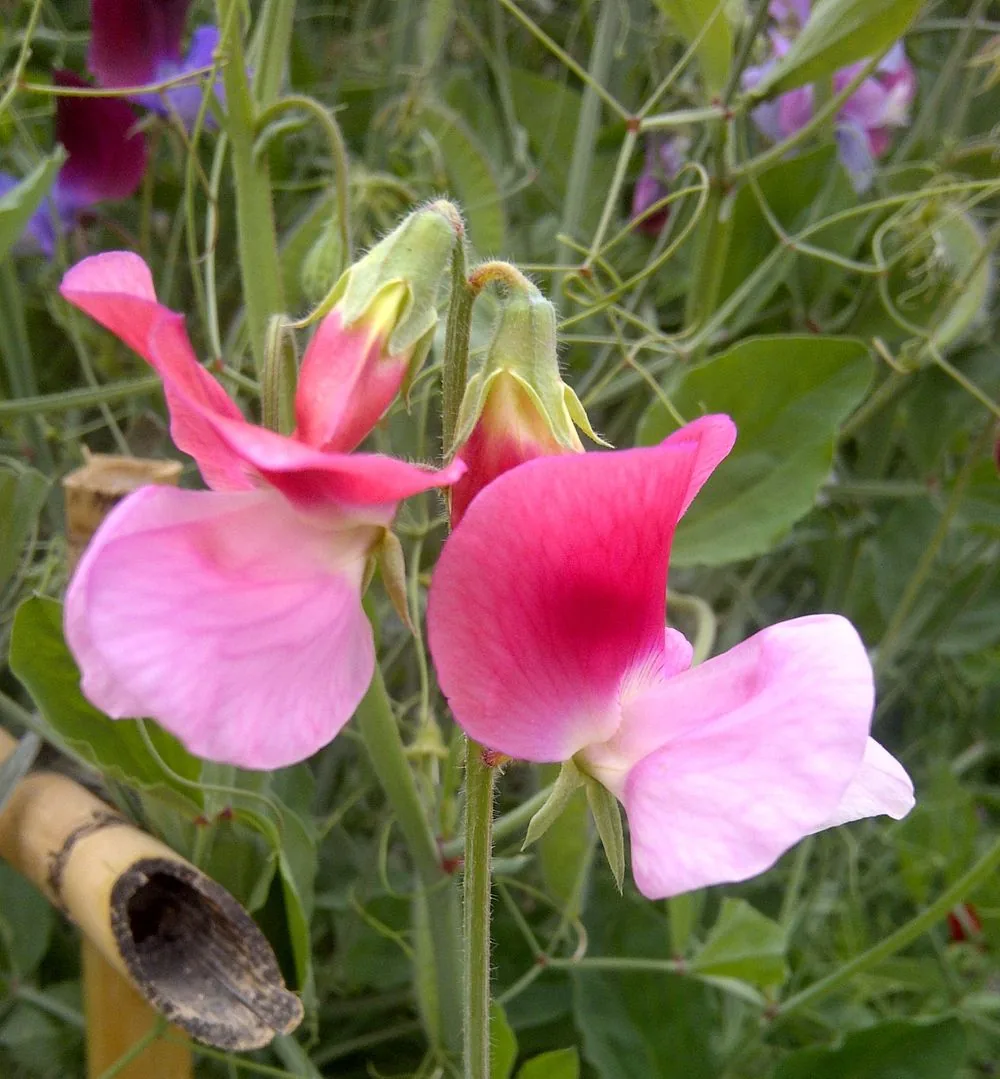
The sweet pea is an annual climber grown for its ruffled, strongly scented flowers in almost every colour except yellow. It climbs by tendrils up canes, netting or twiggy sticks, flowers from early summer and is one of the best plants for cutting: a small jar scents a room. It likes cool weather, deep rich soil and regular water, and it has one firm rule. Unlike garden peas, the seeds and pods are poisonous and must not be eaten.
Lathyrus odoratus 'Cupani'Lathyrus odoratus 'Painted Lady'Lathyrus odoratus Spencer Group
Light
Full sun; light shade in the afternoon helps in hot areas.
Water
Keep the soil moist. Water deeply in dry weather, as dry roots stop flowering and encourage mildew.
Humidity
Not a factor for this outdoor plant.
Soil
Deep, fertile, well-drained soil improved with garden compost or well-rotted manure.
Temperature
A hardy annual that prefers cool weather. Young plants stand light frost; flowering slows in summer heat.
Size
Climbs 1-2.5m in a season; bush types stay under 1m.
Growth speed
Fast
!Toxic to pets
Toxic to cats and dogs if eaten.
It can make cats and dogs unwell, so keep it out of their reach.
If your pet has eaten some, contact your vet.
Source: Pet Poison Helpline
Beginner tip
Pick the flowers every few days. As soon as a plant is allowed to set seed pods it stops producing buds, so cutting is what keeps it flowering for months. Remove any pods you missed.
Care by Season
Spring
Sow, or plant out autumn-sown seedlings once the soil is workable. Pinch out the tips and put up supports.
Summer
Flowering. Pick every few days, tie in stems that wander, water deeply and feed.
Autumn
Plants finish and are cleared. Sow next year's plants under cover.
Winter
Keep autumn-sown seedlings cool, bright and just moist in a cold frame.
Growing & Maintenance
Planting
Sow one or two seeds per deep pot, about 1cm deep, and keep them cool and bright. Harden off and plant out in spring, 20-30cm apart at the foot of the support.
Fertilising
Dig compost or manure into the soil before planting. Feed with a high-potash fertiliser every two weeks once flower buds appear.
Pruning
Pinch out the tips of young plants. Cut flowers and remove faded blooms and seed pods constantly.
Support
Give canes, netting, an obelisk or twiggy sticks about 2m tall. The tendrils grip thin supports; tie in young stems to start them off.
Propagation
By seed. Named varieties come true if grown apart; let a few pods ripen and dry on the plant at the end of the season.
Pests & Diseases
Common problems
Flowering stops early
Most likely cause: Seed pods were left on, or heat and dry soil.
What to do: Remove all pods, water deeply and mulch.
Buds fall before opening
Most likely cause: Cold nights or sharp temperature swings.
What to do: Wait; later buds open normally.
Short flower stems
Most likely cause: Dry or hungry soil, or late in the season.
What to do: Water and feed; stems shorten naturally as plants age.
Leggy, weak seedlings
Most likely cause: Too much warmth and too little light.
What to do: Grow them cool and bright and pinch out the tips.
Yellow leaves from the base
Most likely cause: Drought or waterlogged roots.
What to do: Keep the soil evenly moist and well drained.
Pests & Diseases
Aphids
Signs: Clusters of small insects on shoot tips and buds; streaked or distorted growth can follow, as they spread viruses.
Treatment: Rub them off or rinse them away early.
Slugs and snails
Signs: Seedlings eaten to stumps overnight.
Treatment: Protect young plants, pick slugs off in the evening and plant out sturdy seedlings.
Powdery mildew
Signs: A white powdery coating on the leaves from midsummer, worst on dry soil.
Treatment: Water deeply at the base, mulch and remove badly affected plants at the end of the season.
Mice
Signs: Seeds dug up and eaten before or just after they germinate.
Treatment: Start seeds in pots under cover, out of reach, and plant out as seedlings.
FAQ
When should I sow sweet peas?
In autumn in a cold frame or unheated greenhouse for the earliest, strongest plants, or in late winter to spring. Sow in deep pots or root trainers, as the roots run deep and dislike disturbance.
Do I need to pinch them out?
Yes. When seedlings have three or four pairs of leaves, nip off the tip. The plant branches from the base and gives more flowering stems.
Can you eat sweet peas?
No. They are not edible peas. The seeds and pods are poisonous to people and pets.
Why have my sweet peas stopped flowering?
Usually because seed pods were left on, or because of heat and dry soil. Remove every pod, water deeply and mulch. In a hot summer the season simply ends earlier.
Why are the buds dropping before they open?
Bud drop follows cold nights, big swings between day and night temperature, or dull weather early in the season. The plant recovers by itself once conditions settle.
Do sweet peas come back every year?
No, the plant is an annual and dies after setting seed. Sow again each year. The everlasting pea, Lathyrus latifolius, is the perennial relative, but it has no scent.
Why do my sweet peas have no scent?
Scent depends on the variety. Many large-flowered modern types are only lightly scented; old-fashioned varieties such as 'Cupani' are the strongest.