No results. Is a plant missing? Tell uscontact@wikiplant.net
Sweet violet
Viola odorata
Care level: Easy
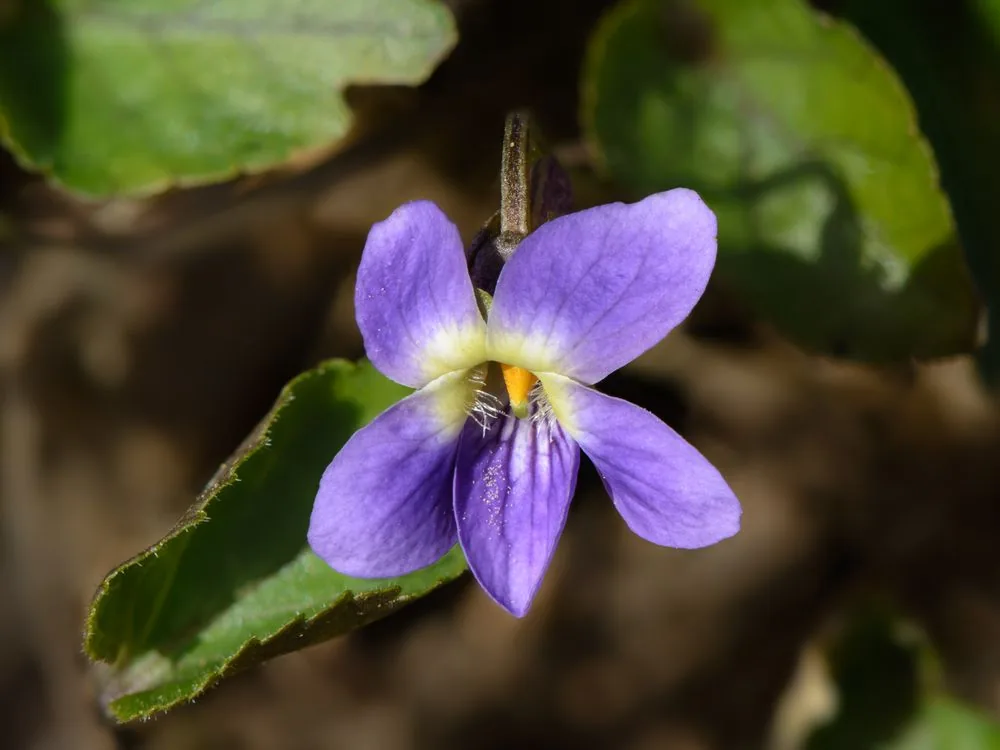
The sweet violet is a low, semi-evergreen perennial of hedge banks and woodland edges, and one of the first garden flowers of the year. From late winter to mid-spring it carries small, strongly scented flowers, usually deep violet but sometimes white or pink, above a tuft of heart-shaped leaves. It spreads by runners that root as they go, and by seed, slowly forming a carpet under shrubs and deciduous trees. The flowers are edible and were long grown for perfume and for sugared cake decorations.
As a precaution, keep it out of reach of children and pets.
Did you know?
The scent seems to vanish after the first sniff. One of the compounds behind the fragrance briefly dulls the nose's ability to detect it, so the smell fades within moments and returns after a short break. The flower has not stopped being scented.
Care by Season
Spring
The main flowering ends. Divide crowded clumps after flowering and mulch with leaf mould.
Summer
Water in dry spells and remove surplus runners.
Autumn
Plant new violets and tidy tattered leaves. A few flowers may appear in mild weather.
Winter
Flower buds open from late winter. Clear fallen leaves off the clumps so the flowers show.
Growing & Maintenance
Planting
Plant in autumn or spring, 20-30cm apart, with the crown at soil level, and water in well.
Fertilising
A spring mulch of leaf mould or garden compost is enough. Avoid high-nitrogen feeds, which give leaves instead of flowers.
Pruning
Remove tattered leaves in late winter before the flowers open, and cut off runners where you want compact plants.
Propagation
Divide after flowering or in autumn, or detach rooted runners. Seed needs a cold period and can be sown outdoors in autumn.
Pests & Diseases
Common problems
Few flowers
Most likely cause: Deep shade, old congested clumps or too much nitrogen.
What to do: Divide, replant in better light and remove runners.
Leaves yellow and speckled in summer
Most likely cause: Red spider mite in dry conditions.
What to do: Water regularly and give more shade.
Plants die out in the centre
Most likely cause: Old clumps.
What to do: Lift, divide and replant the young outer pieces.
Flowers hidden
Most likely cause: Old leaves or fallen tree leaves covering the buds.
What to do: Clear the clump in late winter.
Leaves scorched
Most likely cause: Hot afternoon sun on dry soil.
What to do: Move to partial shade and mulch.
Plants spreading too far
Most likely cause: Runners and self-sown seedlings.
What to do: Pull up unwanted plants in spring.
Pests & Diseases
Slugs and snails
Signs: Ragged holes in leaves and flowers, with slime trails.
Treatment: Hand-pick after dark and clear hiding places near the plants.
Red spider mite
Signs: Leaves turn dull and finely speckled with yellow in hot, dry weather, sometimes with fine webbing.
Treatment: Water well and move plants to a shadier, moister spot. Check the undersides of the leaves and the crevices where the leaf stem meets the main stalk.
Violet gall midge
Signs: Young leaves stay tightly rolled and thickened, with small grubs inside.
Treatment: Pick off and destroy the rolled leaves.
Pansy leaf spot
Signs: Dark spots on the leaves that enlarge in wet weather.
Treatment: Remove affected leaves and avoid overcrowding.
Powdery mildew
Signs: A white, powdery coating on the leaves in dry summers.
Treatment: Water in dry weather and remove the worst leaves.
FAQ
Where should I plant sweet violets?
In partial shade, in soil that stays moist but drains well: under deciduous shrubs and trees, along a hedge or at the foot of a north- or east-facing wall. They take full sun in spring if the soil does not dry out in summer.
Why are there plenty of leaves but few flowers?
Usually deep shade, crowded old clumps or too much nitrogen. Divide the clump, replant the young outer pieces in fresh soil and remove some of the runners so the plant puts its energy into flower buds.
Do sweet violets spread?
Yes. Runners root to form new plants and ants carry the seeds further. They are easy to pull up where they are not wanted and are rarely a nuisance.
Are the flowers edible?
Yes, the flowers of sweet violet are used fresh in salads, crystallised with sugar for cakes or made into syrup. Use only flowers that have not been sprayed.
Why do seedlings appear when I never see seed pods?
As well as the scented spring flowers, the plant makes small, closed flowers in summer that never open and pollinate themselves near the ground. These set most of the seed.
Can I grow sweet violets in a pot?
Yes, in a pot of loam-based compost kept in a cool, partly shaded spot and never allowed to dry out. Divide and repot every two years.
How do I tell it from the dog violet?
By scent and by its runners. The common dog violet, Viola riviniana, has no fragrance and does not spread by long rooting runners.