No results. Is a plant missing? Tell uscontact@wikiplant.net
Thuja
Thuja occidentalis
Care level: Easy
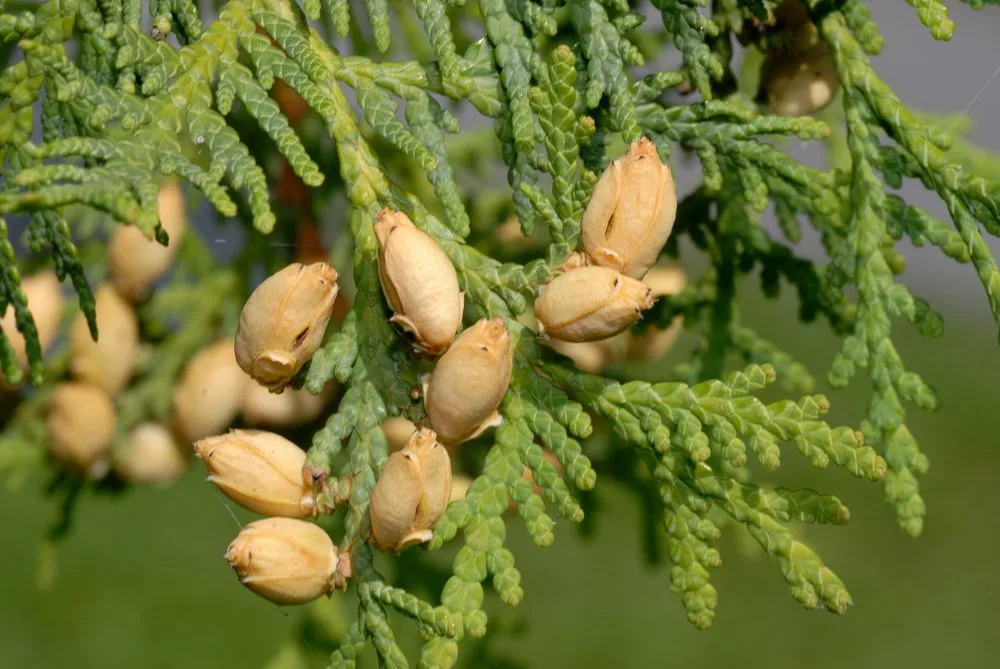
Thuja, also sold as arborvitae or white cedar, is an evergreen conifer from eastern North America with flat, fan-like sprays of scale-like leaves and small, upright brown cones. In the wild it is a slow-growing tree with a single dominant trunk, but gardens mostly grow its compact cultivars as hedges, screens and neat cones or globes. It puts up with clay, wet ground and polluted air, and asks for little beyond moisture at the roots.
Thuja occidentalis 'Smaragd'Thuja occidentalis 'Brabant'Thuja occidentalis 'Danica'
Light
Full sun or partial shade. In full shade the foliage thins out.
Water
Keep the soil moist. Water young plants and hedges through dry spells, and do not let pots dry out.
Humidity
It likes moist air and dislikes dry, windy positions.
Soil
Moist, well-drained loam, neutral to alkaline. Clay and wet ground are tolerated.
Temperature
Very hardy. Drying winter wind does more harm than cold.
Size
12-18m tall and 3-4.5m wide.
Growth speed
Slow
?Pet safety not confirmed
As a precaution, keep it out of reach of children and pets.
Common mistake
Planting thuja on a dry, exposed, windy site is the usual reason it fails. Cold itself rarely hurts it, but drying winter wind turns the foliage yellow-brown, and the plant wants soil that stays moist all year.
Care by Season
Spring
A good time to plant. Water new plants regularly and mulch around the base to hold moisture.
Summer
Water in dry weather, especially young hedges. Small cones appear in spring and ripen to brown over summer.
Autumn
The other good planting season. Water thoroughly before the ground freezes so the plant enters winter well supplied.
Winter
Foliage on exposed plants may bronze or burn. Brush off heavy snow before it bends or breaks the stems.
Growing & Maintenance
Planting
Plant in spring or autumn in moist, well-drained soil in sun or light shade, out of drying wind. It transplants easily. For a hedge, set plants in a row and keep them watered for the first years.
Pruning
Trim hedges and shaped plants lightly, staying within the green growth. Free-standing trees need no pruning beyond removing dead or broken stems.
Propagation
Cultivars are raised from cuttings so that they stay true to type; most gardeners simply buy young plants.
Pests & Diseases
Common problems
Yellow-brown foliage after winter
Most likely cause: Winter burn on a dry, exposed, windy site.
What to do: Give shelter from wind and water well in autumn and in dry spells.
Thin, sparse foliage
Most likely cause: Too much shade.
What to do: Grow it in full sun or partial shade.
Bent or broken stems
Most likely cause: The weight of snow and ice.
What to do: Brush snow off after heavy falls and tie upright forms before winter.
Browning in summer
Most likely cause: Dry soil.
What to do: Water deeply and mulch the root area.
Lower foliage eaten away
Most likely cause: Browsing deer, which can do serious damage.
What to do: Fence or net young plants where deer are present.
Sunken, dead patches on stems
Most likely cause: Canker, an occasional disease.
What to do: Cut affected stems back to healthy wood and clean the blades afterwards.
Pests & Diseases
Leaf miners
Signs: The tips of the sprays turn brown and hollow while the rest of the plant stays green.
Treatment: Clip off and dispose of the affected tips. A healthy, well-watered plant outgrows light damage.
Bagworms
Signs: Small, spindle-shaped bags of silk and foliage hanging from the twigs, with stripped patches around them.
Treatment: Pick the bags off by hand and destroy them, ideally in winter before the eggs inside hatch.
Spider mites
Signs: Dull, speckled, yellowing foliage in hot, dry weather, sometimes with fine webbing.
Treatment: Hose the foliage down firmly and keep the plant watered; mites thrive on dry, stressed plants. Check the undersides of the leaves and the crevices where the leaf stem meets the main stalk.
Scale insects
Signs: Small, shell-like bumps on the twigs and foliage, sometimes with sticky honeydew.
Treatment: Prune out badly affected sprays and scrub off small colonies.
FAQ
Why is my thuja turning brown in winter?
Usually winter burn. On an exposed, windy site the foliage loses water it cannot replace and turns yellow-brown. Plant in a spot sheltered from the wind, and water well in dry spells, including in autumn before the ground freezes.
How fast does thuja grow?
The species is slow, which is why a thuja hedge takes patience. Growth depends heavily on the cultivar, so check the label: hedging selections are faster than the dwarf globes.
Can thuja grow in shade?
It grows well in full sun or partial shade. In full shade the foliage thins out markedly and the plant loses the density that makes it useful as a screen.
What soil does thuja need?
Moist, well-drained loam, neutral to alkaline, is ideal. It also tolerates clay and wet sites. What it does not tolerate is dry soil.
Does snow damage thuja?
It can. Heavy snow and ice build up on the foliage and can bend or break stems. Knock snow off gently after a heavy fall, and tie upright forms loosely together before winter where snow is regular.
Is thuja a good hedge?
Yes. Planted in a row it makes a dense, evergreen hedge, privacy screen or windbreak, and the thick crown offers nesting places for songbirds. Keep it watered in its first years.