No results. Is a plant missing? Tell uscontact@wikiplant.net
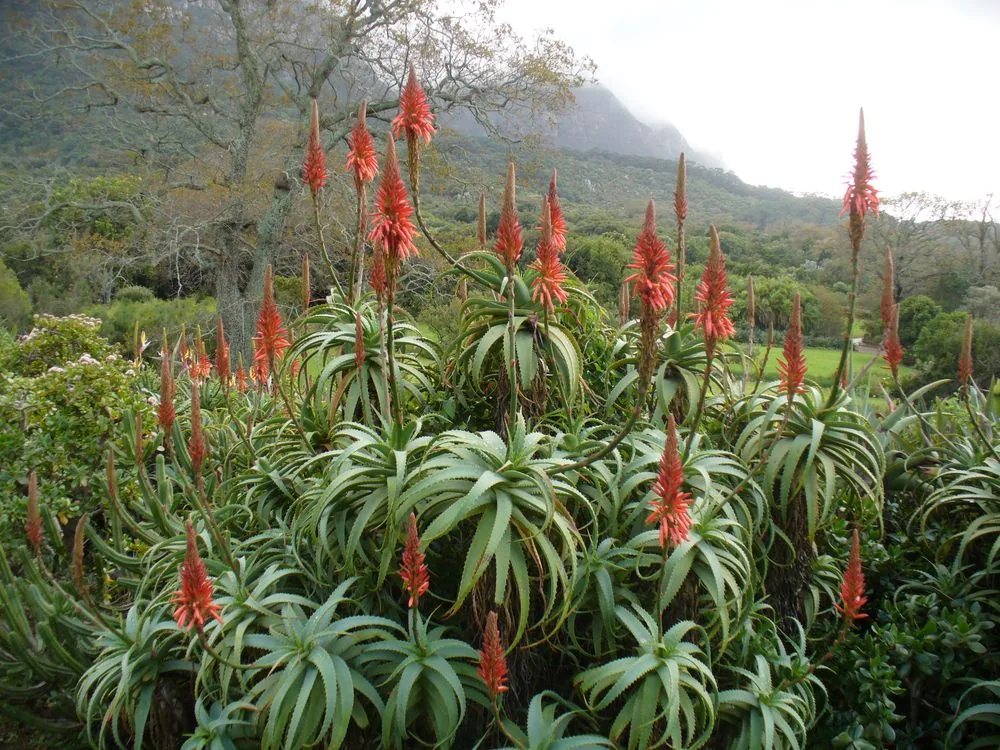
Torch aloe
Aloe arborescens
Care level: Easy
The torch aloe is a bushy, many-headed succulent shrub from southern Africa. Each branch ends in a rosette of long, slender, curved, blue-green leaves edged with pale teeth, and from late winter into spring mature plants send up tall spikes of tubular, coral-red flowers that give it its name. Where winters are frost free it is planted outdoors as a hedge or specimen; elsewhere it is a tough, fast houseplant or conservatory plant that branches into a small tree shape. It needs sun, gritty compost and very little water in winter.
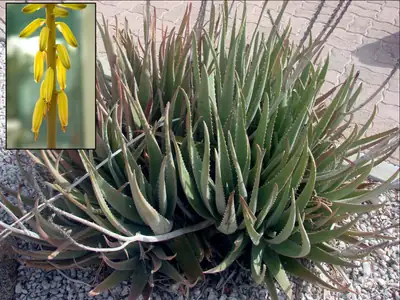
Aloe arborescens 'Variegata'Aloe veraAloe x spinosissima
Light
Full sun or the brightest light you can give. Get it used to strong sun gradually after winter.
Water
Water moderately in growth and let the compost dry out between waterings. Water very sparingly in winter.
Humidity
Dry air suits it. No misting.
Soil
A cactus compost, or a loam-based compost with added grit, in a pot with drainage holes.
Temperature
Not frost hardy. Keep it above about 10°C in winter; it can stand outside in summer.
Size
A branching shrub of 2.5-4m outdoors in mild climates; under 1m for years in a pot.
Growth speed
Medium
!Toxic to pets
Toxic to cats and dogs if eaten.
Eating it can cause vomiting and an upset stomach.
If your pet has eaten some, contact your vet.
Source: RHS, Pet Poison Helpline
Signature feature
Unlike Aloe vera, which stays a single low rosette, this aloe grows a woody stem and branches, so over the years it becomes a small, many-headed tree. Each new head can be cut off and rooted.
Care by Season
Spring
Flowering ends. Resume watering, repot if needed and take offsets from late spring.
Summer
Water moderately and feed monthly. It can stand outdoors in full sun.
Autumn
Bring it indoors before the first frost and reduce watering.
Winter
Keep it bright, cool and almost dry. Flower spikes appear from late winter.
Growing & Maintenance
Repotting
Repot every two or three years in spring into a heavy pot only slightly larger; tall plants become top-heavy in light pots.
Fertilising
Feed once a month from late spring to late summer with a general liquid fertiliser.
Pruning
No pruning is needed. Remove dead lower leaves and spent flower stalks, and cut off heads to limit size or to make cuttings.
Propagation
By offsets or branch cuttings in late spring or early summer, dried for a few days before potting, or by seed sown warm as soon as it is ripe.
Pests & Diseases
Common problems
Soft, brown, translucent leaves
Most likely cause: Overwatering, especially in winter.
What to do: Let the compost dry out fully and water far less.
Pale, stretched growth
Most likely cause: Too little light.
What to do: Move it to full sun, gradually.
Brown, dry patches on the leaves
Most likely cause: Sudden strong sun after winter indoors.
What to do: Harden it off over one to two weeks.
No flowers
Most likely cause: A young plant, or a warm, dim, wet winter.
What to do: Give a bright, cool, dry rest.
The plant topples over
Most likely cause: A tall, branching plant in a light pot.
What to do: Repot into a heavy clay pot, or cut back and re-root the heads.
Pests & Diseases
Mealybugs
Signs: White, woolly tufts deep between the leaves and at the base of the rosettes.
Treatment: Dab them off with a cotton bud dipped in alcohol and repeat weekly. Check the undersides of the leaves and the crevices where the leaf stem meets the main stalk.
Scale insects
Signs: Small brown or grey bumps on the leaves and stems, with sticky honeydew.
Treatment: Scrape or wipe them off and check again every week.
Root rot
Signs: Leaves that turn soft and brown from the base and a stem that blackens, in wet compost.
Treatment: Cut off healthy heads, dry them for a few days and re-root them in fresh, gritty compost.
FAQ
Is torch aloe the same as Aloe vera?
No. They are related, but torch aloe has narrower, more curved, toothed leaves, grows a branching stem and has red flowers. Aloe vera stays stemless, with thick, spotted leaves and yellow flowers.
How often should I water it?
Moderately while it is growing in spring and summer, letting the compost dry between waterings, and very sparingly in winter, when once a month is plenty.
Why is my torch aloe not flowering?
It needs to be mature, several years old, and to have had a bright, cool, dry winter. Plants kept warm and watered in dim light all winter rarely flower.
Why are the leaves turning red or brown?
A reddish tinge is a normal reaction to strong sun, cold or drought and fades again. Soft, brown, translucent leaves mean too much water.
Can it go outside in summer?
Yes. Move it out after the last frost, into light shade first and then full sun over a week or two, or the leaves scorch.
How do I propagate it?
Cut off a side branch or basal offset in late spring or early summer, let the cut dry for a few days, then pot it in dry, gritty compost and water lightly once roots form.