No results. Is a plant missing? Tell uscontact@wikiplant.net
Tree Houseleek
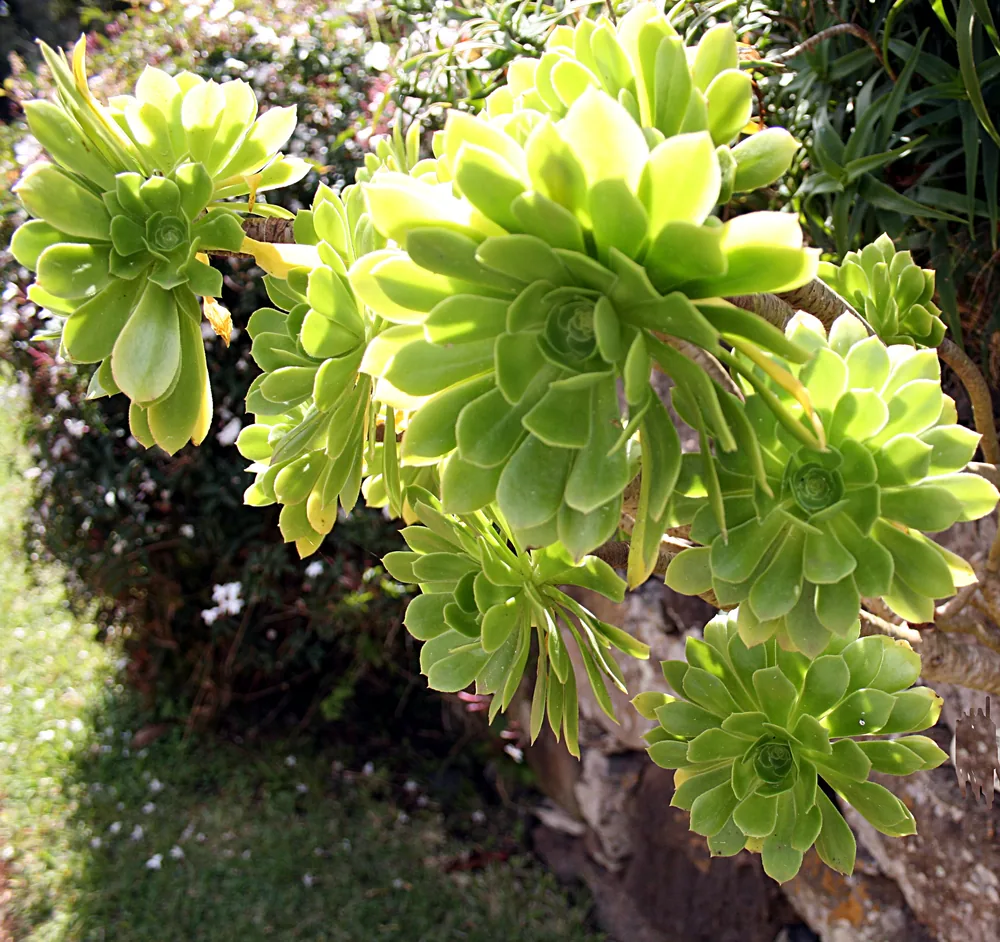
Aeonium arboreum
Care level: Easy
Aeonium arboreum runs on the opposite calendar from most succulents: rather than resting in winter, it actively grows through the cooler, wetter months and can go semi-dormant in summer heat, sometimes dropping lower leaves to cope. Its rosettes sit atop slowly woodening stems, giving older plants a small, sculptural, tree-like shape that's unusual among rosette succulents.
ZwartkopSunburstAeonium arboreum var. rubrolineatum
Light
Needs bright light with several hours of direct sun; darker cultivars especially need strong light to keep their color.
Water
Water when soil is fully dry, more often in active growth (autumn-spring) and much less in summer dormancy.
Humidity
Tolerates average to dry household air without issue.
Soil
Very well-draining succulent or cactus mix.
Temperature
Cool and bright suits it. Bring it indoors before nights drop to about 4°C.
Best position
south-east / south / south-west-facing windowanywhere up to about 1 m from the window
east / west-facing windowright by the window
See every window directionHide window directions
Best position
right by the window
about 1 m
about 2 m
about 4 m
4 m or more
north
too dark○
too dark○
too dark○
too dark○
too dark○
north-east
too dark○
too dark○
too dark○
too dark○
too dark○
east
works well✓
too dark○
too dark○
too dark○
too dark○
south-east
works well✓
works well✓
too dark○
too dark○
too dark○
south
works well✓
works well✓
too dark○
too dark○
too dark○
south-west
works well✓
works well✓
too dark○
too dark○
too dark○
west
works well✓
too dark○
too dark○
too dark○
too dark○
north-west
too dark○
too dark○
too dark○
too dark○
too dark○
✓works well~just about○too dark☼too much direct sun
A rough guide based on window direction and typical daylight through the year. Window size, curtains and whatever stands outside matter just as much.
?Pet safety not confirmed
As a precaution, keep it out of reach of children and pets.
Did you know?
Dark cultivars like Zwartkop only develop their near-black color in strong direct sun; the same plant grown in lower light will revert to green, since the dark pigment is a sun-protection response rather than a fixed trait.
Care by Season
Spring
Growth is active; water moderately when soil dries out and give as much light as possible.
Summer
Aeoniums often go semi-dormant in heat and may drop lower leaves; water sparingly during this rest period.
Autumn
Growth resumes as temperatures cool; increase watering frequency and resume light feeding.
Winter
This is peak growing season for aeoniums; keep it bright and cool, watering moderately when dry.
Growing & Maintenance
Soil and pot
A very well-draining succulent or cactus mix in a pot with drainage holes.
Fertilising
A light feed in autumn, when growth resumes. None during the summer rest.
Propagation
From cuttings taken in spring or summer: a rosette with a piece of stem, left to dry before it is set in succulent mix.
Pests & Diseases
Common problems
Lower leaves dropping in summer
Most likely cause: Normal. It rests in the heat and sheds leaves.
What to do: Water sparingly until growth resumes in autumn.
Dark cultivar turning green
Most likely cause: Too little direct sun.
What to do: Move it into several hours of direct sun.
Scorched leaves
Most likely cause: Sudden strong sun in spring.
What to do: Get it used to the sun gradually.
Soft, blackening stem
Most likely cause: Overwatering and root rot.
What to do: Cut away the rotten tissue, let the cut dry and repot in dry succulent mix.
A rosette dying after it has flowered
Most likely cause: Normal. The rosette that flowers dies afterwards.
What to do: Cut it off. The other branches carry on, and cuttings replace it.
Pests & Diseases
Mealybugs
Signs: White cottony clumps nestled between leaves
Treatment: Remove with an alcohol-dipped cotton swab and repeat weekly. Check the undersides of the leaves and the crevices where the leaf stem meets the main stalk.
Root rot
Signs: Mushy, collapsing rosette and blackened stem from overwatering
Treatment: Cut away rotten tissue, let it callous, and repot in fresh dry succulent mix.
Aphids
Signs: Small insects clustering on new rosette centers
Treatment: Rinse off gently or apply insecticidal soap.
FAQ
Why is my Aeonium dropping its lower leaves in summer?
This is usually normal seasonal behavior, not a problem; aeoniums often go semi-dormant in summer heat and shed some lower leaves as a stress response, then resume active growth as temperatures cool in autumn.
Why did my dark purple Aeonium turn green?
Insufficient direct sun is the most common cause; the dark pigmentation in cultivars like Zwartkop depends on strong light, and a plant moved to a shadier spot will gradually green up.
How often should I water an Aeonium?
When the mix is fully dry: more often from autumn to spring, when it grows, and much less in summer. In winter, give just enough to keep the leaves firm.
How much light does an Aeonium need?
It needs bright light with several hours of direct sun. Get it used to strong spring sun gradually, or the leaves scorch.
When does an Aeonium grow?
From autumn to spring. In summer heat it goes semi-dormant, closes its rosettes and drops lower leaves.
Does an Aeonium flower?
Yes, with a cluster of star-shaped flowers in late winter or spring. It can take several years, and the rosette that flowers dies afterwards.