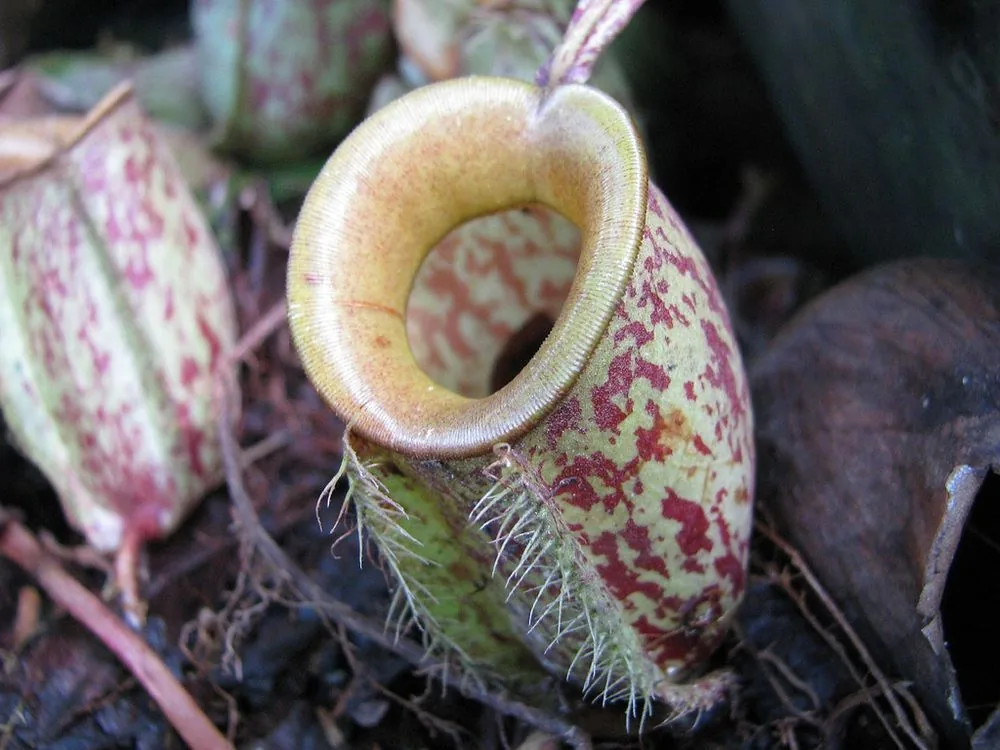
A tropical pitcher plant with green and red speckled pitchers hanging from the tips of its leaves

Tropical pitcher plant

Nepenthes spp.
Care level: Moderate

Tropical pitcher plants are carnivorous climbers from the forests of Southeast Asia, grown for the hanging traps that give them the name monkey cups. Each leaf ends in a tendril, and the tip of the tendril swells into a pitcher with a lid and a slippery rim. Insects drawn to the rim fall into the fluid at the bottom and are digested there. The plants sold for the home are mostly tough hybrids such as Nepenthes x ventrata, which cope with room conditions and are usually grown in a hanging pot so the pitchers can dangle freely.

I have this plant

Information

Varieties and related species
Nepenthes x ventrataNepenthes alataNepenthes 'Bloody Mary'

Light

Bright, indirect light with some gentle morning or evening sun. Shade from strong midday sun, which scorches the leaves.

Water

Water from above with rainwater whenever the surface starts to dry, and let it drain. Do not leave the pot standing in water.

Humidity

High humidity is the key to pitchers. A bathroom, kitchen or a group of plants suits it; mist in dry rooms.

Soil

A very open, lime-free, low-nutrient mix such as sphagnum moss with orchid bark and perlite.

Temperature

Room temperature all year, ideally above about 15°C, away from cold draughts.

Size

A climbing vine; houseplant hybrids are usually 20-50cm across, with pitchers 5-15cm long.

Growth speed

Slow

Pet safety not confirmed

As a precaution, keep it out of reach of children and pets.

Common mistake

Do not treat it like other carnivorous plants. Venus flytraps and sundews stand in a saucer of water, but a tropical pitcher plant rots if it does. It is a rainforest climber that roots in loose moss and bark: water it from the top, let the surplus drain away and keep the mix moist but airy.

Care by Season

Spring

Growth picks up. Repot if the mix has broken down and cut back leggy stems.

Summer

Water often, keep the humidity up and shade from hot sun.

Autumn

Growth slows. Remove dried pitchers and reduce watering slightly.

Winter

Keep warm and as bright as possible, away from cold windows and radiators.

Growing & Maintenance

Repotting

Repot in spring every two to three years, or when the moss turns dark and compacted. Handle the thin, black roots gently and do not use ordinary potting compost.

Fertilising

No fertiliser in the pot. The roots are sensitive to salts, and the plant gets what it needs from light and the insects it traps.

Pruning

Cut off pitchers once they have dried completely, and remove dead leaves. Shorten long vines in spring to encourage side shoots.

Support

Grow it in a hanging pot so the pitchers hang free, or tie the climbing stems to a moss pole or small trellis.

Propagation

Stem cuttings of two or three leaves, rooted in damp sphagnum moss in a warm, humid, bright place. Rooting takes a couple of months.

Pests & Diseases

Common problems

No new pitchers

Most likely cause: Dry air or too little light.
What to do: Raise the humidity and move it to brighter light.

Pitchers brown soon after forming

Most likely cause: Dry air, a cold draught or a recent move.
What to do: Give stable warmth and humidity.

Leaves with red or brown scorched patches

Most likely cause: Strong direct sun through glass.
What to do: Move it out of midday sun.

Black, mushy stem base

Most likely cause: The pot stood in water or the mix has broken down.
What to do: Repot into a fresh, open mix and let it drain freely.

Long, bare stems

Most likely cause: Natural climbing growth.
What to do: Cut back in spring to make it branch.

Leaf tips brown and growth stalls

Most likely cause: Hard tap water or fertiliser in the pot.
What to do: Flush the mix with rainwater and use only rainwater from then on.

Pests & Diseases

Scale insects

Signs: Small brown bumps on stems and the undersides of leaves, with sticky honeydew.
Treatment: Wipe them off with a cotton bud dipped in methylated spirit and check again every week.

Mealybugs

Signs: White, woolly tufts in the leaf joints and around the growing tip.
Treatment: Dab them with methylated spirit and repeat weekly until they are gone. Check the undersides of the leaves and the crevices where the leaf stem meets the main stalk.

Thrips

Signs: Silvery streaks and distorted new leaves with tiny black specks.
Treatment: Rinse the foliage, raise the humidity and use blue sticky traps.

FAQ

Why has my plant stopped making pitchers?

Almost always dry air or too little light. The pitcher bud at the tip of each new leaf dries up before it can swell. Move the plant to a brighter, more humid spot such as a bathroom window, and mist it or stand it near other plants.

Which water should I use?

Rainwater, distilled or deionised water. The minerals in hard tap water build up in the mix and damage the roots over time.

Do I need to feed it insects?

No. It grows from light like any other plant and catches the odd fly by itself. An occasional small insect dropped into a pitcher does no harm, but never use meat or put fertiliser in the pot.

Should I put water in the pitchers?

No. The plant makes its own digestive fluid, and healthy pitchers hold what they need. If the fluid was spilled in transport, the pitcher may dry early, but new ones will follow.

Why are the pitchers turning brown?

Each pitcher lasts only a few months and then dries from the lid downwards. That is normal ageing. If new pitchers brown quickly, the air is too dry or the plant has been moved or chilled.

Can I cut the long stems back?

Yes. Shortening a leggy vine in spring makes it branch from lower down, and the new shoots carry fresh pitchers. The cut tips can be used as cuttings.

Does it need a winter rest?

No. It is a tropical plant with no dormancy. Growth slows in the darker months, so water a little less but keep it warm and bright.

You might also like