No results. Is a plant missing? Tell uscontact@wikiplant.net
Tulip
Tulipa gesneriana
Care level: Easy
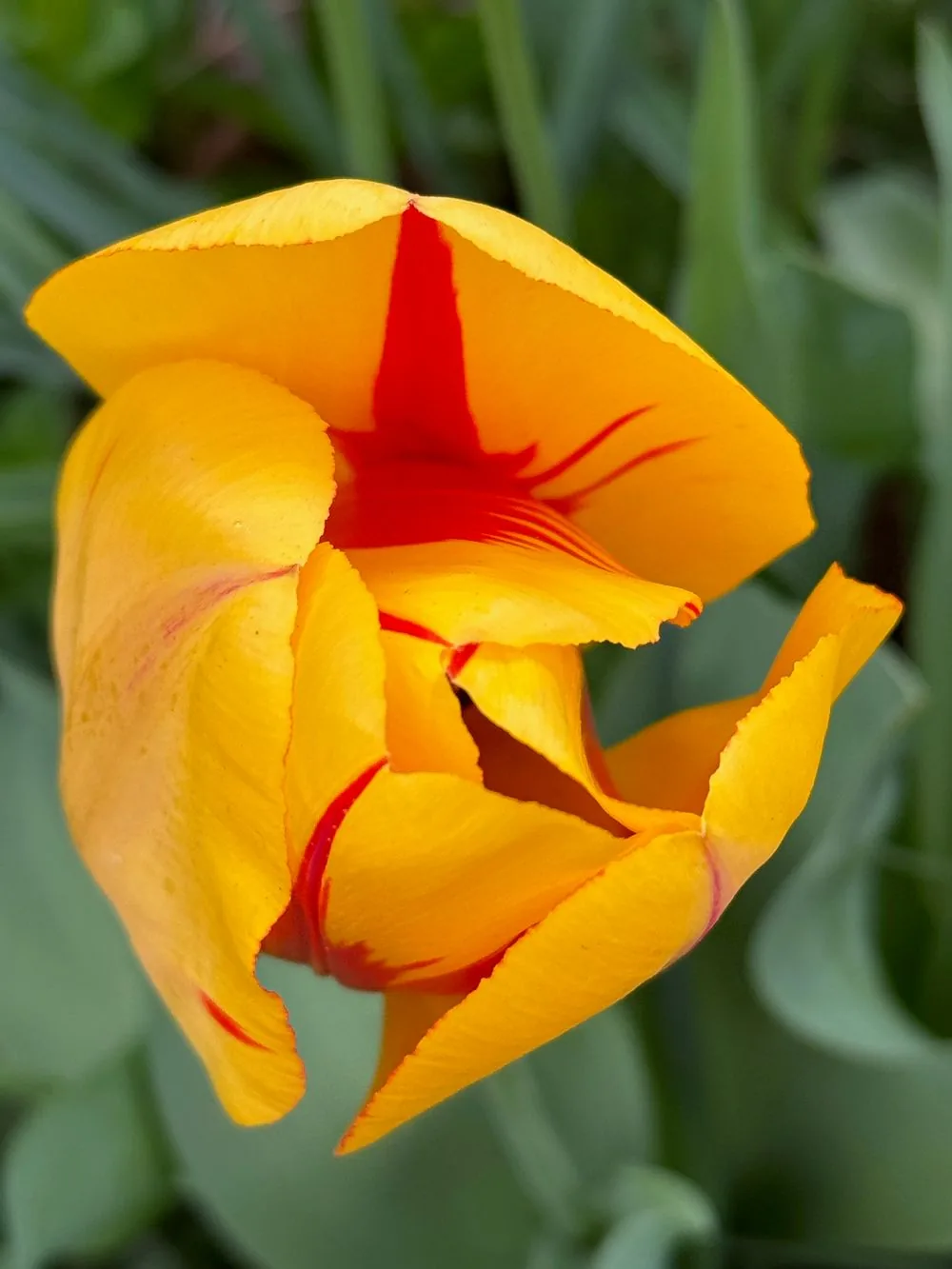
The garden tulip is the spring bulb behind the fields of the Netherlands and the window boxes of half of Europe, a single upright cup of six petals on a bare stem above a few broad, grey-green leaves. Most of what is sold today under this name is a complex hybrid bred over centuries from wild Central Asian species, in almost every colour except true blue. It flowers for a few weeks in mid to late spring, then dies back completely and spends the rest of the year as a dormant bulb underground.
Tulipa gesneriana Darwin Hybrid groupTulipa clusianaTulipa gesneriana Parrot group
Light
Full sun. Tulips flower and stand up straightest in an open, sunny spot; shade makes the stems stretch and lean towards the light.
Water
Water in after planting and during active spring growth if the weather is dry. Once the leaves have died back the dormant bulb wants to stay on the dry side, especially over summer.
Humidity
Not a significant factor; this is an open-ground and container bulb unconcerned with ambient humidity.
Soil
Free-draining and fertile. Bulbs rot in heavy, waterlogged soil over winter, which is the single most common reason a planting fails to come up.
Temperature
Hardy to about -20°C. It needs a cold winter to flower well.
Size
10-70cm tall and 15-23cm wide, depending on the variety.
Eating it can cause vomiting and an upset stomach.
If your pet has eaten some, contact your vet.
Source: ASPCA
Signature feature
A tulip bulb needs a real cold winter to flower well the following spring, which is why bulbs bought in a warm climate are often pre-chilled by the supplier. In a mild European winter this looks after itself; further south, or in a very sheltered garden, bulbs can be chilled in a paper bag in the fridge (never the freezer) for 8-10 weeks before planting to make up the difference.
Care by Season
Spring
Flowering, typically April to May depending on the variety. Deadhead spent flowers but leave the leaves and stem in place to die back naturally, which feeds the bulb for next year.
Summer
The plant is fully dormant underground by early summer. In heavy or wet soil, bulbs of hybrid varieties are sometimes lifted once the leaves have browned and stored dry until autumn.
Autumn
The main planting season, once the soil has cooled after summer. Plant at roughly three times the bulb's height in free-draining soil or pots.
Winter
Hardy down to around -20°C once planted; the cold itself is what triggers good flowering the following spring, so a mild winter can actually mean a weaker display.
Growing & Maintenance
Planting
Plant in late autumn, once the soil has cooled, at about three times the bulb's own depth, in free-draining, fertile soil in full sun.
Pruning
Remove the spent flowers, but leave the leaves until they have yellowed.
Propagation
By separating the offsets when the bulbs are lifted.
Pests & Diseases
Common problems
Smaller flowers or none in the second year
Most likely cause: Normal for most modern hybrid tulips, which are bred for one display.
What to do: Replant fresh bulbs each autumn, or choose species tulips that come back.
Bulbs rotted over winter
Most likely cause: Heavy, waterlogged soil.
What to do: Plant in free-draining soil, or in pots.
Twisted leaves with scorched spots
Most likely cause: Tulip fire, a fungal disease.
What to do: Remove and destroy affected plants promptly, and do not replant tulips in that spot.
Long, leaning stems
Most likely cause: Shade.
What to do: Plant in an open, sunny spot.
Holes in the leaves and flowers
Most likely cause: Slugs and snails.
What to do: Check with a torch after dark and pick them off.
Pests & Diseases
Tulip fire (Botrytis tulipae)
Signs: Distorted, scorched-looking shoots as they emerge, grey mould on leaves and flowers in wet weather, and small black resting bodies on dead tissue and in the soil.
Treatment: Remove and destroy affected plants promptly, do not replant tulips in the same spot for at least three years, and plant bulbs a little later in autumn once the soil has cooled, which reduces the risk considerably.
Slugs and snails
Signs: Ragged holes in the emerging leaves and flower buds, usually worse in a wet spring.
Treatment: Beer traps and torchlight checks after dark reduce damage on young growth. Bulbs in raised pots generally suffer less than those in open borders.
Aphids
Signs: Clusters of small insects on the stems, buds and leaves
Treatment: Rinse them off with water.
FAQ
My tulips flowered well in their first spring but came back smaller or not at all the next year. Why?
This is normal for most modern hybrid tulips, which are bred for one spectacular display rather than for reliably returning. The bulb splits into smaller bulbs after flowering, and each of those takes a year or more to build up enough reserves to flower again. Leaving the foliage to die back naturally rather than cutting it early, and feeding after flowering, both help; otherwise most gardeners treat hybrid tulips as a bulb to replace every year or two and plant species tulips, which do perennialise reliably, where a lasting display matters more.
When is the right time to plant tulip bulbs, and does depth matter?
Late autumn, once the soil has cooled, is better than early autumn: planting too early in still-warm soil increases the risk of a fungal disease called tulip fire. Depth matters more than most bulbs - about three times the bulb's own height, roughly 15-20cm to the base in average soil - since a shallow-planted tulip is both more exposed to frost heave and more likely to split into non-flowering offsets.
Are Tulips toxic to cats and dogs?
Yes, Tulips are toxic to cats and dogs. Eating the plant, and above all the bulb, can cause stomach upset, so keep bulbs out of reach.
When do Tulips flower?
From April to May, depending on the variety. Remove the flowers as they fade and leave the leaves.
How hardy are Tulips?
They are hardy to around -20°C once planted. The cold itself is what triggers good flowering the following spring.
How much sun do Tulips need?
Full sun. In an open, sunny spot the stems stand straightest, while shade makes them stretch and lean.