No results. Is a plant missing? Tell uscontact@wikiplant.net
Urn plant
Aechmea fasciata
Care level: Easy
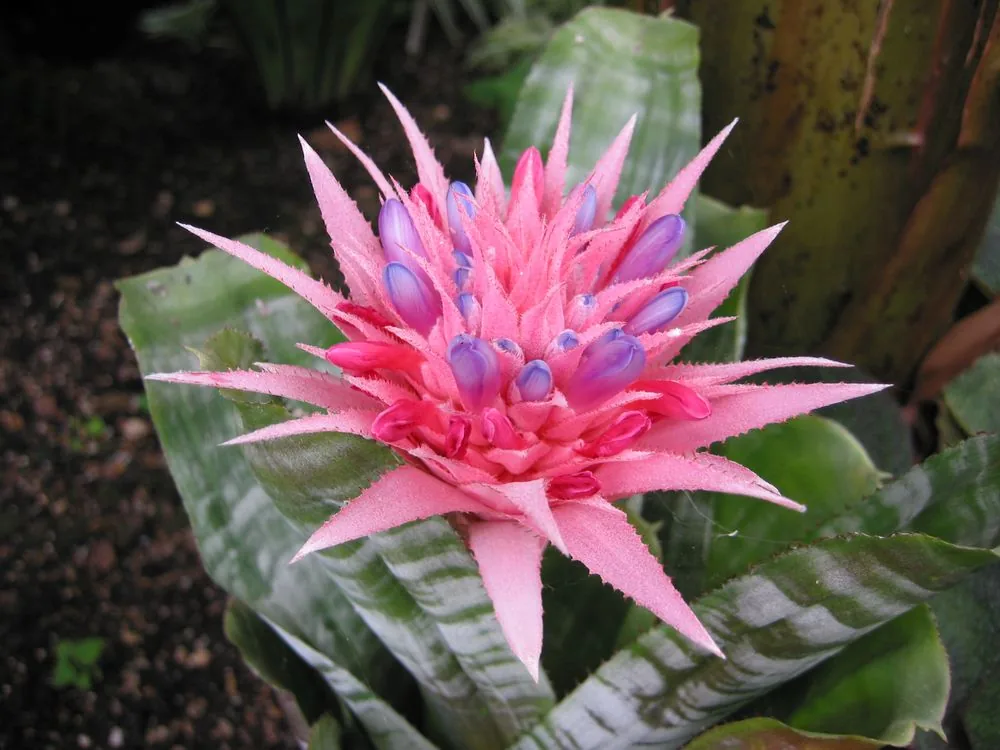
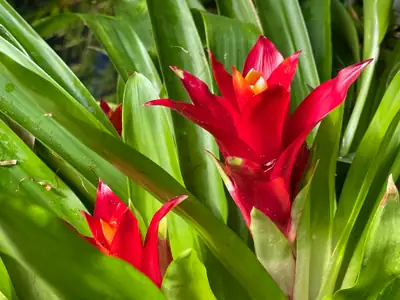
The urn plant is a bromeliad from south-eastern Brazil, where it grows perched on trees. Its broad, stiff, grey-green leaves are banded with silver, edged with small spines and arranged in a rosette that forms a watertight vase at the centre. From that vase rises a dense, bright pink head of pointed bracts with small blue-purple flowers tucked between them. The flowers pass quickly, but the pink head stays showy for months. It is a tough, slow, drought-tolerant houseplant.
Keep water in the central vase and refresh it every two to three weeks. Water the compost only when it is dry.
Humidity
Average room humidity is enough.
Soil
An open, free-draining bromeliad compost, in a heavy pot that will not tip over.
Temperature
It needs a minimum of 10-15°C and prefers normal room warmth.
Size
30-90cm tall and 30-60cm wide.
Growth speed
Slow
?Pet safety not confirmed
As a precaution, keep it out of reach of children and pets.
Signature feature
The silver bands on the leaves are a layer of tiny scales that take up water and nutrients from the air. Wiping or polishing the leaves rubs the scales off for good, so dust the plant only by rinsing it gently.
Care by Season
Spring
Growth resumes. Separate and pot up offsets, and start feeding lightly.
Summer
Keep the vase topped up and flushed. The plant can stand outdoors in light shade.
Autumn
Bring it in before the nights turn cold and reduce watering.
Winter
Keep it warm and bright, with only a little water in the vase and the compost almost dry.
Growing & Maintenance
Soil and pot
Use an open bromeliad or orchid compost. The roots mainly anchor the plant, so a small, heavy pot is enough.
Fertilising
Feed monthly in spring and summer with a liquid fertiliser at a quarter strength, poured into the vase or onto the compost.
Pruning
Cut the faded flower head off at its base, and remove the old rosette once it has dried up.
Propagation
By separating rooted offsets from the parent plant.
Pests & Diseases
Common problems
The pink head turns brown
Most likely cause: The end of flowering.
What to do: Cut it off; the rosette will produce offsets.
The silver banding has rubbed off
Most likely cause: The leaves were wiped or polished.
What to do: It does not return on those leaves; rinse instead of wiping in future.
Brown leaf tips
Most likely cause: Dry air or hard water.
What to do: Use rainwater or soft water and refresh the vase regularly.
A soft, brown centre
Most likely cause: Stagnant water in the vase.
What to do: Empty it, let it dry and refill with a little fresh water.
Pale leaves with little silver
Most likely cause: Too little light.
What to do: Move it to brighter, filtered light.
Pests & Diseases
Scale insects
Signs: Small brown, shell-like bumps on the leaves, usually on the undersides.
Treatment: Lift them off with a fingernail or a damp cotton bud rather than rubbing the leaf, to spare the silver scales.
Mealybugs
Signs: White, cottony tufts deep between the leaf bases.
Treatment: Wipe them out with a cotton bud dipped in rubbing alcohol and flush the vase with clean water. Check the undersides of the leaves and the crevices where the leaf stem meets the main stalk.
Crown rot
Signs: The centre of the rosette turns brown and soft and smells foul.
Treatment: Tip out the water, let the vase dry for a few days and keep less water in it, especially in a cool room.
FAQ
How do I water an urn plant?
Keep the central vase about a quarter full of water and replace it every two to three weeks so that it does not stagnate. Water the compost only when it has dried out. Rainwater or soft water leaves fewer marks on the leaves.
The pink flower head has gone brown. Is the plant dying?
The flowering rosette is, slowly, and that is normal: each rosette flowers once. It lives on for many months while it grows offsets at its base. Cut the faded head off and keep caring for the plant.
When and how do I separate the offsets?
When an offset is about a third to half the size of the parent and has roots of its own, cut it away with a clean, sharp knife and pot it in bromeliad compost. Keep it warm and in bright, filtered light.
My young plant will not flower. What can I do?
A rosette flowers only when it is mature, which takes a few years. A full-grown plant can be nudged into flower by sealing it in a clear bag with a ripe apple for a week or so; the gas the apple gives off triggers flowering in bromeliads a few months later.
How much light does it need?
Bright, filtered light. It tolerates a little direct sun in the morning or evening, but hot midday sun scorches the leaves. In poor light the silver banding fades.
Are the leaves sharp?
Yes, the edges carry small spines. Wear gloves when you repot the plant or separate offsets, or choose a spineless variety.