No results. Is a plant missing? Tell uscontact@wikiplant.net
Wax Plant
Hoya carnosa
Care level: Easy
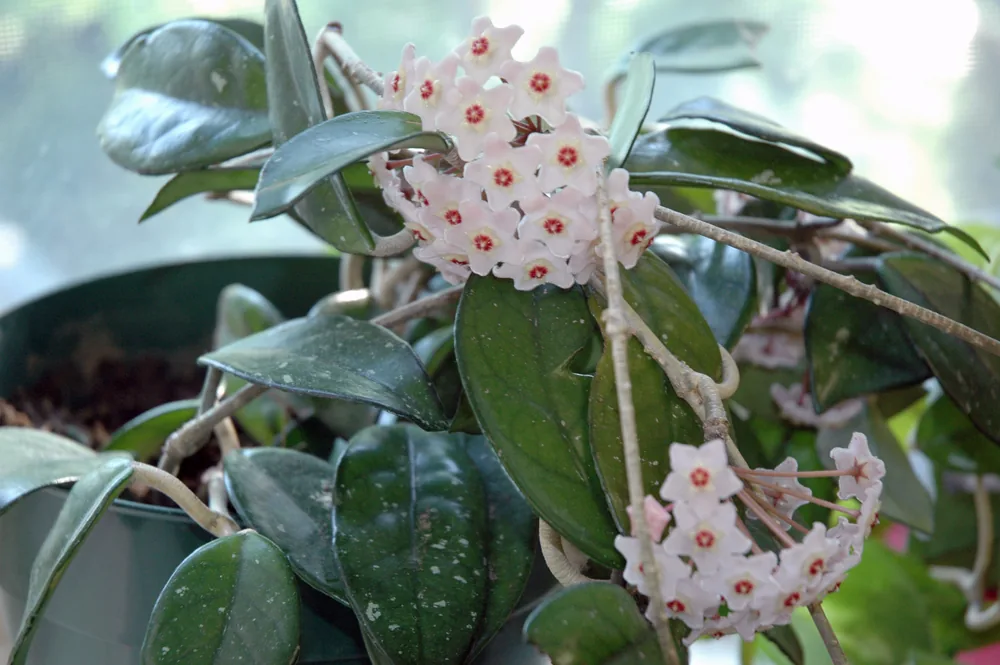
Hoya carnosa gets its common name from the thick, waxy texture of its leaves, but the real showstopper is its flowers: star-shaped clusters that look almost artificial, often smell of chocolate or honey at night, and are coated in a glistening layer of nectar. Collectors prize the plant partly because it can live and rebloom for decades in the same pot, sometimes passed down through generations as an heirloom houseplant.
Bright, indirect light with some gentle direct sun encourages the best flowering.
Water
Let soil dry out almost completely between waterings, roughly every 10-14 days, as it stores water in thick leaves.
Humidity
Enjoys moderate to high humidity but tolerates average indoor conditions well.
Soil
Chunky, well-draining mix such as orchid bark, perlite, and standard potting soil combined.
Temperature
Normal room temperatures. Keep it above 10°C.
Growth speed
Fast
Best position
east / south-east-facing windowanywhere up to about 2 m from the window
north / north-east / north-west-facing windowanywhere up to about 1 m from the window
south / west-facing windowabout 1 m from the window or further back
Watch for strong direct sun at south / west windows.
See every window directionHide window directions
Best position
right by the window
about 1 m
about 2 m
about 4 m
4 m or more
north
works well✓
works well✓
too dark○
too dark○
too dark○
north-east
works well✓
works well✓
too dark○
too dark○
too dark○
east
works well✓
works well✓
works well✓
too dark○
too dark○
south-east
works well✓
works well✓
works well✓
too dark○
too dark○
south
just about~
works well✓
works well✓
too dark○
too dark○
south-west
just about~
just about~
works well✓
too dark○
too dark○
west
just about~
works well✓
works well✓
too dark○
too dark○
north-west
works well✓
works well✓
too dark○
too dark○
too dark○
✓works well~just about○too dark☼too much direct sun
A rough guide based on window direction and typical daylight through the year. Window size, curtains and whatever stands outside matter just as much.
✓Non-toxic to pets
Considered non-toxic to cats and dogs.
Source: ASPCA
Common mistake
Cutting off the spent flower spurs (peduncles) after blooming is a frequent beginner mistake, those same knobby stalks produce new flower clusters year after year, so removing them means waiting much longer for the next bloom.
Care by Season
Spring
Resume regular watering and monthly feeding as vines begin producing new leaves and buds.
Summer
Water a bit more often and provide bright light to encourage fragrant flower clusters.
Autumn
Cut back on watering and feeding as growth slows; avoid moving or disturbing flower spurs.
Winter
Water sparingly and keep away from cold windows; do not remove old flower stalks, as they rebloom.
Growing & Maintenance
Soil and pot
A chunky, fast-draining mix of orchid bark, perlite and potting soil, in a pot with drainage holes.
Repotting
Only when it has outgrown its pot and is not in bud. Choose a pot no more than 5cm wider.
Fertilising
Feed once a month in spring and summer. Reduce in autumn.
Pruning
In early spring. Never cut off the short flower spurs, as they bloom again for years.
Support
Train the vines around a hoop or trellis, or let them trail from a hanging pot.
Propagation
From stem cuttings.
Pests & Diseases
Common problems
No flowers
Most likely cause: Too little light, a pot that is too roomy, or a young plant. It can take 2-3 years to bloom.
What to do: Give it bright light with some gentle direct sun and leave it slightly root-bound.
Leaves dropping
Most likely cause: Compost that is too wet or too dry.
What to do: Let the mix dry almost completely, then water thoroughly with room-temperature water.
Buds dropping
Most likely cause: The plant was moved or disturbed while in bud.
What to do: Leave it where it is until the flowers have finished.
Wrinkled leaves
Most likely cause: A long dry spell.
What to do: Water thoroughly and let it drain.
Yellow, soft leaves
Most likely cause: Overwatering and root rot.
What to do: Water less, improve the drainage and trim away the rotten roots.
Pests & Diseases
Mealybugs
Signs: White cottony clusters in leaf axils and along stems.
Treatment: Remove with alcohol-dipped cotton swabs and repeat weekly until clear. Check the undersides of the leaves and the crevices where the leaf stem meets the main stalk.
Aphids
Signs: Small green or brown insects clustering on new buds and flower stalks.
Treatment: Rinse off with water and apply insecticidal soap if they return.
Root rot
Signs: Soft, blackened stems and yellowing leaves from waterlogged soil.
Treatment: Reduce watering, improve drainage, and trim away any rotten roots or stems.
FAQ
Why won't my wax plant flower even though it looks healthy?
Hoyas typically need to be a bit rootbound and get several hours of bright light, including some gentle direct sun, before they bloom; a plant that's frequently repotted or kept in low light can grow well for years without flowering.
Should I remove the old flower stalks after my Hoya blooms?
No, leave the peduncles in place, since wax plants rebloom from the very same spurs season after season, and cutting them off delays or prevents future flowers.
Is the Wax Plant safe for cats and dogs?
Yes, the Wax Plant is not toxic to cats or dogs.
How often should I water a Wax Plant?
Roughly every 10-14 days, once the mix has dried out almost completely. Use room-temperature water, since cold water can shock it.
How do I propagate a Wax Plant?
From stem cuttings. A piece of vine with a pair of leaves roots in moist, chunky mix.
When does a Wax Plant flower?
From spring to autumn, with clusters of fragrant, star-shaped, white to pink flowers. A young plant may take 2-3 years before it blooms.