No results. Is a plant missing? Tell uscontact@wikiplant.net
Zebra Haworthia
Haworthia fasciata
Care level: Easy
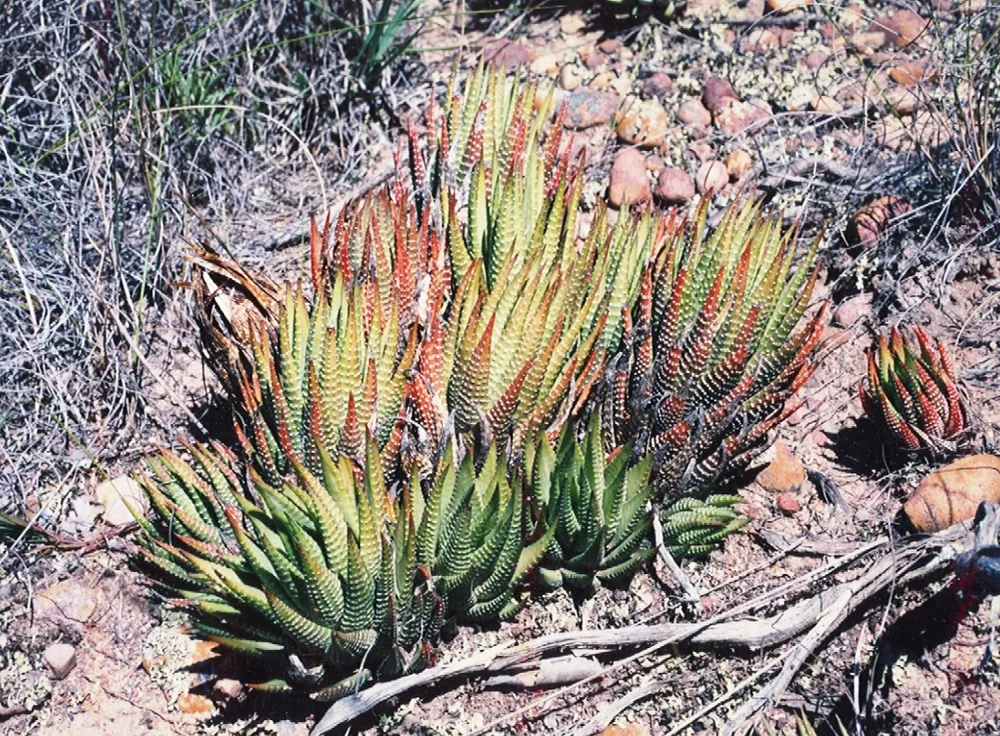
Haworthia fasciata grows naturally among rocks and grasses in South Africa's Eastern Cape, where its raised white tubercles banding the outer leaf surface are thought to diffuse harsh sunlight, a trait that also makes this small, slow-growing succulent one of the easier ones to identify at a glance thanks to its distinctive zebra-like striping.
Bright indirect light; too much direct sun can turn leaves orange or brown.
Water
Drought-tolerant succulent; water only when soil is fully dry, about every 2-3 weeks.
Humidity
Tolerates dry, average indoor humidity without issue.
Soil
Very well-draining cactus or succulent mix.
Temperature
16-27°C. Keep it above 10°C in winter.
Size
10-15cm tall and wide.
Growth speed
Slow
Best position
east / south-east-facing windowanywhere up to about 2 m from the window
north / north-east / north-west-facing windowanywhere up to about 1 m from the window
south / west-facing windowabout 1 m from the window or further back
Watch for strong direct sun at south / west windows.
See every window directionHide window directions
Best position
right by the window
about 1 m
about 2 m
about 4 m
4 m or more
north
works well✓
works well✓
too dark○
too dark○
too dark○
north-east
works well✓
works well✓
too dark○
too dark○
too dark○
east
works well✓
works well✓
works well✓
too dark○
too dark○
south-east
works well✓
works well✓
works well✓
too dark○
too dark○
south
just about~
works well✓
works well✓
too dark○
too dark○
south-west
just about~
just about~
works well✓
too dark○
too dark○
west
just about~
works well✓
works well✓
too dark○
too dark○
north-west
works well✓
works well✓
too dark○
too dark○
too dark○
✓works well~just about○too dark☼too much direct sun
A rough guide based on window direction and typical daylight through the year. Window size, curtains and whatever stands outside matter just as much.
✓Non-toxic to pets
Considered non-toxic to cats and dogs.
Source: ASPCA
Propagation tip
Zebra Haworthia readily produces small offsets, or 'pups', around its base as it matures; once a pup has a few of its own roots, it can simply be separated with a clean cut and potted on its own in dry succulent mix.
Care by Season
Spring
Resume light watering and feed once with diluted succulent fertilizer.
Summer
Water sparingly and keep out of harsh, scorching afternoon sun.
Autumn
Reduce watering frequency as growth slows.
Winter
Water minimally, roughly once a month, and keep above 10°C.
Growing & Maintenance
Soil and pot
A very well-draining cactus or succulent mix in a small pot with drainage holes.
Fertilising
One feed in spring with diluted succulent fertiliser.
Propagation
From the pups that form around the base, or from leaf cuttings.
Pests & Diseases
Common problems
Leaves turning orange or red
Most likely cause: More direct sun than it likes.
What to do: Move it to bright, indirect light.
Faded stripes and stretched growth
Most likely cause: Too little light.
What to do: Give it brighter light, out of harsh afternoon sun.
Soft, translucent leaves
Most likely cause: Overwatering and root rot.
What to do: Take it out of the wet mix, let it dry and repot in fresh succulent mix.
Thin, shrivelled leaves
Most likely cause: A very long dry spell.
What to do: Water thoroughly, then let the mix dry out completely again.
White fluff at the base of the leaves
Most likely cause: Mealybugs.
What to do: Dab them with a cotton swab dipped in alcohol and repeat weekly.
Pests & Diseases
Mealybugs
Signs: White cottony fluff tucked between leaves at the base.
Treatment: Remove with an alcohol-soaked swab and repeat weekly until clear. Check the undersides of the leaves and the crevices where the leaf stem meets the main stalk.
Root mealybugs
Signs: Stunted growth and white fuzz on roots when unpotted.
Treatment: Rinse roots clean, discard old soil, and repot in fresh, dry mix. Check the undersides of the leaves and the crevices where the leaf stem meets the main stalk.
Root rot
Signs: Mushy, translucent leaves and a soft base from overwatering.
Treatment: Remove from wet soil, let dry out, and repot in fast-draining mix.
FAQ
Why is only one side of my Zebra Haworthia banded with white bumps?
This is completely natural, since the raised white tubercles form more prominently on the outward-facing side of each leaf that receives the most light; it is simply a feature of the species, not a sign of a problem.
Why is my Zebra Haworthia turning orange or reddish?
A color shift toward orange or red usually means the plant is getting more direct sun than it prefers; while it can tolerate some sun, moving it to slightly less intense bright indirect light will typically restore the normal green color over time.
Is Zebra Haworthia safe for cats and dogs?
Yes, Zebra Haworthia is not toxic to cats or dogs.
How often should I water a Zebra Haworthia?
About every 2-3 weeks, only when the mix is fully dry, and roughly once a month in winter.
How big does a Zebra Haworthia get?
Only 10-15cm tall and wide. It grows slowly and can live for decades.
Does a Zebra Haworthia flower?
Yes. In summer it sends up long, thin stalks with small white tubular flowers.