No results. Is a plant missing? Tell uscontact@wikiplant.net
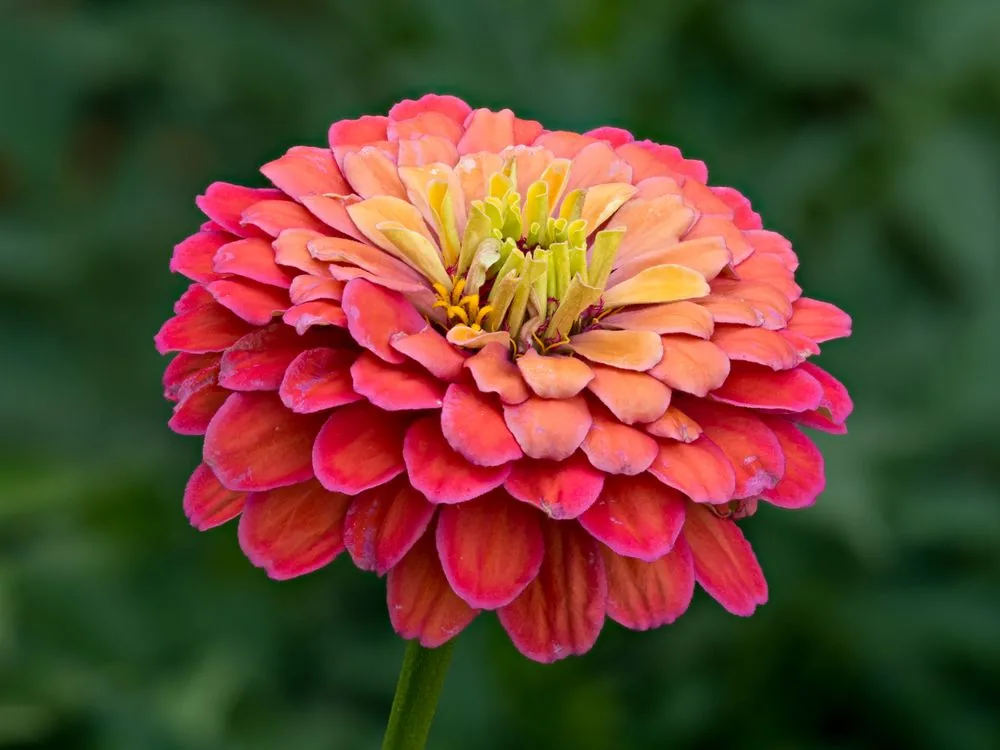
Zinnia
Zinnia elegans
Care level: Easy
The zinnia is an upright, bushy annual from Mexico with rough, lance-shaped leaves in pairs and stiff stems, each ending in a single daisy-like flower. The flowers come single, semi-double or fully double, in white, yellow, orange, red, pink, purple and lime green, and they keep coming from midsummer until the first frost. It loves heat and sun, makes a first-rate cut flower, draws butterflies, and grows quickly and easily from seed sown in spring.
As a precaution, keep it out of reach of children and pets.
Common mistake
Watering zinnias from above is the usual cause of trouble. Wet leaves and crowded plants bring powdery mildew, which coats the foliage white by late summer. Water at the base, in the morning, and give each plant room.
Care by Season
Spring
Sow indoors in modules and plant out after the last frost. Pinch out the tips of young plants.
Summer
Flowering from midsummer. Cut and deadhead regularly, and water at the base in dry spells.
Autumn
Flowering continues until the first frost. Save seed from dry heads if you wish.
Winter
The plants are dead; clear them away, and do not compost mildewed foliage.
Growing & Maintenance
Planting
Sow in modules indoors in spring and plant out after the last frost, 20-30cm apart, in fertile, well-drained soil in a warm, sunny position. In warm areas sow directly in late spring.
Pruning
Pinch out the tip of young plants, then cut or deadhead regularly to keep the flowers coming.
Propagation
By seed.
Pests & Diseases
Common problems
White powder on the leaves
Most likely cause: Powdery mildew, encouraged by wet foliage and crowding.
What to do: Water at the base and give the plants more space.
Seedlings collapsing
Most likely cause: Cold, wet compost.
What to do: Sow later and water sparingly.
Plants that stand still after planting out
Most likely cause: Root disturbance, or cold nights.
What to do: Raise them in modules and plant out only when the nights are warm.
Tall, single-stemmed plants with few flowers
Most likely cause: The tip was never pinched out.
What to do: Pinch young plants and cut flowers regularly.
Flowers flopping in the vase
Most likely cause: Cut too early.
What to do: Cut only when the stem below the flower is stiff.
Pests & Diseases
Powdery mildew
Signs: A white, powdery coating on the leaves from midsummer, starting on the lower leaves.
Treatment: Space plants well, water at the base and remove the worst leaves. Destroy the plants at the end of the season.
Grey mould
Signs: Flowers and buds turn brown and fuzzy in wet weather.
Treatment: Remove affected flowers promptly and avoid overhead watering.
Slugs and snails
Signs: Young plants eaten down soon after planting out.
Treatment: Plant out sturdy plants and pick the slugs off by torchlight after dark.
FAQ
When and how do I sow zinnias?
Sow in pots or modules indoors in spring and plant out after the last frost, or, in a warm area, sow where they are to flower in late spring. Zinnias dislike root disturbance, so use individual modules and plant out before the roots fill them.
Why are the leaves covered in white powder?
That is powdery mildew, the commonest problem on zinnias, usually from midsummer. Space the plants so that air moves between them, water the soil and not the leaves, and remove the worst leaves. Flowering usually continues regardless.
How do I get more flowers?
Pinch out the growing tip when the young plant is about 20cm tall, so that it branches, then cut flowers for the house and remove faded ones. Every stem you cut is replaced by new flowering shoots.
Are zinnias good cut flowers?
Among the best of the annuals. Cut a stem when the flower is fully open and the stem below it stays stiff when shaken; flowers cut too early flop in the vase.
Do zinnias come back each year?
No. They are tender annuals and die at the first frost. Seed is easy to save from dry flower heads, though seedlings from mixed plantings differ from their parents.
Why did my seedlings collapse at soil level?
That is foot or root rot, which strikes in cold, wet compost. Sow later, when it is warmer, use fresh compost and water sparingly until the seedlings are growing strongly.